



In a world shaken by overwhelming turbulence and change, few keynote speakers understand the pressures of leading high-performance organisations quite like Claire Williams.
Claire is the former Deputy Team Principal of the Williams Formula One Team, and spent years navigating the relentless demands of one of the world’s most fast-paced and high-stakes sports – steering a team with a decades long racing legacy through regulatory upheaval, global crises, and the ever-evolving demands of elite competition.
I sat down with Claire to reflect on the leadership lessons Formula 1 taught her – from building genuinely resilient, cultivating psychological safety, to unpacking the power of authentic communication towards forming durable cultures.
Formula 1 is subject to frequent regulatory changes, including the major new technical and power unit regulations that have come into force this year.
From a leadership perspective, how do you guide an organisation through the uncertainty these changes bring?
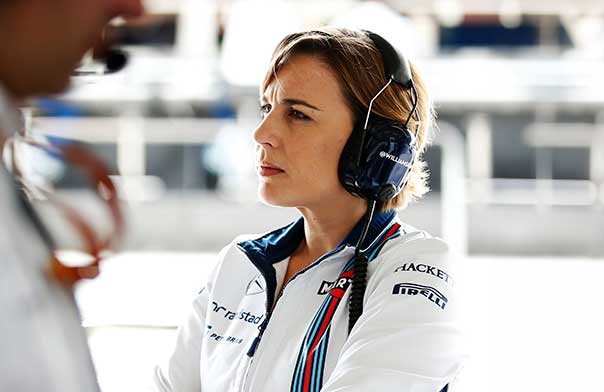
There’s often an awful lot of uncertainty in Formula 1 – not just from season to season, but even from race to race. As a result, it’s critical that F1 organisations are built to withstand regular change.
Williams had been racing for 40 years when I took over, so my team were eminently used to a degree of consistent turbulence, and was structurally built to accommodate it – to react quickly, and to remain robust during periods of uncertainty. The ability to pivot, to think “okay, well, we were going down this path, but now we’ve been told to go down another path ” – for people to be able to adapt quickly, is exceptionally important. You need the entire team to be able to do that.
On a daily basis, leadership needs to be able to set clear goals from the outset, and to be almost overly communicative when changes are required. Leaders must be clear and concise about what those alterations are, what the expectations are to meet and accommodate those shifts, what pathway has been laid to achieve them, and the timing plan around that.
In an industry where change is the norm, the environment that you operate in can also be incredibly powerful. The people in your organisation need to genuinely feel that failure is okay, this is what organisational psychologists call psychological safety. In industries where it’s a regular occurrence, things are inevitably going to fall through the cracks. People aren’t always going to get it right the first time when you’re asking them to adapt at the drop of a hat. They will make mistakes, and you need to create a space where that’s allowed – one where when you fail, you fail fast, and you pick yourself back up.
Like the new regulations in F1, AI is rapidly reshaping many industries, including motorsport.
How do leaders balance the pressure to deliver week-to-week results with the longer-term responsibility of preparing their organisation for transformational change?
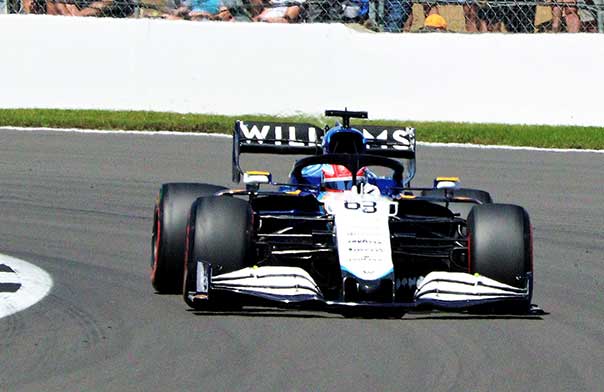
It’s not easy. In the world of Formula 1, you deliver your car to the racetrack every other weekend, and that will invariably demand showcasing updates at each and every race. Simultaneously, in the background, you’ve always got a new car to build for the following year. As a result, you typically have groups structured to accommodate that: every team will have two smaller teams within it – one working on the current car, and another solely focused on long-term projects.
Obviously, if you have the luxury of people-power, the right numbers and generous budgets to accommodate it, this is a great principle to apply for businesses across the board. When bringing in new technologies, processes or innovations, you’ve got to ensure you have enough people to implement it, spend time thinking about it, creating it, and building it, whilst you lead your main team in focusing on the day-to-day. You can’t expect people to do both. I think that’s almost a physical impossibility, particularly if you want a positive outcome. Having those dedicated future-focused teams is key to successfully tackling these workplace challenges.
In Formula 1, you’ve always got that balance around investment as well, particularly when exploring future-focused innovation. You’ve got to be looking ahead to what’s coming next year – to make sure your team has the investment necessary to accommodate and deliver against it, whilst maintaining investment on the day-to-day as well. Ensuring you’ve got clear principles around expenditure becomes even more significant in this light.
Lastly, one of the most important considerations when bringing in new tech and innovations to propel your performance: you’ve got to leave time to think.
So often, we don’t leave time for our people to think strategically, to consider what’s coming down the line, and how they can roll implementations out in a complementary way. We’re so busy with meetings, emails and the day-to-day grind, we don’t allow that really critical time for creative thinking and experimentation. People expect that you’ll have lightning bolt moments whilst you’re doing your day job. In reality, it’s just not going to happen if you don’t create the conditions for it.
In Formula 1, races are scheduled years in advance. However, events beyond the track – like geopolitical tensions and global crises – can change plans week by week.
How do you plan effectively and keep the team motivated when so much is outside of your control?
Good contingency planning is non-negotiable. This is one of the things Formula 1 is renowned for as an industry – being able to move and react extraordinarily quickly. That’s what we do all day long, whether it’s on the pit wall, or because we’ve got to build a new upgrade.
Being able to pivot and adapt is absolutely paramount to crisis management. When there is so much uncertainty in industry, business, and the world at large, you’ve got to have an organisation that can remain agile.
As an example, we went to Australia at the start of COVID back in 2020. Everything was set up and ready to go – our last few people had just flown in. Suddenly, a meeting was called announcing that they were cancelling the Grand Prix. With that news, we had to get everyone and everything out quickly. Fast reaction time is of the essence in those kinds of situations, just as much as it is on the track.
As a leader, being able to communicate efficiently and effectively in moments like that is vital. Even when we don’t know all the information, it’s much better to be transparent about what you do understand. Even if you don’t have the answers to everything, at least tell people that. It’s better to stand up in front of your organisation and say, “I don’t know the situation yet, but as leadership, we are keeping an eye on it”. A lack of information can be immensely damaging, especially to organisations that are potentially entering a period of peril – it’s much, much safer to over-communicate.
Also, it must be remembered that you are your team’s emotional checkboard. If you are panicking, or not demonstrating emotional control, the wrong message is likely to be conveyed. Alternatively, if you focus on showcasing a calm, collected headspace, that’s the message you’re going to relay to everybody working for you – they will respond and behave accordingly. It’s all about that “keep calm and carry on” kind of ethos.
How did you find space to focus on culture, people, and organisational development in such a time intensive and performance focused sport?
I have to hold my hands up here, and admit that in the early days of my tenure, I didn’t really focus on culture and the environment.
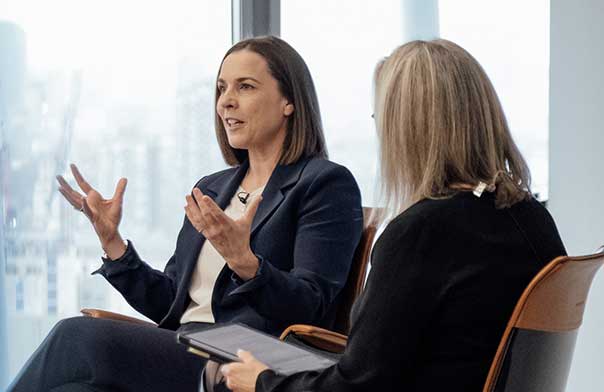
This was probably attributable to the first four years of my time being largely successful. When any organisation is thriving, culture tends to go out the window, and daily health checks are pretty much forgotten about; success breeds success, along with motivation, and an inherently strong culture. Leading a business like this, you don’t necessarily think there’s much work to do.
My greatest learnings came when we weren’t doing well, and our organisation was starting to fall apart. I learnt that culture is the absolute bedrock of any high-performing team. Even if you have the very best people, with all the resources necessary to do their jobs, you won’t get the best out of them if the environment – and the psychological safety – they work in doesn’t also make the cut.
As a consequence of this period, culture became something I paid close attention to, each and every single day of my leadership journey at Williams – whether it was conducting walkabouts around the factory, having lunches with groups in the team, or even hosting go-karting sessions with members of the race team on race weekends.
Simultaneously, this attitude can’t all come from one leader. It has to be lived and breathed by senior and middle management – it must flow throughout the organisation. One person can’t prop up the whole team by themselves. It has to be a joint, collaborative effort.
To learn more about booking Claire for your event, you can check out her page here, or contact the JLA team for more information.