


What do an astronaut, a former Formula One Team Principal, a former BBC Director General, two AI specialists and one of Britain’s most celebrated comedians have in common?
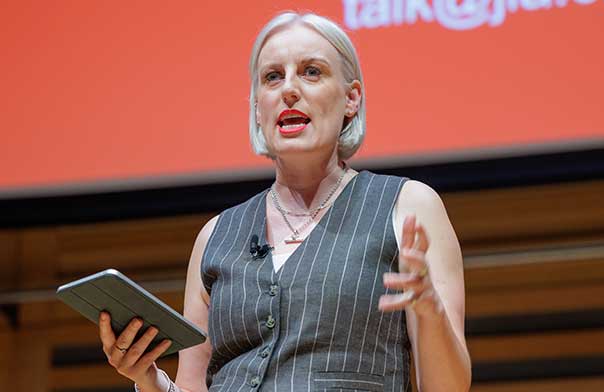
On the face of it, not much. However, over the course of two hours at JLA’s Festival of Speech 2026, hosted by the brilliant Steph McGovern, many of the same ideas surfaced time and time again.
Major Tim Peake spoke about making decisions hundreds of miles above our planet, whilst Claire Williams brought the conversation back down to the earth, sharing lessons learned from leading one of Formula One’s most famous teams through difficult years.
Reinforcing Claire’s reflections on building resilience as a leader, Tim Davie shared insights from navigating scrutiny from the top of the BBC.
Dr Laura Gilbert and Ben Legg tackled the opportunities and challenges presented by AI, which Sir Lenny Henry wove into his own reflections on nurturing talent and creativity in the present day.
Whilst each speaker was different from the next, the lessons, surprisingly, were not.
We’ve broken down our top takeaways from all five sessions throughout the evening.
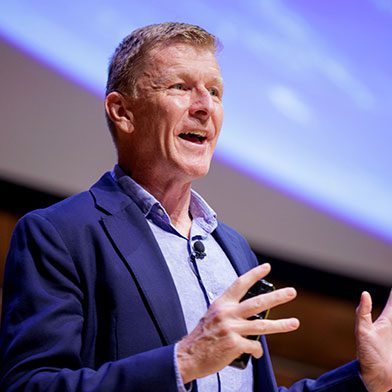
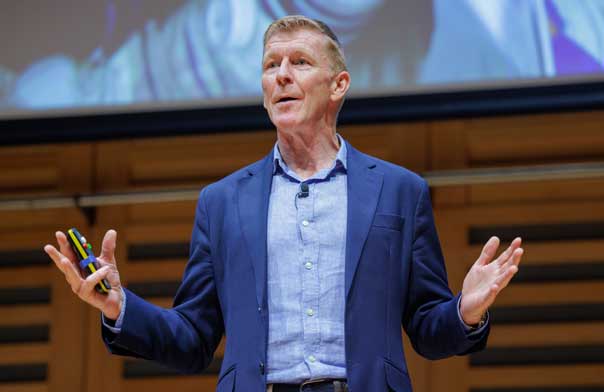
Tim Peake opened the evening with a story that immediately brought the audience into his world – or, more accurately, a world floating directly above the one we inhabit, sitting beyond the stratosphere: the International Space Station.
He told the story of his Soyuz TMA-19M launch – a flawless take-off, followed just hours later by cascading systems failures as his crew tried to dock with the ISS. A story of this kind naturally invites questions about intense pressure, fast action and high-stakes decision-making.
Instead, Tim spoke about something less flashy, but more real: the importance of thorough preparation, and what that actually looks like.
Astronauts spend years rehearsing emergencies, simulating crises and putting themselves intentionally in situations with real risk. This is not because they expect real-life situations to mirror training exercises perfectly, but because repetition creates space to think – the opportunity to acclimatise to the state of risk itself.
Tim went on to explore the leadership structures aboard the ISS. Despite popular perceptions, he explained that it isn’t built around rigid hierarchy; instead, expertise matters more than rank. The person best placed to solve the problem becomes the person people listen to.
Tim pointed to Apollo 11 as an example. The Moon landing came perilously close to being aborted before a young engineer in Mission Control made a judgement call that ultimately helped keep the mission on track.
Another crucial lesson for businesses comes to the fore here: if responsibility within an organisation is arranged solely by levels of status and seniority, businesses run the risk of missing important breakthroughs and preventing people from reaching their full potential.
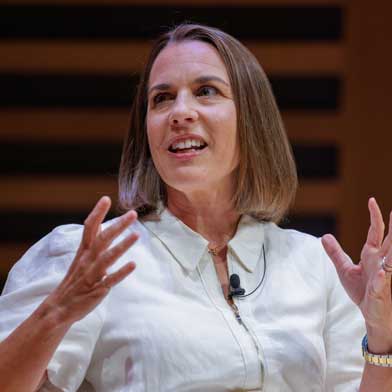
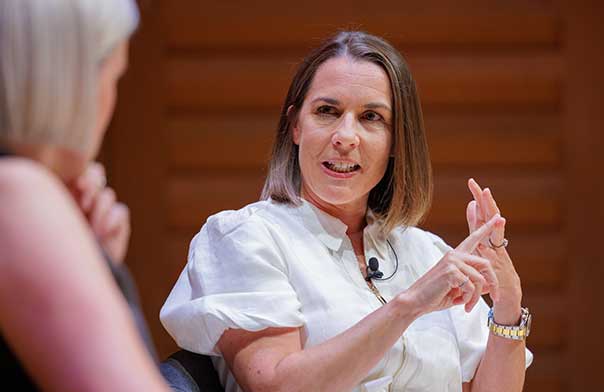
Running a Formula One team is difficult enough. Doing so on an independent basis, without the same budget scope available to your biggest competitors, presents an entirely different challenge.
For Claire, that reality shaped almost every leadership decision she made. If Williams couldn’t outspend rival teams, it had to find advantages elsewhere. Time and again, the advantage she came back to was culture.
She described the cultural values established by her father, Sir Frank Williams, as one of the foundations of high performance. When results become difficult and pressure starts building, culture is often the thing people discover they either have or don’t.
During difficult periods, Claire made a conscious effort to stay present as a leader, standing right beside the people on the ground, living the truth of a situation right beside them. Rather than retreating into meetings and strategy sessions, she focused on being available and communicative – talking to her team, explaining what came next, and making sure everyone she was pushing to deliver was bearing up under the very pressure she was exerting.
She also spoke openly about the personal side of leadership, including the challenge of recognising when resilience turns into exhaustion. Looking after a team and looking after yourself are rarely separate issues.
Tying these two principles together is one, critical message:
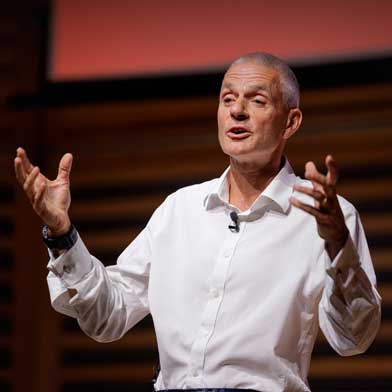
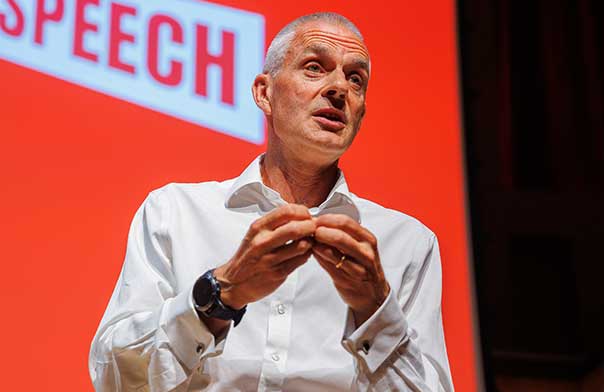
Few leadership roles come with more public scrutiny than running the BBC.
Fresh from stepping down as Director General, Tim Davie reflected on his time leading an organisation where a crisis can appear to arrive every morning with the newspapers.
With a background defined by relentlessness and open evaluation, Tim returned repeatedly to the vital relationship between pressure and performance throughout his session.
With too little pressure, he argued, organisations can become slow, cautious and bureaucratic. Too much, and decision-making deteriorates. The challenge is finding a balance that creates urgency without sparking panic.
This perspective informed how he approached some of the BBC’s most high-profile moments. His instinct was to separate genuine problems from background noise as quickly as possible, then focus on objective facts rather than speculation.
Echoing Claire’s sentiments, Tim went on to explore the importance of establishing deep-seated resilience as a leader, and to what extent this is rooted in a healthy work-life balance. From avoiding a state of half-working, to carving out space to immerse yourself in activities that clear your head
Effective leadership, through Tim’s eyes, often comes down to the positive influence of staying calm, even if everyone else is losing their head.
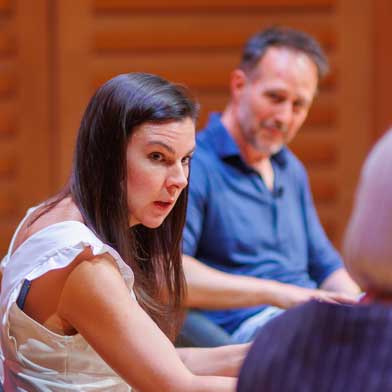
Dr Laura Gilbert CBE and Ben Legg
Why Human Judgement Is Central To AI’s Success
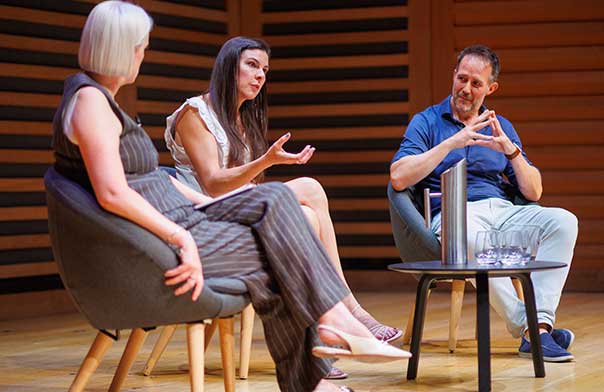
Dr Laura Gilbert and Ben Legg tackled the question on every business leader’s mind in 2026: what should we actually be doing about AI?
Rather than feeding the familiar hype, or equally familiar doom, Laura and Ben argued that AI’s impact will be determined by the decisions leaders make about how they use it.
Their discussion repeatedly came back to a simple point: organisations get into trouble when they treat ‘the implementation of AI’ as an objective in its own right.
As Laura pointed out, the vast majority of enterprise AI pilots never deliver meaningful value. Too many projects begin with an instinctive, eager question – “how do we adopt AI?” – instead of a harder, but more practical one: “what problem are we actually trying to solve?”
Following this thread to the end, Laura and Ben were eager to stress that AI makes human judgement more valuable, not less.
As AI tools become increasingly capable, the competitive advantage won’t come from accepting their outputs unquestioningly. Instead, it will come from knowing when to challenge them, where to verify them and how to apply them responsibly.
Critical thinking, curiosity and good judgement emerged as qualities that will matter even more in the years ahead, rather than skills AI are set to replace.
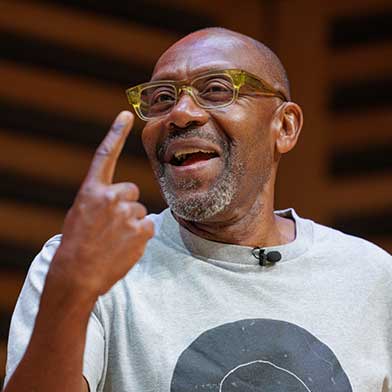
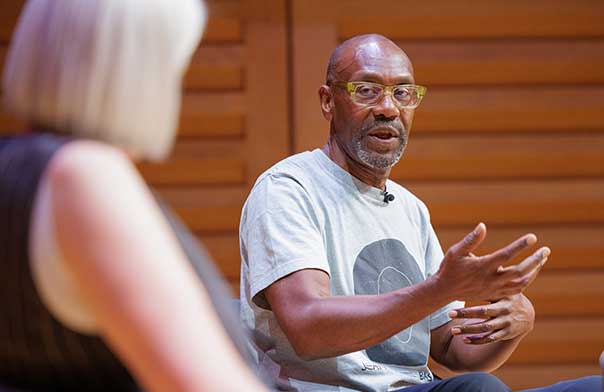
Looking back across a career stretching from his first television appearance at sixteen, through to his work on Comic Relief and beyond, Lenny Henry reflected on his evolving relationship with talent and creative development.
Picking up the AI thread left by Laura and Ben, Lenny reflected on the interplay between AI and creativity. In his view, technologies of this kind won’t replace genuinely creative people. What matters is the quality of the ideas, the craft behind them and the originality of the voice creating them.
He also emphasised the importance of the people who helped him along the way to defining his success. Writers, producers, directors, mentors and collaborators have helped shape his approach to his craft – in much the same way that effective teams supported Tim Peake, Claire Williams and Tim Davie in their own respective fields.
Lastly – and importantly – when asked what he hoped his legacy would be, Lenny spoke less about television or comedy than about the extraordinary ability of creativity, talent and shared moments to bring out the best in people.
Comic Relief, he suggested, is about the transcendent outcome of bringing people together towards a common goal – and the idea that if someone needs help, and you’re in a position to give it, you do. This sentiment sits at the heart of its mission.
This manifested in taking people beyond statistics and headlines, and showing them the reality of the communities their support reaches.
Whether through Comic Relief, or events like the Festival of Speech, the act of bringing people together can create a ripple effect that extends well beyond the room. Conversations may end when the lights go down, but the ideas, the connections and the impulse to act are what endure.
What Made This Year’s Event Special?
A few common threads shone consistently throughout each of our incredible five sessions at our Festival of Speech this year.
Complementing the rich diversity of perspectives we had the pleasure of listening to on Thursday evening were a series of perspectives our speakers all seemed to share:
Preparation matters more than talent and attitude alone.
The strongest leaders invest heavily in culture and communication.
Lastly, whether the setting is a spacecraft, a racing team, the heart of British broadcasting, a technology company or the entertainment industry, success was always a collective effort.
If you missed the Festival of Speech 2026, you can catch selected highlights in the video below. If would like to explore booking Major Tim Peake, Claire Williams, Tim Davie, Dr Laura Gilbert, Ben Legg, Sir Lenny Henry or any of our other speakers for an event of your own, we’d be delighted to hear from you.
We look forward to welcoming you again at the Festival of Speech next year.