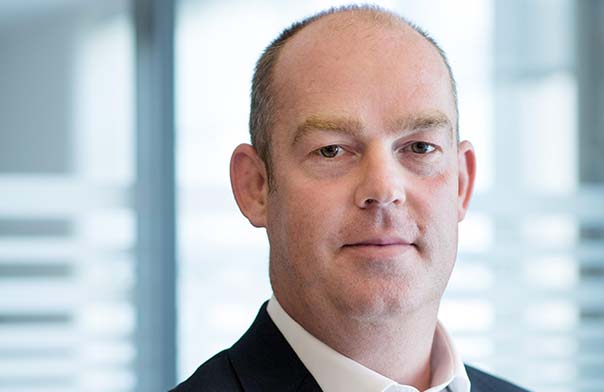

Tomas Chamorro-Premuzic
Chief Innovation Officer, ManpowerGroup
Innovation isn’t just a buzzword, it’s a business necessity. Companies that fail to innovate risk growing stagnant or failing in a fast-paced and ever-evolving global market. Whether you’re a start-up aiming to disrupt an industry or an established organisation seeking to remain successful, fostering innovation within your business is essential for long-term success.
From streamlining business operations to improving customer experience and unlocking new revenue streams, innovation can drive growth. But what does being an innovative business mean, and how can organisations inspire and maintain an innovative mindset across their teams and departments?
Below, we’ll explore the importance of innovation and how bringing in expert business speakers, entrepreneur speakers and innovation speakers can provide the spark needed to ignite fresh thinking across your company.
Consumer needs and behaviours can change rapidly, and businesses that stay in the same lane often fall behind. Innovation allows organisations to anticipate trends, stay ahead of the competition, and adapt quickly to market shifts.
Innovative thinking doesn’t just apply to products or services; it can also improve internal processes. Whether adopting new technologies or restructuring workflows, creative solutions can help businesses reduce costs, save time, and boost productivity.
An innovative approach to customer engagement can lead to better service, improved interactions, and ultimately, greater loyalty. Whether through new platforms, products, or communication methods, businesses that innovate tend to build stronger, longer-lasting customer relationships.
Businesses that promote innovation empower employees to think creatively and take calculated risks. This innovative mindset nurtures problem-solving and collaboration, keeping teams engaged and motivated to improve.
Innovative thinking enables companies to evolve and thrive in new environments, whether entering new markets, launching new services, or pivoting business models entirely.
Innovation often comes from collaboration, so it’s vital to create an environment where all team members feel confident sharing their ideas, no matter how big or small.
Offering training, courses, and access to thought leaders ensures your organisation remains at the forefront of industry trends and innovative strategies.
Breaking down barriers across departments encourages creative thinking, fresh perspectives and more dynamic problem-solving. Innovation thrives when teams work together across different functions.
Risk-taking is all part of an innovative process. Recognising and learning from unsuccessful attempts encourages ongoing experimentation and improvement.
While internal efforts are essential, sometimes businesses need an outside voice to reinvigorate their thinking. That’s where external innovation speakers come in.
Hiring innovative speakers can benefit your business or organisation by:
At JLA Speakers, we represent an extensive roster of leading innovation speakers, from entrepreneurs and future trends experts to tech and AI pioneers and corporate strategists experienced in tackling workplace challenges. Whether your business wants to unlock creative potential, increase adaptability, or future-proof operations, we can connect you with the perfect conference speaker to suit your needs. Below are just a few examples of the fantastic speakers available to you today:
Chief Innovation Officer, ManpowerGroup
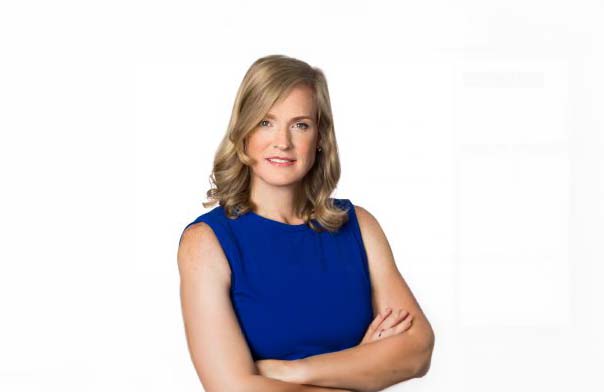
Neuroscientist, Entrepreneur & AI Expert

Science Broadcaster & Emergency Medicine Doctor

Mathematician & STEM Advocate
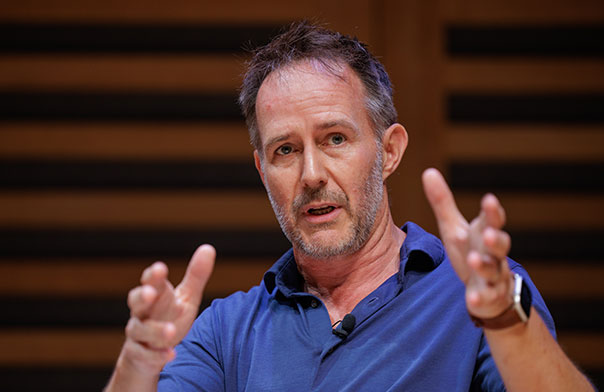
Former COO Google Europe
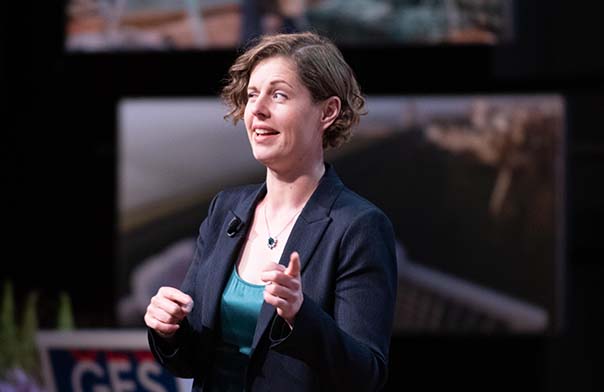
Author of Digital Transformation & Inventor
Tomas is a globally recognised expert in business psychology, specialising in people analytics, leadership development, and the relationship between human behaviour and artificial intelligence. As Chief Innovation Officer at ManpowerGroup and a professor at both University College London and Columbia University, he combines academic insight with practical application to help organisations unlock their potential.
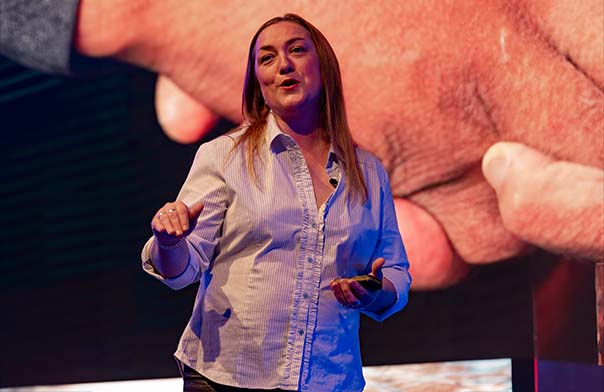
Vivienne is a renowned neuroscientist, entrepreneur, and AI expert, celebrated for her work at the intersection of technology, human potential, and inclusion. As co-founder of Socos Labs, she applies machine learning to challenges in education, healthcare, and workplace equity, developing tools that enhance creativity, emotional intelligence, and well-being.
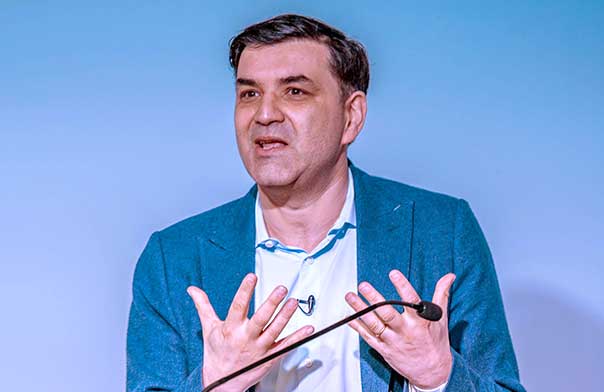
Kevin is a unique blend of astrophysicist, medical specialist, and natural storyteller, renowned for his expertise in risk, decision-making, and innovation. With experience ranging from working with NASA to serving as a National Clinical Advisor during the COVID-19 pandemic, Kevin captivates audiences by translating complex scientific concepts into engaging narratives, making him a perfect speaker to champion technological innovation.
Anne-Marie is a leading voice in technology and innovation, known for her work at the forefront of STEM and digital transformation. As founder of Stemettes, she champions diversity while also driving forward-thinking solutions that challenge traditional approaches to tech and business. Her engaging talks explore the impact of AI on the future of work and the importance of inclusive innovation, making her a dynamic speaker on the future of technology.
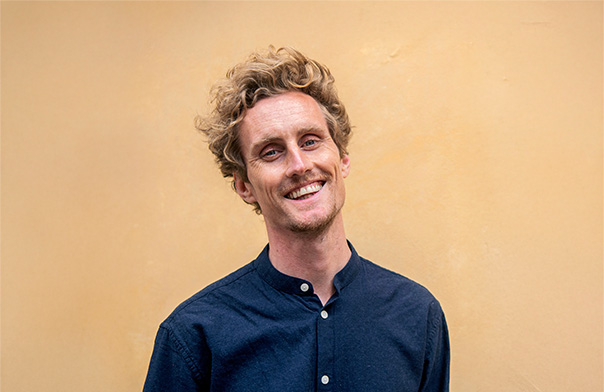
Ben is a seasoned technology strategist and former COO of Google Europe, where he played a pivotal role in shaping the company’s monetisation strategies across platforms like Search, YouTube, Maps, and Mobile . With a diverse background that includes leadership roles at Coca-Cola, McKinsey, and the British Army, he brings a unique perspective to innovation and strategic growth, Ben offers deep insights into the future of work, digital transformation, and navigating disruption in an AI-driven world.
Lindsay is a globally recognised innovation expert, IBM Inventor, and author of Digital Transformation, acclaimed for its practical framework on driving enterprise-scale change. As Global Chief Innovation Officer at IBM Garage GBS, she leads breakthrough projects for organisations including Shell, the NHS, and the UN, blending technological insight with cultural transformation.
When you contact us a dedicated JLA account manager will work closely with you to understand your objectives and source an innovation speaker that perfectly fits your requirements and audience. We handle everything from shortlisting speakers and managing logistics to organising fees and follow-up sessions for long-term impact.
Whether it’s for a company conference or an industry-wide event, our speakers don’t just inspire, they equip your teams with the mindset and tools to innovate effectively. Contact JLA today to explore our expert speaker options and book the right voice to help your business progress.


Leadership and management are often used interchangeably, but while they share some similarities, they are fundamentally different concepts that play distinct roles in the success of a business.
Understanding the difference between the two is essential for any organisation that wants to improve performance, inspire teams, create a supportive culture and remain agile in an ever-changing business landscape.
Here, we’ll break down the key distinctions between leadership and management, how they relate to each other, why it’s important to know the difference, and how the right leadership speaker can help organisations develop future-ready role models at every level.
A manager’s primary responsibility is implementation, meeting goals, and ensuring systems run smoothly. Leadership is about sharing a vision, motivating and supporting people, and influencing stakeholders to move toward a common objective.
Four key differences include:
Leaders invest in developing talent. They mentor, coach, and create space for individuals to grow. They know they may not have all the answers, but they will share their network with others so that those better positioned to help can do so.
Managers ensure tasks are done correctly and on time. They understand the processes and the resources, as well as how to best allocate them to achieve strategic goals as effectively and efficiently as possible.
While leadership and management require different skill sets, one is not better than the other, they’re both essential. Businesses need capable managers to maintain structure, improve processes, and ensure reliable performance. But without good leaders, innovation stalls, morale dips, people fail to achieve their potential and long-term goals are often overlooked.
The most successful organisations recognise the value of developing managers and leaders, and understand when each approach is needed.
No one is born a natural leader, but with the proper guidance, leadership skills can be uncovered and nurtured at every level. That’s where leadership speakers come in.
A powerful keynote speaker can:
At JLA Speakers, we offer a wide-ranging roster of Leadership Speakers, from renowned CEOs to successful sporting stars. Each speaker brings a unique perspective on leadership, helping organisations cultivate stronger, more adaptive teams.

Former Director General, MI5 and Former Lord Chamberlain
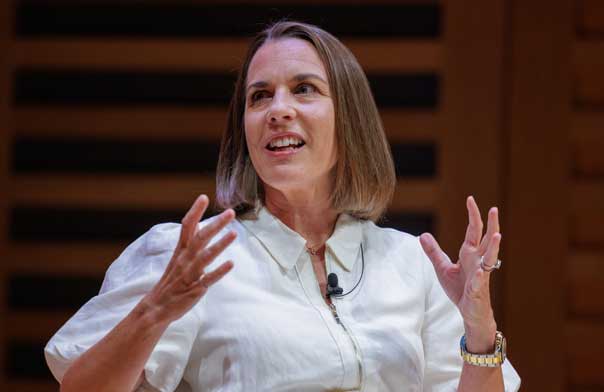
Former Deputy Team Principal of the Williams Formula One Team

Business Leader

Act Like a Leader, Think Like a Leader

Former Home Secretary and Foreign Secretary

Future of Leadership Expert
Andrew Parker has held two of the most sensitive and respected leadership roles in British public life. He ended a 30-year career in national security and intelligence by heading MI5, after which he served as Lord Chamberlain, the non-executive Chair and de facto head of the Royal Household. He explores the pressures of leadership, the tough decisions, and importantly, the importance of building a diverse, open team with accountable, values-driven leaders and shared, clear goals and purpose.
Claire Williams is a pioneering leader in motorsport, having served as Deputy Team Principal of the Williams Formula 1 team. Under her guidance, the team achieved consecutive third-place finishes in the Constructors’ Championship, marking their best performance in over a decade. Known for her strategic vision and commitment to high-performance culture, Claire shares compelling insights on leadership, diversity, and team resilience.
Ellis Watson is a dynamic business leader and keynote speaker known for his energetic and forthright approach to leadership, transformation, and navigating disruption. With a diverse career spanning media, transport, and entertainment, he brings a wealth of experience to his talks. Ellis delivers practical, sometimes provocative insights on nurturing talent, adapting to technological and societal changes, and embedding purpose at the heart of organisations.
Herminia Ibara is the Charles Handy Professor of Organisational Behaviour at London Business School and a globally recognised authority on leadership and career development. Ranked among the world’s most influential management thinkers by Thinkers50, she is best known for her research on leadership identity, talent management, and the dynamics of career transitions. As the author of Act Like a Leader, Think Like a Leader and Working Identity, Herminia offers practical strategies for navigating leadership challenges and embracing change.
Sir James Cleverly is a distinguished political leader with a multifaceted career spanning the military, business, and both local and national politics. As one of the few individuals to have served as both Foreign Secretary and Home Secretary, he has navigated the UK through some of the most challenging domestic and international events in recent history. His diverse background equips him with a unique perspective on leadership, strategy, and decision-making under pressure.
Blaire Palmer is a leading authority on the future of leadership, widely recognised for challenging conventional thinking and helping senior leaders drive meaningful change. Drawing on over two decades of experience, including her time as a BBC producer and as CEO of leadership consultancy That People Thing, she offers fresh, practical insights into how organisations can thrive in fast-changing environments.
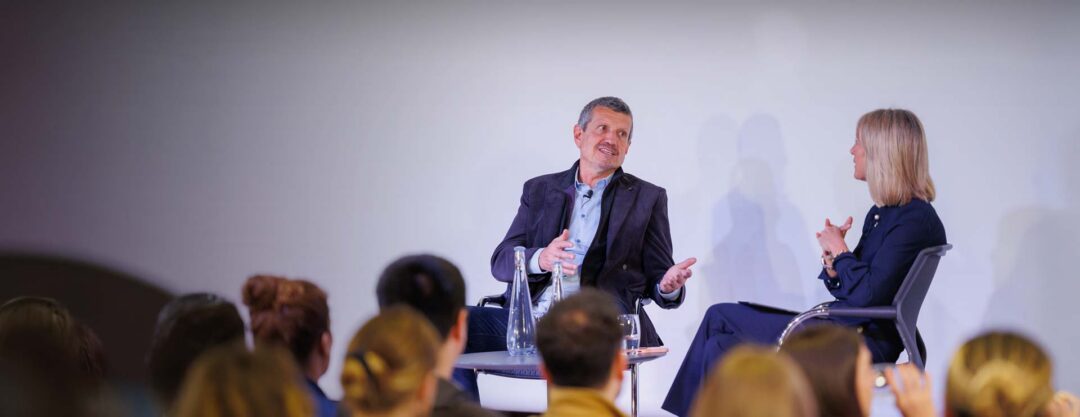
Last Thursday, behind the grand doors of One Moorgate Place in Central London, JLA Speakers had the pleasure of hosting another brilliant Speakers Breakfast, marking our second of the year.
Each breakfast presents a unique opportunity for our clients to connect face-to-face with our JLA account managers over breakfast, and catch some of our best and brightest conference speakers and presenters in action. This event was no exception.
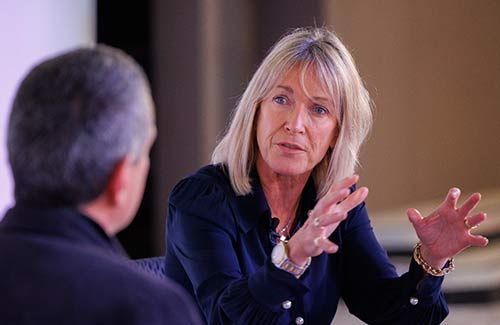
Nevertheless, it’s not every day a corporate event is populated by attendees in motorsports jackets and F1 merchandise. The reason for this is we had the huge honour of welcoming Guenther Steiner to the stage, former Team Principal of the Haas F1 Team, loved worldwide for his appearances on Drive to Survive. Guenther was joined in the conversation by British sports presenter Jill Douglas, the first female presenter of the Rugby Special.
Delivering a powerful introduction to the Breakfast, Jill reflected on teamwork as a key facilitator of performance across her career, from the context of working in a male-dominated environment, to leading the small but powerful team behind the My Name’5 Doddie foundation.
In conversation with Jill, the audience was then given a tantalising glimpse behind the scenes of Guenther’s career, exploring the challenges he met, crossroads he faced and lessons he now takes forward with him.
From the rich array of topics covered over the course of the session, including leadership, motivation and peak performance, here are our three top takeaways.
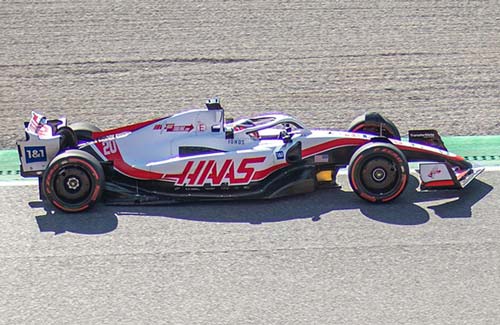
When asked about his choice to pursue a career in motorsport, Guenther’s reply was simple: he loves cars, and in his words, ‘got up and went to do what I wanted to do’.That being said, it was with surprise that Guenther learned a full-fledged career in motorsport was a possibility. For him, it was passion that allowed him to forge a path towards that goal, even when the way forward wasn’t always obvious; grounding career steps in genuine interest, first and foremost, is absolutely essential.
With an open attitude and his love for motorsport driving him forward, Guenther was able to translate even the challenges he faced into opportunities – instances of failure instead became chances to grow, improve, and take a next step.
Even in times of uncertainty, staying connected to what has sparked our interest in the first place can help us continue down the track towards high performance and success.
Whilst individual interest in an area of work is naturally crucial to career success, ‘team spirit’ is what truly seals the deal, in Guenther’s eyes.
Through the conversation with Jill, he revealed one of his key tactics for building finely-tuned teams: in interviews, regardless of the individual calibre each candidate had displayed, he would set aside a short one-to-one session solely focused on reviewing how well that individual might fit into the group they’d be joining.
In his experience, if you have the brightest person you can find but they don’t fit into a team, it only ends up a “waste”- both for the individual, and for the team as a whole.
Once a team has been pulled together, keeping unity front and centre is integral to reaching the peak of success. Ensuring your team members invest in the same principles, and in each other, is central to driving hard work and results.
Further into the session, Guenther considered the obstacles faced by F1 when COVID struck. As a sport so inherently defined by in-person interaction, and loved worldwide for the relationships forged and tested on the track, how was his team able to bounce back?
In 2020, it was only natural that performance in 2021 would be low, considering the curveball the industry had been thrown. However, by focusing the Haas team on targets for 2022, Guenther encouraged the group to cast their vision beyond a period of necessary recovery and towards a more realistic realm of success.
To Guenther, the same is true for the industry as a whole. No matter how strong F1 team rivalries rage in the arena, it was only through their collaboration and shared vision that the industry pulled itself together and became one of the quickest fields to spring back into action.
How can leaders go about making high-stakes decisions in conditions of uncertainty?
From Guenther and Jill’s perspective, the worst thing to do is nothing at all.
It’s a natural instinct to freeze up in the face of a precarious situation; however, as emphasised by both speakers, opting to steer clear of any choice gives us nothing to build on, even if the outcome ends up being negative.
If you make the right choice, you win. If you make a mistake, you learn from it. Even in the second scenario, there’s no need to be afraid of admitting to making a wrong decision, and moving swiftly on to the next.
All it takes to avoid the worst outcome of all, inertia, is to take that first step into the dark.
If you missed us at this Speaker Breakfast, you can watch more highlights below. To enquire about Guenther or Jill speaking at your own event, please contact us today.
We look forward to welcoming you at our next event!

News of cyber attacks on major UK retailers reminds us that every business needs to be alert to the constantly evolving digital threat. State actors, online groups and individuals are continually seeking (and finding) new ways to infiltrate systems, and no matter how sophisticated your security, there will always be a weakness that can be exploited.
To understand the nature of the threat, the potential implications, and how to better protect yourself as an organisation and as individuals, these leading conference speakers on the subject of security and cybersecurity can provide solutions, ideas and warnings.
Sarah works at the very foundations of cybersecurity and the complex interplay of changing technologies, processes and structures. Before her role at the tech giant Sarah was Group Head of Resilience and Crisis Management at the London Stock Exchange Group, and is the author of Effective Crisis Management and Understand the Cyber Attacker Mindset.
The former Chief of MI6 led the organisation through a period of significant geopolitical and technological change. He modernised the Service’s culture as well as its methods as cyber attacks, hybrid warfare and disinformation campaigns became a leading threat to national and commercial interests.
As Chief Technology & Information Officer of the world’s biggest shipping company AP Moller-Maersk, Adam oversaw a vast, complex system that monitors millions of tonnes of cargo, on thousands of ships, every minute of the day, across the world. When the company was hit by one of the most serious malicious cyberattacks ever, offices were disconnected, networks failed and computers went blank. Adam explores the people, processes and decisions that kept the business operating in exceptional circumstances.
Many look at the weakness in the technology underpinning organisations, but it is almost always a human that is the first point of contact in any attack. People are invariably the ones that open the door (literally and figuratively) to those seeking an initial entry point to a system. Our habits, psychology and social conditioning make use easy pray for those seeking to manipulate, convince and misdirect. Security expert Jenny explores the surprising, even shocking ways we can all reveal passwords, click links and ignore warning signs.
Gordon has spent his career investigating, analysing and recounting stories of intelligence, national security, espionage, cybersecurity and risk. The author of Intercept: The Secret History of Computers and Spies combines engaging cautionary tales with insights into how technology has always, and continues to dictate national priorities, relationships and security.
Former hacker turned digital security expert and researcher Keren has led cybersecurity work in the private and public sectors. She explores the role hacking has played in the evolution of the digital world, and how hackers bring a unique perspective to security, privacy and data as they expose flaws, abuse and misinformation within systems.
For more insight into what the above speakers can bring to your organisation, please do not hesitate to get in touch with us!
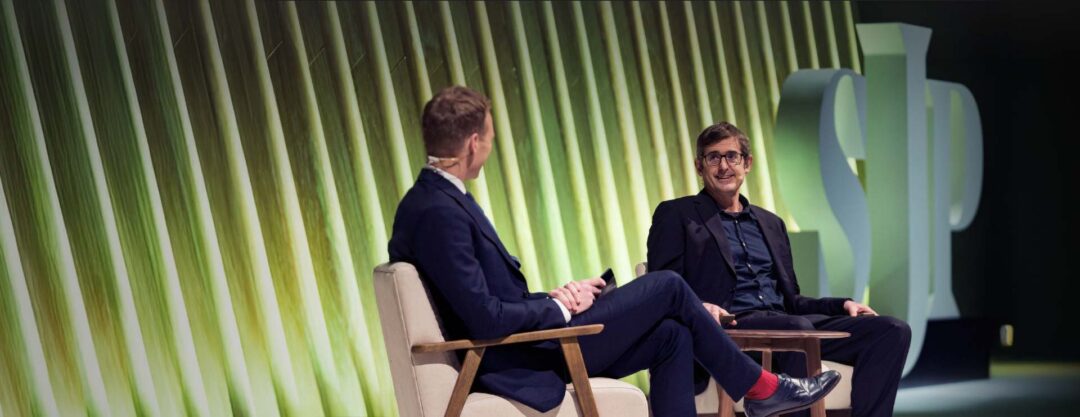
The world of events is constantly evolving, and so are the types of session that our conference speakers are being asked to deliver. We asked the JLA team to break down the latest trends in session format that we’re seeing across our diverse client base, ranging from new approaches to returning favourites.

Over the past few months, JLA has seen a significant increase in requests for workshop-style engagements. Lasting anywhere from a couple of hours, half a day, or even a series of repeat events across a few months, workshops give our clients the opportunity to not only hear our speakers’ valuable insights, but to action them, and start making concrete organisational change. In turn, many speakers are beginning to offer more consultative, tailored and bespoke services, focused on providing an interactive experience and tangible takeaways.
Following on from the focus on tailored content, JLA have observed a spike in events with much smaller audience numbers, allowing speakers to tune their sessions to the individual needs of specific groups and teams. Giving our talent the chance to ‘get to know’ attendees allows for direct interaction and collaboration, unlocking the potential for back-and-forth conversation and reaching levels of depth that prove difficult on larger scales.
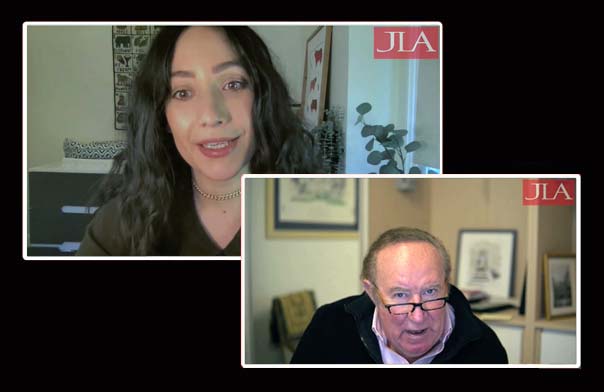
The days of COVID may be largely behind us, but virtual events are here to stay. Online sessions are a great way to connect audiences on a much larger scale, particularly useful for larger organisations looking to unite teams spread across the globe through a singular experience. They also broaden the scope for speaker participation, allowing further-flung speakers or those with busier schedules to dial-in to an event without needing to hop on a plane.
There’s no beating the classics. JLA are continuing to see steady interest in 1 hour keynotes, typically consisting of 30-45 minutes of speaking and followed by questions. Keynotes set the tone of an event – whether framing a day at its outset, or solidifying key takeaways as it draws to a close, a great speech can concentrate and amplify the core themes and ideas you want your audience to take away.
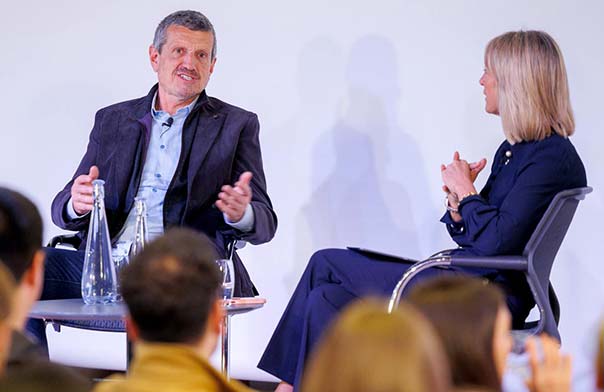
Last, but by no means least, the fireside chat has maintained steady popularity across JLA’s client base, and for good reason. Replicating the off-the-cuff nature of podcasts, this format brings us right back to the theme of tailored content we began with; whether it’s your CEO in conversation with one of our talent, or two speakers united to reflect on a matter of shared relevance and interest, each combination promises to bring about a discussion entirely unique to your event alone.
If you’re interested in exploring a different approach for your event, do reach out and someone from the JLA team will be happy to chat through some options in more depth.

Like it or loathe it, AI is sweeping multiple sectors and influencing how many people and companies approach work. While artificial intelligence has been around long enough for some people to have grasped or integrated it into their operations, many are still in the dark about its capabilities and the opportunities to be gained from using AI professionally.
JLA offers a fantastic roster of AI speakers adept at illuminating your conference with the knowledge and skill sets to use artificial intelligence to your advantage and that of your business.
With so many conference speakers to choose from, we’ve simplified things by breaking down 10 top AI speakers in no particular order, allowing you to ascertain the right fit for your event’s needs efficiently.
%20Paul%20Wilkinson%202023.jpg)
Professor of Computer Science, University of Oxford

Emerging Technologies, Innovation and Business

Technologist & Researcher
.jpg)
Author, Solve for Happy

Generative AI and Deepfake Expert
Mathematician & STEM Advocate
The Future of the Professions
Chief AI Officer, WPP and AI Academic
Michael Woolridge is a professor of computer science at Oxford University, the Ashall professor of the Foundations of Artificial Intelligence, and the Director of Foundational AI Research at The Alan Turing Institute.
His impressive background, wealth of knowledge, and experience as an AI researcher for over 30 years make Michael a leading authority on artificial intelligence and technology, even finding the time to author two books, The Ladybird Expert Guide to AI and The Road to Conscious Machines.
Michael’s conference talks can cover all aspects of AI, from introductory elements for newcomers and businesses exploring the introduction of AI to their processes to more advanced topics and theories for companies with experience in the sector.
Rahaf Harfoush has an impressive résumé, authoring best-selling books, working for the World Economic Forum, and lecturing at the Sciences Po University in Paris.
She is a digital anthropologist, academic, and consultant who explores digital transformation, how artificial intelligence impacts innovation and culture, and the impact of data and digitalisation on the relationship between organisations, employees, and society as a whole.
In her work as a conference speaker, Rahaf dissects tech trends and research into digestible takeaways, sharing her wealth of experience and valuable insights on technology and innovation so that companies can make meaningful, long-lasting changes to organisational processes and company culture.
Dr Stephanie Hare is an acclaimed researcher, broadcaster, and author focusing on AI and technology, business, and political risk. Her impressive career has spanned everything from tech company strategy to foreign policy research, arming her with a formidable arsenal of tools and insights that can leave audiences with valuable insights and a lasting impression.
No stranger to speaking to the masses, Stephanie regularly contributes and comments for The Financial Times, BBC World News, and Radio 4, among others. In her talks, Stephanie explores everything from AI in HR to consensus in policy-making and spending on cybersecurity and accountability.
She is adept at arming organisations with the knowledge to create and use tools and technologies in company processes and culture. She shares how emerging tech and AI can be positively transformative – and the risks and hazards you should avoid.
Mo Gawdat has led some of the world’s most innovative tech projects as Chief Business Officer for Google X, the acclaimed R&D division of the world’s most recognised and widely used search engine. Alongside his impressive CV, Mo has still found the time to write an international best-selling book, Solve for Happy: Engineer Your Path to Joy, which he followed up with Scary Smart and Unstressable.
It was during his time as CBO for Google X that Mo would explore and achieve some monumental leaps of innovation, from artificial intelligence and projects on autonomous vehicles to sustainable energy and providing remote locations with WiFi.
Mo now turns his experience and skills into other pursuits, which include his fascinating conference talks where attendees can hear from a true tech pioneer.
Henry Adjer is at the forefront of the AI revolution, having notably presented the hit BBC documentary series, ‘The Future Will be Synthesised’. Henry is also an industry expert on generative AI and deepfakes, an AI expert for CNN, Bloomberg, and The New York Times, and enjoys various advisory roles, including sitting on Meta’s Reality Labs Advisory Council, an Advisor to The Content Authenticity Initiative led by Adobe, and a Strategic Advisor to The Partnership on AI.
This wealth of experience leaves Henry perfectly placed to share his knowledge with conference attendees on the challenges and opportunities that these new technologies present.
Anne-Marie Imafidon enjoyed an impressive academic career, becoming one of the prestigious Oxford University’s youngest-ever master’s graduates. From here, Anne-Marie worked in banking and technology before founding Stemettes. This pioneering social enterprise has helped thousands of women pursue studies and careers in tech, science, engineering and mathematics.
Despite all this impressive work, Anne-Marie is no stranger to talking and commentating on the accessibility and opportunities presented by technology, having regularly worked with the likes of BBC and 20th Century Fox to feature more tech role models on-screen.
Her insightful and entertaining conference talks highlight the importance of diversity and inclusion in the tech sector, plus how artificial intelligence will impact workspaces and workforces in the near future.
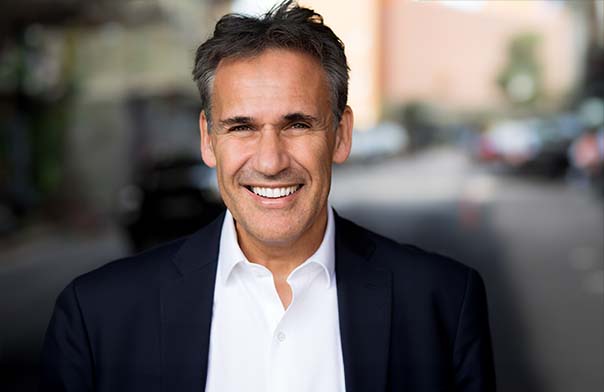
Richard Susskind is a best-selling author of 11 books, including The Future of the Professions and How To Think About AI: A Guide for the Perplexed, and an expert advisor to international firms and national governments.
With over 40 years of experience writing and commentating on AI since the 1980s, Richard is adept at passionately and intelligently conveying both the threats and opportunities of artificial intelligence to his audience, outlining how AI is a challenging obstacle for businesses and governments in the modern era.
Richard has recently expanded his focus to the impact of AI on the economy and society as a whole, meaning that his conference talks are informative and accessible to many sectors.
Dr Daniel Hulme is a leading expert in artificial intelligence and emerging technology, with extensive experience in academia and public and private sectors. His insightful talks break down how AI can be applied professionally, as well as its uses socially, economically, and commercially, as well as all the ethical implications and obstacles that come with it.
Daniel is the CEO of award-winning company Satalia, which provides AI products, services and solutions for global companies and governments, and the founder and CEO of Conscium, the first commercial research organisation in the world looking to understand machine learning and consciousness.
Daniel’s talks explore precisely what artificial intelligence is, what it can achieve and help businesses succeed, and how organisations can alter their structure to accommodate AI.
While our website features an extensive roster of industry-leading AI speakers, our account managers can also arrange conference talks by renowned and respected figures from around the world in the field of artificial intelligence.
Geoffrey Hinton is considered “The Godfather of AI”. He is a celebrated computer scientist, and cognitive psychologist who revolutionised the field of AI through his work on neural network models. Geoffrey also won the Nobel Prize for Physics in 2024, and his outstanding work in the sector makes him a leading authority on the capabilities and drawbacks of artificial intelligence.
For more information on Geoffrey, please contact us.
Fei-Fei is the co-director of Stanford University Institute for Human-Centered AI, co-founder/CEO of World Labs, and a leading authority on AI, machine learning, deep learning, robotic learning, and ambient intelligence. Her impressive background and natural knack for delivering exceptional, insightful keynotes make her a formidable asset to any AI and Tech-related conference or event.
For more information on Fei-Fei, please contact us.
Whether you’re looking for an experienced AI expert to explore the complicated ethics, unintended consequences and incredible applications of artificial intelligence or seeking fresh ideas on how to implement new technology into your organisation, JLA’s dedicated team can match you with the ideal speaker and handle every detail, ensuring a seamless, stress-free experience.
Contact us today and start your journey of educating and preparing for a future where artificial intelligence can integrate into and improve your business.

Digital organisational culture quietly shapes how we work, yet surprisingly, it’s often overlooked. When the world swiftly moved to remote work, we lost the subtle but powerful signals that guided office interactions – body language, casual chats, and quick exchanges at the coffee machine. Without these implicit cues, organisations found themselves needing to explicitly redefine their cultures through digital channels.

Tools like Slack, Microsoft Teams, and Zoom quickly became lifelines for maintaining connectivity. But despite their benefits, these platforms often strip conversations of essential context. Messages that once carried warmth, humor, or encouragement could suddenly feel cold or ambiguous when confined to text or video screens. Misinterpretations became common, trust was harder to build, and suddenly it was clear: organisational culture couldn’t be left to chance. It had to be intentionally cultivated.
Interestingly, digital tools themselves deeply influence behavior through their default settings, often shaping culture in unintended ways. Take Slack, for instance: its default status indicator subtly nudges employees toward constant availability, creating expectations of immediate responses and blurring the line between professional and personal time. Similarly, email notifications default to interruptive pop-ups, inadvertently promoting a fragmented workday rather than periods of focused, deep work.
Video conferencing platforms offer another compelling example. The default to video-on meetings, intended to replicate face-to-face interactions, has inadvertently created new pressures – employees often feel compelled to visibly demonstrate constant engagement, leading to exhaustion and anxiety rather than connection. It’s a reminder that the technology we use isn’t neutral; it profoundly shapes workplace dynamics.
This conversation around digital culture was recently amplified by JP Morgan Chase CEO Jamie Dimon, who criticised remote work for negatively impacting productivity and performance. Yet studies consistently show remote work boosts productivity when properly supported. Dimon’s concerns actually highlight a critical misunderstanding – it’s not remote work or technology that’s problematic, but rather a lack of intentional investment in digital organizational culture. When digital culture is explicitly cultivated, remote work can become not just viable, but highly effective.
As we continue navigating this digital shift, organisations must proactively shape their digital cultures. Clear guidelines around digital communication, response times, virtual meeting etiquette, and inclusive interactions become essential. By explicitly defining cultural norms rather than assuming implicit understanding, organisations can foster environments that are not just productive, but also psychologically safe and inclusive.
Ultimately, technology has transformed organisational culture from something quietly understood into something that must be deliberately articulated. Embracing this change isn’t just beneficial – it’s essential for creating workplaces that thrive in our digital-first era.
Conference speaker and bestselling author Rahaf Harfoush offers insights at the crossroads of innovation, culture, and digital transformation. A lecturer at Paris’ Sciences Po and a former advisor to the World Economic Forum, she explores how data is reshaping the relationship between organisations and employees, uncovering disruptive business models, and examining the profound impact of digitisation on society.
For more of her work, visit her blog here.
To enquire about Rahaf speaking at you next conference of business event or to get advice tailored to your specific event needs, don’t hesitate to get in touch with us!
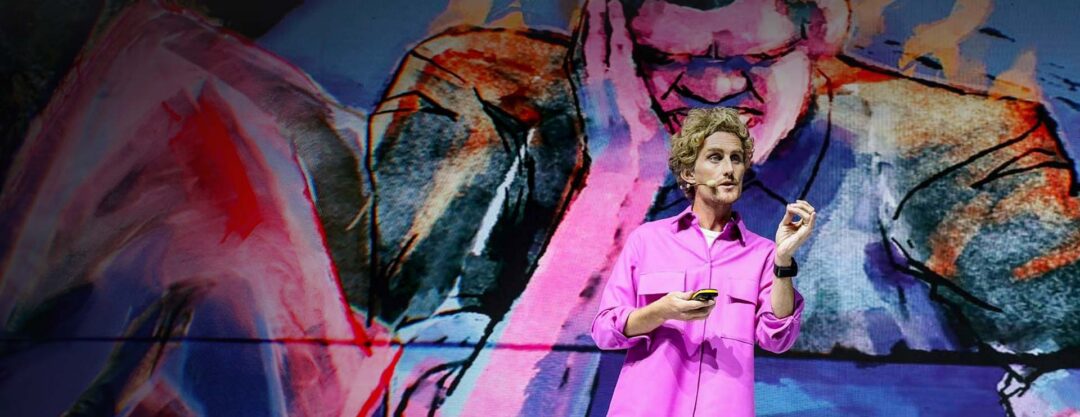
There is a tension at the heart of every brief I get as a keynote speaker. Each company has an ambitious growth agenda to succeed in tough market conditions and they need their people to level up their performance to deliver.
The problem is that their staff are often overwhelmed by change fatigue, and are breathless from reaching the last financial milestone. The most recent Gallup State of the Global Workforce Report has revealed that 80% of the workforce are somewhat, often or always burnt out. This means a majority of employees are less capable of going the extra mile. How do we square that circle?
A keynote speaker can give that added burst of motivation and insight to continue the climb but it will falter if it’s founded on an outdated model of performance.
For the past 5 years, in collaboration with industry leaders like PwC, Deloitte, EY, and KPMG, I’ve been refining a new model of Sustainable High Performance. It’s a fundamental shift from endurance to resilience, driving higher levels of productivity and deeper levels of well-being.
Keynote from the Salon Owners Summit

Every industry leader I work with has the same problem: excessive workload. This is a level of workload where you are consistently at the very edge or over of your capacity just to get through your day and week.
Addictive, social mobile technology is now the interface through which we face excessive workload, so we live in a boundaryless knowledge work environment. Our modern assembly line is the constant stream of tasks, requests and updates that come from email, MS teams, Slack, and WhatsApp.
There’s little we can do to stem the tide of excessive workload. If you’re on an ambitious growth trajectory, there will inevitably be a mountain of tasks to do, back to back meetings, and multiple deliverables to juggle.
When excessive workload is paired with addictive social mobile technology it gives rise to a subtle but all pervasive work culture built on the antiquated notion of Endurance.
This is where, faced with a digital avalanche of requests, we reactively push through, we plough on, we white knuckle it, even as we go beyond our capacity.
This is not just bad for our health, it gives rise to a screwed version of productivity that I call mowing the lawn. ‘If I get through my mountain of to dos, if I keep that grass nicely trimmed before it turns into a wild garden, I’ll quell my anxiety and feel confident I’m advancing my team’s work.’ We resort to a type of productivity that is about grinding out tasks, which has its merits, but when you think about the decisions or initiatives that have actually been game changers, they come from creating space to not just meet, but exceed expectations.
There is a naive hope that someday we’ll conquer our to do lists but as productivity thinkers from Oliver Burkeman to Cal Newport have vividly illustrated, you can never escape the never ending to do list. Each time you respond to an email you generate the potential for another reply! We cannot endure our way through a knowledge work environment that will deplete us by design. It’s a losing game.
The new model of sustainable high performance is built on resilience. Resilience says: ‘I notice I’m going beyond my capacity, I need to stop and rest, I need a smarter system to better manage my workflow and execute on my priorities; I need to be mindful when I feel the addictive compulsion to keep on working even when I’m not being optimally effective; and in my downtime, I need do the right practices that can keep my physical and mental buffer strong so I can take on greater pressure.’
To operationalise this we need to approach our working days, weeks, months, and indeed lives, as a deliberate cadence of peak exertion and renewal, peak exertion and renewal, peak exertion and renewal. We go beyond boom and bust cycles of legacy corporate endurance culture.
Paradoxically, optimal performance knows its limits, it pulls back from the danger zone. Think about a body builder that bench presses until they feel the burn. That’s their muscle fibres tearing so they regrow bigger. If they are in endurance mode and keep pushing, they don’t get to come back to the gym in three days, they have to sit it out for two weeks.
Sustainable High Performance is generally about staying inside the peak of your capacity, and then learning how to put into practice resilience protocols that expand your capacity over time so you can take on greater challenges.
Nick Petrie, a leading qualitative researcher on burnout, reveals that high performers with a low risk of burnout have intentionally shifted their work patterns to oscillate between pairs of polar opposites. This structured movement creates a dynamic work environment where intensity is balanced with rest, and focus is interspersed with broader collaboration.
The approach can be broken down into several key contrasts:
What makes this approach so effective is its intentionality.
These high performers aren’t in a constant state of hyper-focus or continuous multitasking. Instead, they bounce between these polar states, crafting a workday that helps them perform at their best and stay energised. This isn’t an accidental habit—it’s a well-practiced method that has been deliberately integrated into their daily routines.
For anyone looking to elevate their work performance while also safeguarding against burnout, the strategy is clear: embrace the power of oscillation.
Resilience Expert
Ronan Harrington is a conference speaker that advises industry leaders like Deloitte, PwC, EY, and KPMG on how to create high performance teams. His keynotes introduce a resilience-based approach to peak performance without compromising wellbeing, drawing on his experience as a Lead Futurist for the British Foreign Office. Having faced severe burnout and chronic illness, he highlights the need for organisations to tackle burnout as a public health issue rather than a personal failing.
To enquire about Ronan speaking at your next event or to get advice tailored to your specific event needs, don’t hesitate to get in touch with us!
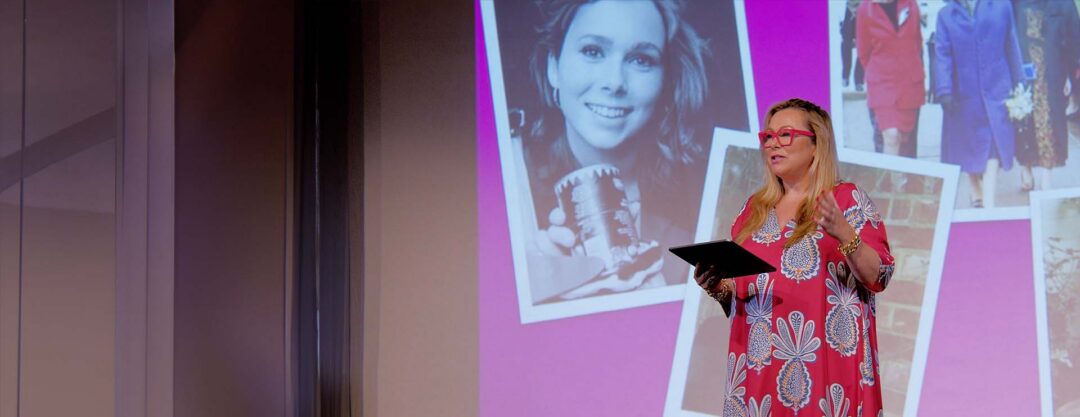
The speaking world is filled with outstanding experts who have carved out their fortunes and successes in all corners of business and industry. From leaders of multinational banks to sporting directors and everything in between, JLA grants you access to an enormous roster of business speakers who will invest their time and energy into your event.
In doing so, these transformative business leaders will share invaluable insights on vision and innovation, inspiring and motivating your attendees to take these lessons into their personal and professional lives.
Without further ado, (in no particular order) here is our pick for 2025.
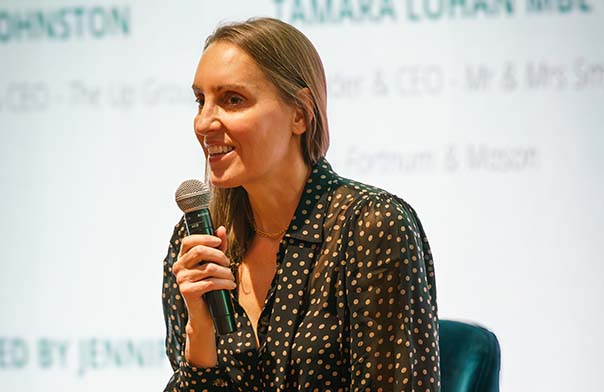
Founder & Chair, Mr & Mrs Smith

Social Enterprise Entrepreneur, The Apprentice winner
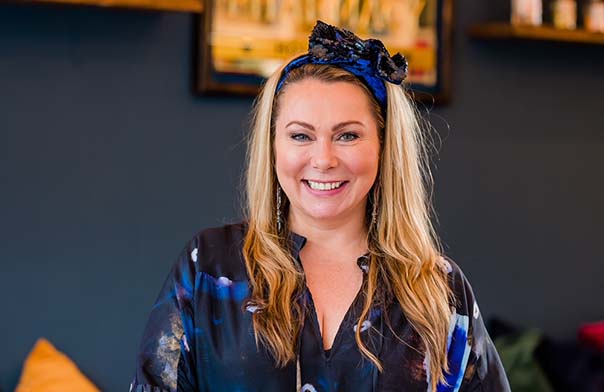
Co-founder, notonthehighstreet.com
Fragrance Designer

Former CEO, Lloyd’s of London

Author and Future Of Work Thought Leader

Former Vice Chair, West Ham & Small Business Ambassador
Former CEO of The Body Shop and Pandora

Business Author & Former CEO
Tamara Lohan is an example of how setbacks and initial failures in the business world are simply just lessons learnt on the way to success. After being rejected by publishers regarding her idea for a new hotel guide, Tamara and her husband took it upon themselves to create their vision themselves.
Fast-forward: Tamara has sold over 100,000 copies of her guide and set up the company Mr & Mrs Smith. The company was later sold to hotel giants Hyatt for £55m, with Tamara staying on as CEO.
An expert in online business and marketing, Tamara’s business speaking centres around strategy. She shares her invaluable knowledge and experience of the ups and downs of business, the challenges and failures she has faced, the importance of putting the customer first, and the successes of her entrepreneurial journey.
Tim Campbell is recognised for his outstanding work supporting the unemployed and disadvantaged, helping them to educate themselves and enter the business world through apprenticeships.
It’s perhaps no surprise that these endeavours earned him a place on BBC’s hit series, The Apprentice, where Tim appears as Lord Alan Sugar’s right-hand man alongside fellow business speaker, Barroness Karren Brady. In fact, Tim was a product of the show himself, winning the series in 2005.
Following the show, he remained with Lord Sugar, helping to run Amstrad’s first foray into the lucrative health and beauty market. He then worked alongside the Mayor of London to promote the positive impact of apprenticeships. From here, Tim founded the Bright Ideas Trust, where his entrepreneurial spirit and championing of diverse talent earned him an MBE. Tim’s business talks centre around the next generation of entrepreneurs, and finding and nurturing global talent.
Holly Tucker is a creative entrepreneur who has founded multiple successful businesses, including notonthehighstreet.com and Holly & Co. She is also the government’s UK ambassador to Creative Small Businesses, a new company that helps startups succeed.
With her creative mindset and knack for spotting new products and opportunities that will succeed, Holly is a breath of fresh air to the classic entrepreneurial mould. She has injected over one billion pounds into the UK economy, helping countless small businesses along the way. Alongside her busy working achievements, Holly also presents an iTunes top-ten podcast in Conversations of Inspiration alongside an annual Congregation of Inspiration event and has a best-selling book, titled Do What You Love, Love What You Do.
Thanks to her market-leading range of cosmetics and fragrances, Jo Malone is a household name to many. From humble beginnings in her kitchen, she grew into a global luxury brand before selling her stake in the business to Estée Lauder. It’s precisely this drive, determination, and business know-how that make Jo a fantastic business speaker.Jo’s presentations and talks explore business nuances, using her extensive experience to cover everything from failures to successes. She offers her take on what it takes to grow a successful business and explains the importance of encouraging your team to take risks and push themselves to reach new heights.
In addition to her passionate conference speaking, she now focuses on the Jo Loves brand and regularly appears in the media.
Inga Beale has worked in some of the most prestigious senior global leadership roles for the world’s largest companies, including City Financial, Converium, Zurich Insurance, and Lloyd’s.
A culture of innovation, inclusion and modernisation has followed Inga wherever she has worked, as she regularly challenges old ways of thinking, particularly within the financial sector, where she expanded the reach of Lloyd’s to the Asian and Middle Eastern market as their first female CEO.
This impressive experience makes Dame Beale one of the most captivating and knowledgeable diversity and inclusion speakers available. She fuses her passion for this field with business speaking to create an evening that inspires and motivates any workforce to break glass ceilings, push boundaries, and advocate for a culture of change and progression.
Bruce Daisley is among the most prominent tech leaders, particularly in social media, having led Twitter’s business efforts across Europe, Asia, and the Middle East as Vice President, working alongside some of the world’s largest and most celebrated companies along the way.
These days, Bruce studies what makes a company successful and what motivates people to succeed in their jobs. The author of The Joy of Work: 30 Ways to Fix Your Work Culture and Fall in Love with Your Job Again and the host of the Sleep Work Repeat podcast, he is recognised in the business world as one of the most influential and respected thought leaders on workplace culture and workplace challenges.
Karren Brady will be no stranger to fans of the BBC’s hugely successful The Apprentice, where she has starred alongside Lord Alan Sugar for 15 years.
Of course, this role only came about thanks to her incredible business acumen. As Managing Director of Birmingham City FC, she ran the club’s business side before taking over as Vice Chairman of West Ham United. Under her leadership, West Ham made a profit for the first time in its recent history and was recognised as the 14th most valuable football club in the world, valued at £ 1 billion following a 300% income growth.
Karren is known for her resilience and focus in the face of adversities, making her role as a business speaker invaluable to companies looking to grow and inspire their workforce.
Kevin Gaskell is a man of insurmountable drive and numerous achievements. He headed UK operations as CEO for BMW, Lamborghini, and Porsche before launching his own software business, leading a Fintech operation, and founding the UK’s fastest-growing alternative fibre network provider.
If you thought that wasn’t enough to keep him busy, Kevin has also walked both poles, climbed the world’s highest peaks, and set a world record as part of the fastest five-man team to row the 3,000-mile journey across the Atlantic Ocean — all while authoring two best-selling books.
It’s fair to say that he knows a thing or two about achieving your goals and generating success, which is precisely what makes Kevin one of the most inspiring and entertaining business speakers in 2025.
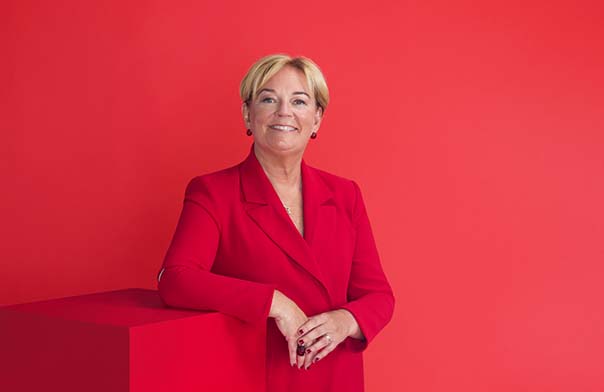
Jeremy Schwartz has served as CEO of numerous global brands and e-commerce-focused retailers. He has experienced transformative success with Coca-Cola, L’Oréal, Pandora, Sainsbury’s, and The Body Shop, turning around their fortunes and shaping them into UK market leaders.
Jeremy champions marketing and digital innovation, including AI, workplace culture, sustainability, and future trends. Outside of his professional endeavours, he uses his natural drive, determination, and resilience to equal effect. He is an accomplished mountaineer and the founding trustee of the Against Malaria Foundation, which has raised over $500 million in the fight against malaria.
Margaret boasts a wealth of experience running successful businesses across the United States, and has now turned this know-how to her advantage, informing her leading business speeches with an analytical approach.
Cambridge-educated Margaret is an expert in leadership, diversity, change, and crisis management. She uses her enigmatic style and industry-leading speaking skills to connect with the audience, sharing the importance of addressing problems within businesses, developing talent, encouraging internal competition, and fostering a strong company culture.
As well as being an acclaimed speaker with numerous TED Talks under her name, Margaret is a successful entrepreneur, acting chief executive, a Professor of Practice at the University of Bath, and best-selling business author through her book, Willful Blindness.
If you have any questions about any of our business speakers, please feel free to contact us. One of our expert account managers will be happy to help. For more topics, tips, and information, browse the JLA Ideas page.

As the Six Nations captivates rugby fans once again, it’s a perfect reminder of the resilience, strategy, and leadership required to compete at the highest level. The tournament isn’t just a showcase of athleticism—it’s a lesson in teamwork, adaptability, and performing under pressure. These very qualities make those who have played and worked at rugby’s elite level such compelling keynote speakers, offering audiences powerful insights drawn from their experiences on and off the pitch.
From leading teams to victory on the world stage to overcoming personal and professional challenges, these sporting speakers bring unique perspectives that resonate beyond sport. Whether inspiring business leaders, teams, or conference audiences, their stories of leadership, perseverance, and transformation leave a lasting impact.
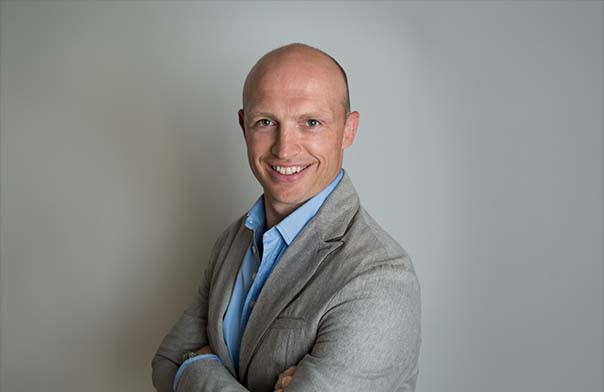
Matt Dawson played a key role in England’s 2003 World Cup-winning team and remains one of the country’s most capped players. He knows what it takes to perform under pressure, lead teams, and adapt to challenges. As a speaker and presenter, Matt brings energy, insight, and entertainment to every event, drawing from his experiences both on the pitch as a winner and as a familiar face on A Question of Sport and MasterChef.
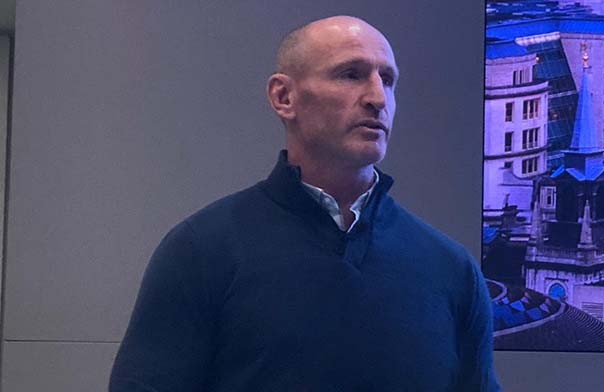
Sir Clive Woodward famously led England to victory in the 2003 Rugby World Cup and three Six Nations titles, including a Grand Slam. After rugby, he became Technical Director and Director of Football at Southampton, earning his UEFA coaching qualification before joining the British Olympic Association. There, he worked to integrate athletes and coaches across all sports into Team GB, contributing to Britain’s record-breaking success at London 2012. As a speaker, Clive shares powerful insights on leadership, teamwork, and high-performance cultures from the worlds of rugby, football, and the Olympics.
At 6’10”, Martin Bayfield was one of England’s most formidable forwards, earning 31 caps, two Grand Slams, and a place in the 1995 World Cup and British Lions tour. After injury ended his career, he found an unexpected path into Hollywood, playing Hagrid’s body double in the Harry Potter films. Now a respected sports presenter on BT Sport and ITV, he’s also fronted Crimewatch and The World’s Strongest Man. A natural host and speaker, Martin combines sharp humor with captivating stories from rugby, policing, and the big screen, delivering both insight and entertainment.
Maggie Alphonsi is one of the most recognized figures in women’s rugby, earning 74 caps for England, scoring 28 tries, and playing a key role in a World Cup win and seven consecutive Six Nations titles. Since retiring, she’s become a respected commentator and media personality, appearing on BBC Sport, Children in Need, and The One Show. An MBE recipient and the first woman to win the Rugby Union Writers’ Club Player of the Year, Maggie is a powerful speaker, sharing insights on overcoming adversity, performing under pressure, and thriving in male-dominated environments.
Gareth Thomas is one of rugby’s most respected figures, earning his place as Wales’ third most-capped player and captaining both a Grand Slam-winning team and the British & Irish Lions. After switching to Rugby League, he defied expectations with standout performances before injury ended his career. Off the field, Gareth has become a powerful advocate for inclusion and resilience, openly sharing his journey as the first openly gay professional rugby player and later revealing his HIV diagnosis. A passionate speaker, he inspires audiences with his story of overcoming adversity, championing diversity, and leading with authenticity.
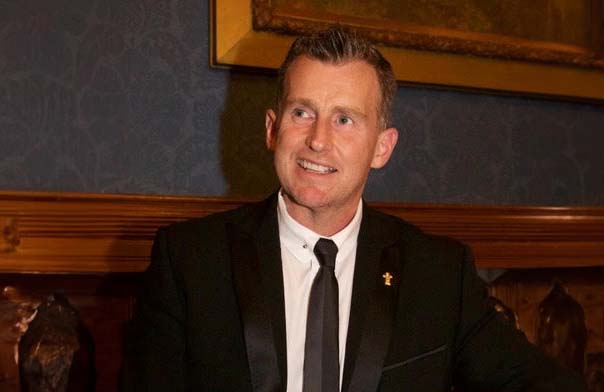
Nigel Owens has refereed the Rugby Union World Cup Final and is widely regarded as the finest official in the game. As the only openly gay official in a sport often perceived as intensely macho, his presence is groundbreaking. In his speeches, Nigel captivates audiences with powerful insights into the challenges he has faced, offering a compelling perspective on resilience, leadership, and the ability to make difficult decisions under pressure, often in the company of formidable characters.
For more insight into what any of the above speakers can bring to your next event or for other options on sporting and motivational speakers, please do not hesitate to get in touch with us!From leading teams to victory on the world stage to overcoming personal and professional challenges, these sporting speakers bring unique perspectives that resonate beyond sport. Whether inspiring business leaders, teams, or conference audiences, their stories of leadership, perseverance, and transformation leave a lasting impact.