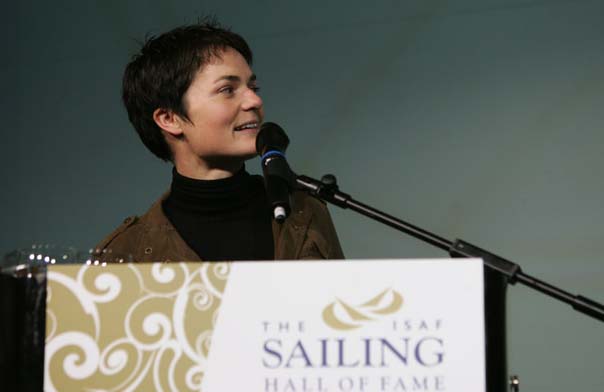
Ellen MacArthur
Round the World Yachtswoman
Last Breath Inspiration
Following a freak accident, commercial diver Chris survived for over 40 minutes on the bed of the North Sea, in complete darkness and freezing temperatures, and with only five minutes of breathing gas available. His remarkable survival story was recounted in the Netflix film Last Breath. Chris explores risk, resilience, leadership under pressure, crisis management and how preparation, trust and teamwork enable survival in extreme situations.
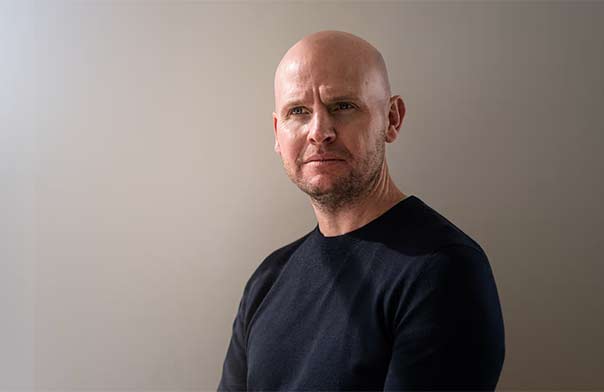
Chris Lemons is a commercial diver and IMCA Diving Supervisor who specialises in deep sea saturation diving, operating almost exclusively in the oil and gas industry. In September 2012, during a routine dive in the North Sea, a freak equipment failure severed his umbilical, which provides breathing gas, light and heat. He was left on the seabed, in complete darkness, 300 feet below the surface, with only five minutes of breathing gas in his emergency tanks and no protection from the freezing temperatures. It took his rescuers over 40 minutes to reach him, and his survival has baffled experts ever since. His extraordinary story was recounted in a documentary, Last Breath, and in the Netflix film also titled Last Breath, starring Woody Harrelson, Simu Liu and Finn Cole.
Chris explores what it feels like to confront death in complete isolation, and how experience, mindset and a courageous team working under intense pressure combined to bring him back alive. Drawing from the events of that day, he examines risk, resilience, leadership and decision-making under pressure, addressing how his team responded to the crisis and what contributed to his survival. He reflects on the value of preparation and trust in high-performance organisations, covering lessons in crisis management, safety processes and peak performance. His insights span the practical, human and psychological dimensions of extreme situations.
Chris has worked as a commercial diver for over 20 years, returning to the seas after his experience, and later working as a Diving Supervisor. His highly specialised form of diving involves living in the claustrophobic confines of a decompression chamber for up to 28 days at a time, commuting daily to the seabed in a diving bell, and working at depths of up to 900 feet for six hours at a time. He explores the relatively unknown world of saturation diving and recounts his miraculous survival story with humour and humility. He also reflects on how near-death experiences can alter someone’s perspective on what matters, as well as how teamwork, training, procedures and practice played a role in his recovery.
"Chris Lemons delivered an unforgettable keynote at our Vitality UK Sales Conference in Manchester. His story was not only gripping and deeply moving, but it also resonated powerfully with our audience—sparking reflection, inspiration, and a renewed sense of purpose. I had the privilege of facilitating the session and Q&A, and the feedback was overwhelmingly positive. Delegates described Chris as 'authentic', 'humble', and 'truly extraordinary'. His ability to connect through vulnerability and resilience left a lasting impact on everyone in the room. A world-class speaker and a genuinely remarkable human being."
"*" indicates required fields