

Since serving in the White House, Pippa has founded an advisory firm, co-founded a robotics company, and written bestsellers on the world economy and leadership. She's advised the UK Department of International Trade and the MoD, as well as investors, policy makers and startups. She identifies actionable trends by weaving together geopolitics, technology, policy and economics. Pippa describes herself as an unusually optimistic economist.
View / Submit“Pippa went down a storm - a roaring success.”
Standard Life Investments
Dr. Pippa Malmgren is an economist who makes sense of the world economy by writing books, founding tech businesses, advising policymakers around the world, and through public speaking and teaching. She lectures at Sandhurst and in the Duke Fuqua Global Executive MBA Program, and is a Senior Advisor to The Monaco Foundry, a European start-up incubator for impact-led founders.
Pippa is a member of the Advisory Board at Streamline Media, the firm that built many of the most successful video, digital and VR games in modern history. She has been named a Fellow of The Bertelsmann Stiftung Foundation and is also a Founder member of the Lunar University, a NASA-originated project to ensure the first human institution on the moon represents the arts and humanities. She writes a column about the world economy on Substack and is pursuing the MIT New Space Economy Program: Technologies, Products, Services, and Business Models.
Pippa served President George W. Bush in the White House as Special Assistant to the President and on The National Economic Council. She served on the President’s Working Group on Corporate Governance and The President’s Working Group on Financial Markets. After 9/11 Pippa was responsible for assessing Terrorism Risks to the Economy and technology as a source of geopolitical competitiveness.
Before joining the White House, Pippa ran the Bankers Trust Asset Management business in Asia and was then appointed as the Global Chief Currency Strategist. She was then named the Deputy Head of Global Strategy at UBS. She also advised the British Cabinet on trade issues as a Board Member for The Department for International Trade.
Pippa is on the Board of Premios Verdes which holds the “Green Oscars” to support cleantech start-ups in emerging market. She also serves as a judge on The Queen’s Enterprise Business Awards and is a Senior Associate Fellow of RUSI, the world’s leading defence think tank. She has also been involved in the Planning Committee of the BSA Huxley Summit, and co-founded a robotics firm that made industrial drones which won the Cog X Award for Autonomy, the National Technology Award and Power Product of the Year.
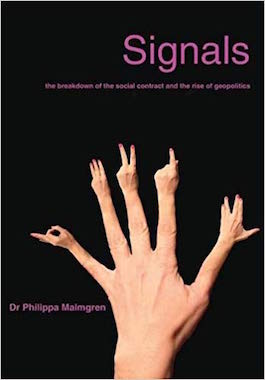
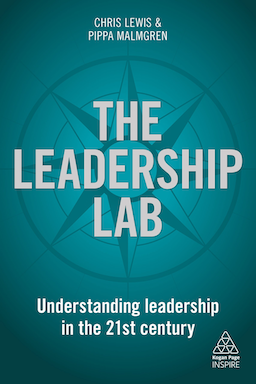
Her bestselling book, The Infinite Leader, won the International Press Award for the Best Book on Leadership. The Leadership Lab was named Business Book of the Year and Best Book on Leadership and won the International Press Award and the NYC Library Big Apple Award. She is also the author of Geopolitics for Investors and Signals: How Everyday Signs Help Us Navigate the World’s Turbulent Economy, a crowd-funded Amazon bestseller.
Pippa was named one of the Fifty Top Inspiring Women in the UK and one of the Top 100 in Tech by @WATC_WeAreTech and longlisted by three times by Computer Weekly as a Most Influential Women in Tech. She has a BA from Mount Vernon College and an M.Sc. and PhD from LSE and completed the Harvard Program on National Security.
© Copyright 2024 JLA. All rights reserved.
In uncertain times Pippa provides real nuggets of wisdom about the global economy. It's fascinating to listen to someone who talks with such fluency about the factors that are having an impact on just about everything we buy and sell. You walk away feeling much better informed and a little bit smug about the inside knowledge you've gleaned.
JLA Agent Brogan West


.jpg)