Motivational Speakers | After Dinner Speakers | Keynote Speakers | JLA Speaker Bureau - JLA

JLA is the UK's biggest specialist agency for keynote, motivational speakers and after dinner speakers, conference presenters, awards hosts and cabaret for corporate, industry and public sector events.

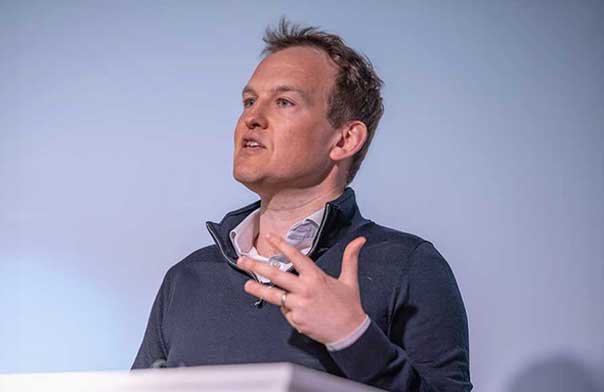
Photo of Philippe Legrain

BIOGRAPHY

Philippe Legrain is a journalist and author, specialising in the fields of globalisation, Europe and migration. He is Visiting Fellow at the European Institute of the London School of Economics. His book Immigrants: Your Country Needs Them was nominated for the Financial Times Goldman Sachs Business Book of the Year Award.

Philippe's career started at The Economist, from where he moved to the World Trade Organisation, where he was special adviser to the Director General. After a spell at the World Economic Forum, he became chief economist and then Director of Policy at Britain in Europe.

As a freelance economics journalist, Philippe has contributed to the Financial Times, The Wall Street Journal Europe, The Times, New Statesman, The Ecologist, as well as The New Republic, Foreign Policy, The Chronicle Review and he is contributing editor to Prospect. He has made regular appearances on BBC television and radio, speaking on immigration issues.

Philippe speaks about the economy, globalisation and immigration. He argues that globalisation provides the opportunity for everyone, rich and poor, to better their lives. In his book Open World: The Truth about Globalisation, he challenges conventional wisdom that governments' ability to tax, spend and regulate is under threat from global competition. Philippe believes that globalisation is the only way to give governments the means to combat poverty. On the subject of immigration, he argues the economic and business case for free flows of people. Apart from filling skills shortages, diversity feeds creativity, which is a significant driver of growth.

Print print icon

© Copyright JLA: All Rights Reserved

TOPICS

Diversity

SPEECH TITLES

The economics of migration
Globalisation

FEE BANDS

CONFERENCE SPEAKERS

Fee band C £2.5K TO £5K

YOU MAY ALSO BE INTERESTED IN...

Photo - Dr Irwin Stelzer (US)

Dr Irwin Stelzer (US)

Sunday Times US Economic Columnist

Fee band a Synopsis
Photo - Jonathan Story (France)

Jonathan Story (France)

Professor of Political Economy

Fee band a Synopsis
Photo - Leo Johnson

Leo Johnson

Co-founder, Sustainable Finance

Fee band b Synopsis
Photo - Professor Joseph Stiglitz (US)

Professor Joseph Stiglitz (US)

Nobel Prize-winning Economist

Fee band aa Synopsis
Photo - Professor Noreena Hertz

Professor Noreena Hertz

Prof. Globalisation, Sustainability and Finance

Fee band b Synopsis

If you can't find who you're looking for ... click here

ON GLOBALISATION

China is the world's fastest growing economy, accounting for more recent growth than any other. The opportunities and challenges here are massive. China has a lot of government intervention and questionable legal interference. Companies risk unwittingly employing sub-contractors who employ poor labour standards or use substandard materials.

Basing all your investment in China alone can be unwise as prices of land and property increase. Neighbouring countries will gain from China's growth as businesses realise they can base operations there.

Companies must face how to operate in a country with little respect for human rights, where labour standards are often poor, and pollution is relatively unchecked. Consumers care and NGOs campaign to highlight these things.

China is so powerful and rich now that even all the Western governments together couldn't change them overnight. However, companies can ensure their supply chains are insulated against the risks of operating in China. Simply, keep your own house in order and control your own practices.

The alternative - not to operate in China - is not only commercially wrong, but unhelpful to the Chinese people. China will change at its own speed, and foreign intervention will have little effect, or even be counter-productive. Look at the reaction to incidents in Tibet. The West was outraged at the oppression of protests and reporting, but most Chinese people either didn't care or felt offended by the West's interference.

The best chance is that as China gets richer, with more indigenous middle class consumers, the pressure to change will come from within. People will want better products, more freedom, a cleaner environment and better labour standards. Although China is not a democracy, the state realises it needs the people's co-operation to survive.

Print print icon