

Karren Brady
Former Vice Chair, West Ham & Small Business Ambassador
Co-Founder, Green & Black’s
Jo launched the world's first organic chocolate in 91, in the midst of the last recession. ('Green' was chosen to represent the environment, and 'Black' the high quality cocoa beans.) It captured people's imagination and earned a Fairtrade mark before it was acquired by Cadbury. Jo now has interests in a bakery, health centre and online beauty brand. Her advice to start-ups: try to harness the power of publicity, and be prepared to work harder than you ever thought possible.
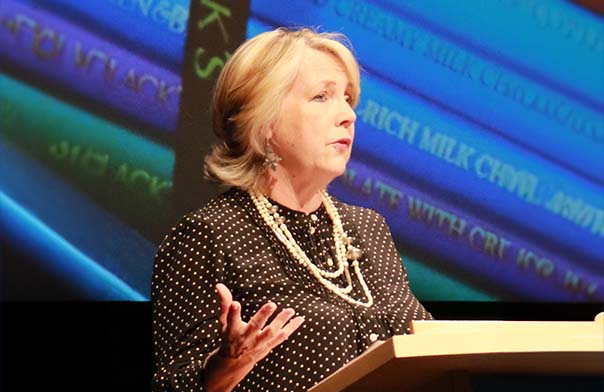
Jo Fairley is co-founder of Green & Black’s. She and her entrepreneur husband set out to market the world’s first organic chocolate, deciding on ‘green’ to represent their environmental ethos and ‘black’ to reflect particularly high-quality cocoa beans.
Jo was among the first to highlight the social responsibility of food producers. Green & Black’s immediately picked up awards for entrepreneurial and ethical achievement, and the fortunes of the Maya Indians in Belize who grow the cocoa have been transformed.
Jo tells how 20,000 young people carrying flaming torches lobbied supermarkets to stock Maya Gold - generating valuable news coverage. But they also had plenty of white knuckle moments. What happens when cocoa beans are stuck in a volatile tropical country, the port blockaded, and your major retailer is threatening de-listing unless the consignment is delivered on time?
Jo’s presentations show the determination needed and the risks involved in building a business and exploiting a niche market. She also demonstrates the power of branding, how business can be both ethical and highly successful, and why you should never underestimate the intelligence of the consumer.
Jo Fairley is author of more than a dozen books, including the Green Beauty Bible. She has also been Contributing Editor on YOU Magazine and chair of a Soil Association committee.
“Jo met the brief and event objectives 100%. She handled everything with the up-most professionalism and her comments were enlightening.”
Jo provided an insightful and enlightening session about her experiences of building a fast growing organisation – highlighting the professional and personal challenges that she faced, and how she tackled them to get the desired outcome. The audience were fully engaged, and definately left the event with some 'food for thought'. The session completely met our criteria, and we got the results that we wanted.
What an inspirational person Jo is. My client was delighted with not only her ability to communicate with such passion and clarity but with her knowledge of their business and the way she applied her experiences to their situation. Relevant, interesting, funny, inspirational and motivational. What more could we have asked for!
I personally will not hesitate to book Jo for future events. What a find!
Jo met our objectives very well – she was an excellent speaker, engaging, on subject and very motivating.
Jo met the brief and event objectives 100%. She handled everything with the up-most professionalism and managed to keep the client at ease through every phase of the project.
Jo did exactly what we wanted by rounding off the conference on a high, reminding the delegates of what it is we are all aiming to achieve and sending them off with a very positive message about business support and social impact. Seeing as Jo was our last speaker of the event, after a late event the night before, the audience could have been disengaged. However, she completely captivated the group with her story and she certainly received the biggest round of applause at the end of her session.
"*" indicates required fields