%20Copyright%20Stewart%20Writtle.jpg)
%20Artist-%20Fergus%20Burnett%20Photography.jpg)
David Smith
Economics Editor, The Sunday Times
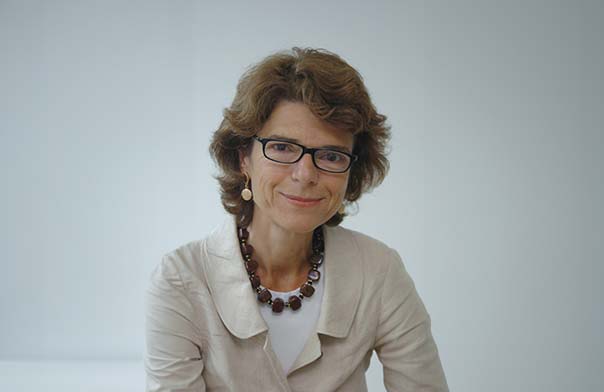
Dame Frances Cairncross DBE
Former Chair, Executive Committee IFS
The ex-Management Editor at The Economist surveys the landscape. Frances argues that the pace and stability of UK recovery will be held back until we make real progress on deficit reduction. She also suggests that we may find we haven't measured productivity very well, complicated by the proportion of GDP coming from services - and the difficulty of calculating the impact of the digital world.
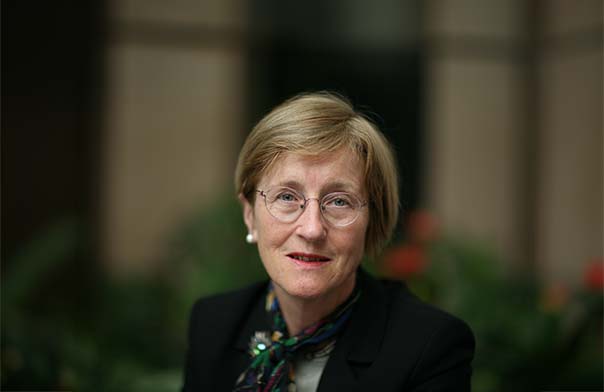
Frances Cairncross is one of the UK’s most respected economic commentators. Formerly Management Editor of The Economist (for whom she wrote for 20 years), she has held senior positions at The Times, The Banker, The Observer and The Guardian. Her broad-based knowledge of economics encompasses environmental change, the internet and mass communications.
Frances draws on a wealth of experience and research to provide insightful and practical assessments of the economic scene and what the future holds for business. As well as an overview of the macroeconomic and global scenes, she examines the forces that will shape twenty-first century businesses and economies. Her book on the subject, The Company of the Future, won her the Institute of Internal Auditors' award for business and management journalism.
Considering key issues which have the potential to affect business, politics and society, Frances also looks at the internet and the global communications revolution, which she examined in her book The Death of Distance. She discusses how the web has and will continue to change companies and outlines how businesses, governments and environmentalists can make common cause. On climate change, she argues that policies that prepare the world to adapt to it are now just as important as efforts to slow it down and what this means to business.
As well as regularly writing for a host of newspapers and periodicals, Frances has also presented BBC Radio 4’s Analysis programme. She chaired the Economic and Social Research Council and was President of the British Association for the Advancement of Science. She is a Fellow of the Royal Society of Edinburgh, a Senior Fellow at the School of Public Policy, UCLA and an Honorary Fellow of the Royal Society of Arts (RSA). After studying Modern History at Oxford and Economics in the US, Frances holds honorary degrees from Trinity College Dublin, Glasgow, Birmingham, Bristol, Cardiff, City, Loughborough and Kingston Universities. She is also Rector of Exeter College, Oxford.
“Extremely relevant”
Frances made herself available for a briefing call I advance which made her delivery more tailored on the day and was excellent.
Informative and interesting. Extremely positive – 'I could have listened to her all day long ' / 'a very different view on the economy' .
"*" indicates required fields