


Preparing for the Unknown
How preparation, drills and procedures reduce cognitive load under pressure
In 2012, saturation diver Chris Lemons survived almost forty minutes on the floor of the North Sea with no air supply – a story told in the documentary and feature film Last Breath. Now a keynote speaker on resilience and performance under pressure, Chris argues that what saved him wasn’t courage or luck, but something far less dramatic. Here, in his own words, he explains why preparation is the quiet foundation of crisis management – and what every organisation can learn from it.
At 22:12 on the evening of the 18th September 2012, I stopped breathing.
Not metaphorically.
Literally.
Three hundred feet below the North Sea, my umbilical cable – the lifeline which supplies me with breathing gas, communications and heat from the ship floating on the surface above me – was severed. In an instant, I was alone in the alien darkness of the seabed, unable to swim to the surface, with only 9 minutes of emergency breathing gas left to sustain me. It took my heroic rescuers nearly 41 minutes to get me back to the safety of a breathable environment.
People often ask me what saved my life that night. Some assume it was luck. Others suggest courage, resilience, God, or quick thinking under pressure. But whilst Hollywood went on to make a movie of my story, the truth is rather less dramatic.
Preparation.
Not an undiscovered superpower or inspirational mindset, but rather a close knit team of people who had spent years doing the boring things exceptionally well.
Why preparation matters most when the plan runs out
That answer often surprises people because preparation is usually associated with predictability. We train for scenarios we expect to happen. We rehearse emergency procedures. We write checklists. We develop contingency plans.
But the incident that nearly claimed my life wasn’t in anybody’s script. The emergency manuals didn’t contain the answer.
So why did preparation matter so much?
Because its greatest value wasn’t that it told people exactly what to do, but rather that it removed everything they didn’t need to think about.
The response to every familiar problem had already been rehearsed. Roles were understood. Communication protocols existed. Emergency drills had become second nature. The fundamentals of the operation had been practised so many times that they required very little conscious thought.
That meant something incredibly important happened. When an unprecedented problem emerged, the team still had the mental capacity to solve it.
Over the years, I’ve come to realise that’s what preparation really gives us.
“It doesn’t just improve performance. It protects thinking.”

Cognitive load: what happens to teams under pressure
Psychologists talk about cognitive load—the amount of mental effort our brains can cope with at any one time. Under pressure, that capacity shrinks remarkably quickly. Information arrives faster. Decisions become more complex. Stress narrows our attention. Even simple tasks can suddenly feel difficult.
We’ve all experienced it. The inbox fills faster than we can answer it. The phone won’t stop ringing. Priorities shift by the minute. People are looking to us for answers we don’t yet have.
In those moments, the organisations that perform best aren’t always those with the most talented individuals. They’re often the organisations that have already reduced as much unnecessary thinking as possible before the pressure arrived.
That’s what effective preparation achieves. Every well-designed process. Every meaningful rehearsal. Every trusted relationship. Every honest conversation. Every clearly defined role and well-practised procedure.
They’re all small investments made during calm conditions that protect our ability to think clearly when conditions deteriorate.
And that principle extends far beyond commercial diving. Whether you’re leading a healthcare organisation, advising a client through a major insurance claim, managing a manufacturing plant, running a technology company or commanding a vessel at sea:
“Your greatest challenge rarely comes from the routine work you’ve anticipated. It comes from the unexpected event that nobody saw coming.”
Preparation creates flexibility, not rigidity
The organisations that respond best aren’t necessarily those with the thickest manuals or the most detailed procedures. They’re the ones that have created the capacity to adapt, and that’s an important distinction.
People sometimes misunderstand meticulous preparation as a barrier to flexibility. I think the opposite is true. Preparation creates flexibility.
When the routine becomes automatic, your mind is free to deal with the extraordinary. When communication has already been built, people speak openly under pressure.
“When trust already exists, decisions happen faster. When roles are understood, teams collaborate rather than hesitate.”
Preparation doesn’t eliminate uncertainty, but it allows us to function despite it. And that’s why I increasingly see preparation as one of the greatest drivers of resilience.
Resilience isn’t a trait -it’s something you build
We often think of resilience as though it’s a personal quality – something you either have or you don’t.
My experience taught me something different. Resilience isn’t a trait. It’s the product of preparation, training, systems, culture and people. Every time we improve a process. Every time we strengthen a relationship. Every time we learn from something that almost went wrong. By the time the crisis arrives, resilience is simply the capability that remains.
And perhaps that’s the lesson I carry into every organisation I now have the privilege of speaking to. Preparation isn’t about handling the expected. It’s about creating the capacity to handle the unexpected.
“Because when uncertainty strikes, we don’t rise to the level of our ambition. We fall to the level of our preparation.”
Chris Lemons speaks to organisations around the world about preparation, crisis management and performance under pressure – drawing on one of the most extraordinary survival stories in modern industry. To enquire about booking Chris as a keynote speaker for your event, visit his speaker profile or contact the JLA team.




Festival of Speech 2026
Key Lessons from an Unforgettable Evening
What do an astronaut, a former Formula One Team Principal, a former BBC Director General, two AI specialists and one of Britain’s most celebrated comedians have in common?
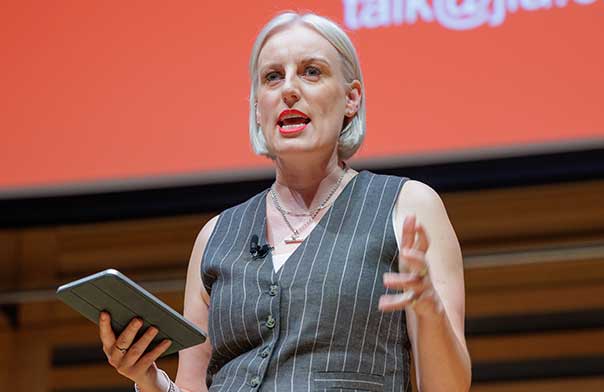
On the face of it, not much. However, over the course of two hours at JLA’s Festival of Speech 2026, hosted by the brilliant Steph McGovern, many of the same ideas surfaced time and time again.
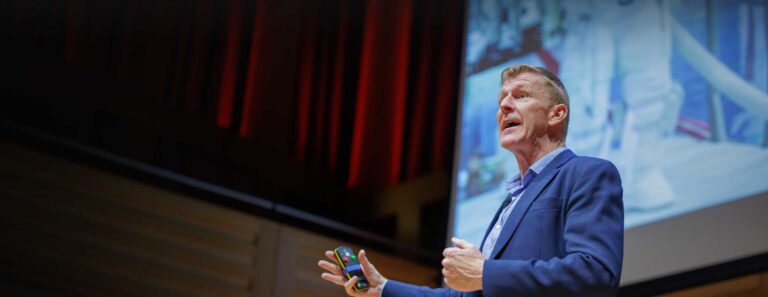
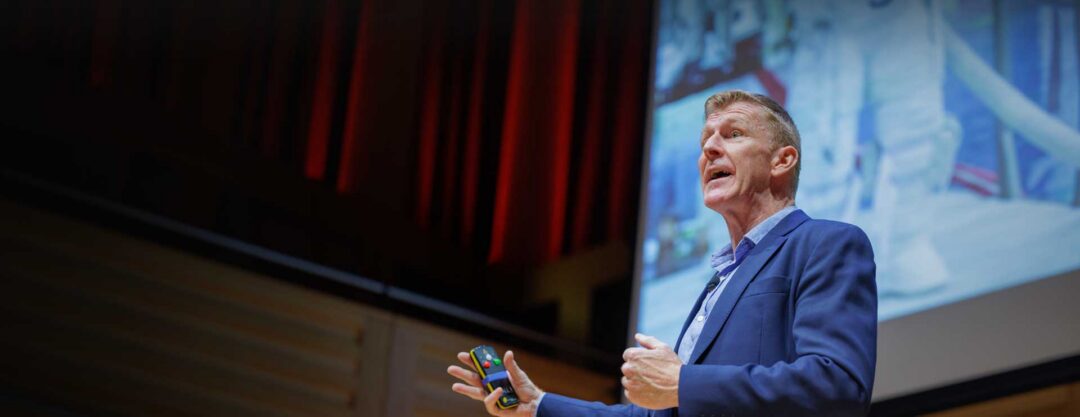
Major Tim Peake spoke about making decisions hundreds of miles above our planet, whilst Claire Williams brought the conversation back down to the earth, sharing lessons learned from leading one of Formula One’s most famous teams through difficult years.
Reinforcing Claire’s reflections on building resilience as a leader, Tim Davie shared insights from navigating scrutiny from the top of the BBC.
Dr Laura Gilbert and Ben Legg tackled the opportunities and challenges presented by AI, which Sir Lenny Henry wove into his own reflections on nurturing talent and creativity in the present day.Whilst each speaker was different from the next, the lessons, surprisingly, were not. We’ve broken down our top takeaways from all five sessions throughout the evening.
Top Takeaways

Tim Peake opened the evening with a story that immediately brought the audience into his world – or, more accurately, a world floating directly above the one we inhabit, sitting beyond the stratosphere: the International Space Station.
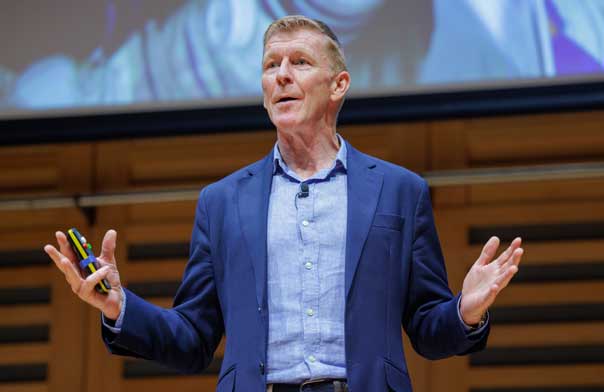
A story of this kind naturally invites questions about intense pressure, fast action and high-stakes decision-making. Instead, Tim spoke about something less flashy, but more real: the importance of thorough preparation, and what that actually looks like.
Astronauts spend years rehearsing emergencies, simulating crises and putting themselves intentionally in situations with real risk. This is not because they expect real-life situations to mirror training exercises perfectly, but because repetition creates space to think – the opportunity to acclimatise to the state of risk itself.
“The best teams don’t spend all their time planning for the most likely scenario. They build the capability to respond when the unexpected happens.”
Tim went on to explore the leadership structures aboard the ISS. Despite popular perceptions, he explained that it isn’t built around rigid hierarchy; instead, expertise matters more than rank. The person best placed to solve the problem becomes the person people listen to.
Tim pointed to Apollo 11 as an example. The Moon landing came perilously close to being aborted before a young engineer in Mission Control made a judgement call that ultimately helped keep the mission on track.
Another crucial lesson for businesses comes to the fore here: if responsibility within an organisation is arranged solely by levels of status and seniority, businesses run the risk of missing important breakthroughs and preventing people from reaching their full potential.

Running a Formula One team is difficult enough. Doing so on an independent basis, without the same budget scope available to your biggest competitors, presents an entirely different challenge.
For Claire, that reality shaped almost every leadership decision she made. If Williams couldn’t outspend rival teams, it had to find advantages elsewhere. Time and again, the advantage she came back to was culture.
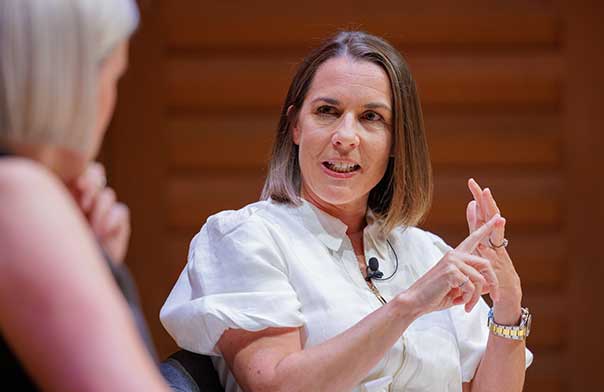
She described the cultural values established by her father, Sir Frank Williams, as one of the foundations of high performance. When results become difficult and pressure starts building, culture is often the thing people discover they either have or don’t.
During difficult periods, Claire made a conscious effort to stay present as a leader, standing right beside the people on the ground, living the truth of a situation right beside them. Rather than retreating into meetings and strategy sessions, she focused on being available and communicative – talking to her team, explaining what came next, and making sure everyone she was pushing to deliver was bearing up under the very pressure she was exerting.
She also spoke openly about the personal side of leadership, including the challenge of recognising when resilience turns into exhaustion. Looking after a team and looking after yourself are rarely separate issues.
Tying these two principles together is one, critical message:
“It is important to lead with kindness, respect, and good manners. As a leader, that attitude extends not only to your team, but to yourself.”

Few leadership roles come with more public scrutiny than running the BBC.
Fresh from stepping down as Director General, Tim Davie reflected on his time leading an organisation where a crisis can appear to arrive every morning with the newspapers.
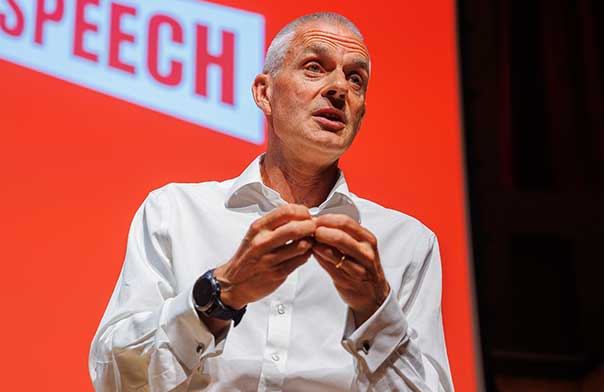
With a background defined by relentlessness and open evaluation, Tim returned repeatedly to the vital relationship between pressure and performance throughout his session.
With too little pressure, he argued, organisations can become slow, cautious and bureaucratic. Too much, and decision-making deteriorates. The challenge is finding a balance that creates urgency without sparking panic.
This perspective informed how he approached some of the BBC’s most high-profile moments. His instinct was to separate genuine problems from background noise as quickly as possible, then focus on objective facts rather than speculation.
Echoing Claire’s sentiments, Tim went on to explore the importance of establishing deep-seated resilience as a leader, and to what extent this is rooted in a healthy work-life balance. From avoiding a state of half-working, to carving out space to immerse yourself in activities that clear your head.
"The best use of a leader’s time in a crisis is often to slow down, gather one’s thoughts, establish perspective, and move from there onto what to do next.”
Effective leadership, through Tim’s eyes, often comes down to the positive influence of staying calm, even if everyone else is losing their head.

Dr Laura Gilbert CBE and Ben Legg
Why Human Judgement Is Central To AI’s Success
Dr Laura Gilbert and Ben Legg tackled the question on every business leader’s mind in 2026: what should we actually be doing about AI?
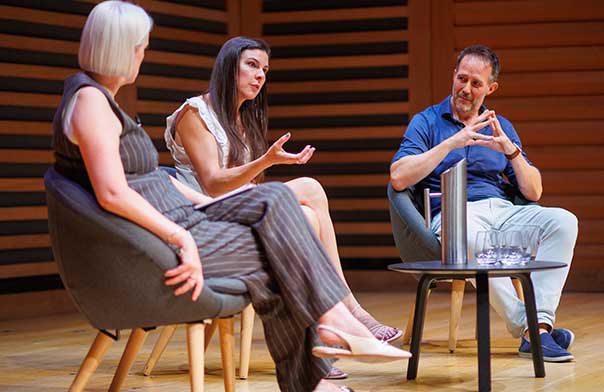
Rather than feeding the familiar hype, or equally familiar doom, Laura and Ben argued that AI’s impact will be determined by the decisions leaders make about how they use it.
Their discussion repeatedly came back to a simple point: organisations get into trouble when they treat ‘the implementation of AI’ as an objective in its own right.
As Laura pointed out, the vast majority of enterprise AI pilots never deliver meaningful value. Too many projects begin with an instinctive, eager question – “how do we adopt AI?” – instead of a harder, but more practical one: “what problem are we actually trying to solve?
“The businesses seeing real returns are the ones that start with a clearly defined challenge, and only then decide whether AI is the right answer."
Following this thread to the end, Laura and Ben were eager to stress that AI makes human judgement more valuable, not less.
As AI tools become increasingly capable, the competitive advantage won’t come from accepting their outputs unquestioningly. Instead, it will come from knowing when to challenge them, where to verify them and how to apply them responsibly.
Critical thinking, curiosity and good judgement emerged as qualities that will matter even more in the years ahead, rather than skills AI are set to replace.

Looking back across a career stretching from his first television appearance at sixteen, through to his work on Comic Relief and beyond, Lenny Henry reflected on his evolving relationship with talent and creative development.
Picking up the AI thread left by Laura and Ben, Lenny reflected on the interplay between AI and creativity. In his view, technologies of this kind won’t replace genuinely creative people. What matters is the quality of the ideas, the craft behind them and the originality of the voice creating them.
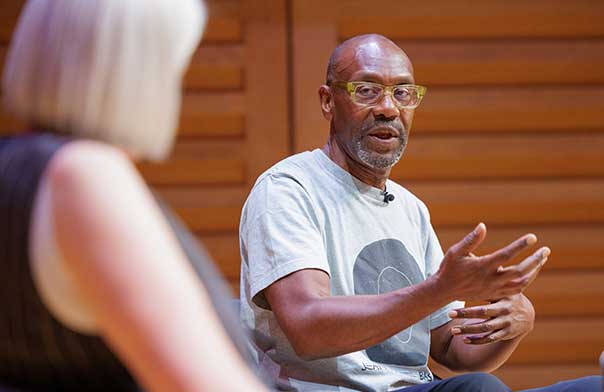
He also emphasised the importance of the people who helped him along the way to defining his success. Writers, producers, directors, mentors and collaborators have helped shape his approach to his craft – in much the same way that effective teams supported Tim Peake, Claire Williams and Tim Davie in their own respective fields.
Lastly – and importantly – when asked what he hoped his legacy would be, Lenny spoke less about television or comedy than about the extraordinary ability of creativity, talent and shared moments to bring out the best in people.
Comic Relief, he suggested, is about the transcendent outcome of bringing people together towards a common goal – and the idea that if someone needs help, and you’re in a position to give it, you do. This sentiment sits at the heart of its mission.
This manifested in taking people beyond statistics and headlines, and showing them the reality of the communities their support reaches.
“Once the impact of generosity is on display, and is given a tangible shape, it stops feeling like an abstract virtue, and starts to become something more instinctive.”
Whether through Comic Relief, or events like the Festival of Speech, the act of bringing people together can create a ripple effect that extends well beyond the room. Conversations may end when the lights go down, but the ideas, the connections and the impulse to act are what endure.
What Made This Year’s Event Special?
A few common threads shone consistently throughout each of our incredible five sessions at our Festival of Speech this year.
Complementing the rich diversity of perspectives we had the pleasure of listening to on Thursday evening were a series of perspectives our speakers all seemed to share:
Preparation matters more than talent and attitude alone.
The strongest leaders invest heavily in culture and communication.
Lastly, whether the setting is a spacecraft, a racing team, the heart of British broadcasting, a technology company or the entertainment industry, success was always a collective effort.
If you missed the Festival of Speech 2026, you can catch selected highlights in the video below. If would like to explore booking Major Tim Peake, Claire Williams, Tim Davie, Dr Laura Gilbert, Ben Legg, Sir Lenny Henry or any of our other speakers for an event of your own, we’d be delighted to hear from you.
We look forward to welcoming you again at the Festival of Speech next year.


JLA Speaks
AI isn't coming for lawyers, it's coming for documents…
AI & The Legal Sector
At JLA Speakers we work with a number of leading law firms and we’ve noticed a growing trend amongst our clients – an increasing demand for speakers who can provide meaningful insight into how AI is set to transform the legal profession in the years ahead.
As AI continues to evolve at a remarkable pace, legal leaders are looking beyond the headlines to understand the practical implications for their firms, clients, and the industry as a whole. Questions around automation, efficiency, risk management, regulation and ethics are becoming central to strategic discussions across the financial and professional services sector.
To explore these issues in greater depth, we asked three of our AI speakers to share their own perspectives on the opportunities and challenges that lie ahead. Drawing on their experience at the forefront of technology and innovation, they offer valuable insights into the main changes for the legal sector.
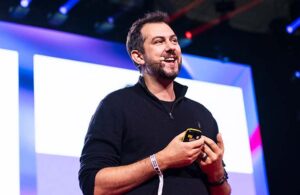
“The wrong question is “which tasks will AI take?” The better one is: What would your firm do if drafting, discovery, and research cost almost nothing?”
Most firms are using AI to do today’s work faster. The firms that will pull ahead are using it to ask what work is now worth doing at all.
AI isn’t coming for lawyers, it’s coming for documents. The economic value of producing a contract, a memo or a research note is collapsing toward zero. What rises in value is judgment: knowing which argument to make, which risk to take, which client to turn down. The premium shifts from output to discernment.
Hallucination is not the real risk in regulated work, unverifiable reasoning is. A wrong answer can be caught by a partner; an unauditable chain of AI reasoning embedded in advice cannot. The firms taking this seriously are investing not in bigger models but in verification – the ability to prove, after the fact, how an AI reached a conclusion. This is the work we’re doing at Conscium, and it is, in my view, where the regulated industries will eventually have no choice but to go.
The billable hour and agentic AI. If a junior’s six hours of research becomes six minutes, the model that priced the six hours starts to break down. Firms have two choices: defend the hour or rebuild around outcomes, subscriptions or fixed-fee work where productivity gains accrue to the firm, not the client.
“Knowledge management was law’s unsolved problem for thirty years. Agentic AI finally cracks it, but only if your data is actually structured.”
Most firms are sitting on decades of precedent locked inside PDFs, emails and individual partners’ heads. The smart firms will be the ones investing in the unglamorous work of making that knowledge machine-readable now, before they try to deploy agents on top of it.
Partnership structures were designed to slow decisions down. Consensus, seniority, and committees made sense when the cost of a bad decision was high and the cost of a slow one was low. AI changes the second part of that equation. The hardest problem in front of a managing partner today is redesigning the firm to absorb the speed the tool unlocks.

“The firms that win won’t be the ones that deploy the tools fastest, they will be the ones that read those shifts and reposition the firm around them.”
Most of the conversation about AI in law is stuck on operations – how it speeds up review, research, drafting. This is important but the much bigger and more important shift that I speak to is strategic and competitive: AI is remaking the social, economic, political and geopolitical world that the clients of law firms are operating in, and as it does, the interests of every stakeholder for a firm – clients, employees, regulators and governments – are rapidly transforming.
Key Insights
- Operational gains are table stakes; the advantage is strategic. Within a couple of years every firm will have access to the same commoditised tools. The differentiator won’t be whether a firm has automated document review but whether they understand how AI will reshape clients’ industries faster than competitors.
- Clients’ legal needs are being rewritten in real time. As AI transforms businesses it generates entirely new demand: liability and IP disputes over training data and AI output, governance and disclosure obligations, employment questions as workforces are restructured, antitrust around concentration in the AI stack. The work mix of the next decade looks nothing like the last.
- The economics of the firm are in play. The billable hour and leverage pyramid were built on junior lawyers doing the work AI now compresses. That isn’t only a margin question, it’s how the next generation of partners learns judgment when the apprenticeship work disappears.
- The rules are a moving target. Courts, regulators and bar bodies are rewriting expectations on AI use, disclosure, privilege and client confidentiality, and doing it unevenly across jurisdictions. Advising clients well now means tracking a compliance landscape that is still being built.
- The global order your clients operate in is fragmenting. AI has become an instrument of national strategy – export controls, data sovereignty, sanctions, industrial policy. Firms advising multinationals are now advising into a far more contested environment, where the legal and the geopolitical are increasingly inseparable.
- Handled well, this is a chance to move up the value chain. The firms that thrive will push towards the judgment, strategy and trusted-adviser work AI can’t replicate.
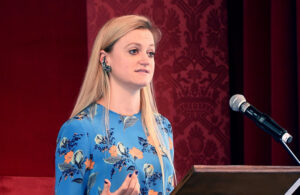
Thinking about the bigger picture, in her latest speech topics Sophie explores how lawyers will need expansive knowledge of how technology and AI will shape the world around us and beyond…
“In a world where AI agents and autonomous robots act on behalf of individuals and organisations, trust technologies will have to be built in across the stack.”
AI infrastructure including data centres and related systems, will likely be autonomously built and maintained in the future. This emergence of “post-human architecture” will become an increasingly visible part of our landscape. Important questions arise – how humans will inhabit, work within, and design for robotic buildings, cities and landscapes?
The evolution of trust will also be fundamentally reshaped. When humans do not fully trust one another, they rely on contracts to formalise agreement and provide legal recourse. In a world where AI agents and, increasingly, autonomous robots act on behalf of individuals and organisations – what will they do? Trust technologies will have to be built in across the stack.
Finally, the buildout of assets in space is likely to accelerate significantly – compute, communications, manufacturing and space stations. As the prospect of individuals and organisations having “space addresses” becomes more realistic, there will need to be a lot of new law! In the meantime, off-Earth assets play an increasing role in the terrestrial economy. What should long-term space strategies be?
If you’re interested in exploring the future of AI further, please contact JLA, where our dedicated account managers would be delighted to help with booking the right speaker to inform, challenge and inspire your audience.

JLA SPeaks
People Need People: How Can Mental Health Speakers Support Employee Wellbeing?
I attended a wellbeing event with HR professionals last week and some of the statistics shared were staggering. Research shows that 79% of employees are experiencing moderate to high levels of stress, while almost two-thirds are showing signs of burnout, including exhaustion, disengagement and reduced productivity. Work-related mental health issues are now estimated to cost the UK economy £57.4 billion every year.
However, organisations are actively looking for ways to better support their people. Of course, there isn’t a single cause of poor wellbeing. Financial pressures, AI, heavy workloads and uncertainty in the world all play a part. But one theme that came up throughout the event was the importance of human connection.
Why does workplace connection matter for Mental Health?
As our lives become increasingly digital, and more of our working life moves online creating opportunities for genuine interaction feels more important than ever. Whether through conversations with colleagues and managers or simply feeling part of a wider community, connection can reduce feelings of isolation and create a stronger sense of belonging and purpose. And when employees feel genuinely connected and well supported, they tend to be happier in their roles – and happier employees are typically more productive ones.
Why do we prioritise physical health over mental health?
We also discussed how differently we tend to approach our physical and mental wellbeing. Most people think nothing of blocking out time to go to the gym, attend a fitness class or go for a run. It’s a common part of life. Yet we rarely hear people say they’re taking an hour to focus on their mental wellbeing – I’m certainly guilty of that myself. I’ve always admired people who seem genuinely in tune with their mental wellbeing and know when to slow down and recharge.
How can mental health speakers help organisations support employee wellbeing?
Creating healthier workplaces starts with awareness, understanding and, perhaps most importantly, conversation. For organisations looking to improve employee wellbeing, tackle burnout and create a culture where people can thrive, the following mental health speakers can offer valuable insight, practical advice and powerful personal stories that can help kick start those conversations:
Mental Health Speakers to help your organisation.
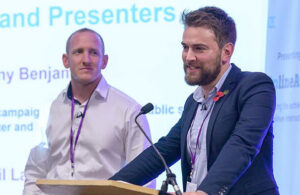
Jonny Benjamin and Neil Laybourn’s story is one of the most powerful examples of human connection in action. After Neil intervened when Jonny was experiencing a mental health crisis, their lives became forever intertwined. Today, they share an inspiring message about compassion, empathy and the impact a single conversation can have. Their talks encourage audiences to think differently about mental health, breaking down stigma and highlighting the importance of looking out for one another.

Psychotherapist, author and workplace wellbeing expert Petra Velzeboer helps organisations better understand burnout, stress and mental health in the modern workplace. Combining professional expertise with lived experience, she provides practical insight into creating healthier workplace cultures, improving psychological safety and supporting employee wellbeing in an increasingly digital world.

Having spoken openly about his own experiences with depression throughout his career, Alastair Campbell has become one of the UK’s most prominent advocates for mental health awareness. Drawing on his experiences in politics, media and public life, he offers a candid perspective on resilience, wellbeing and managing mental health in high-pressure environments.

As a psychotherapist, broadcaster and wellbeing expert, Lucy Beresford explores the psychology behind happiness, resilience and emotional wellbeing. Her engaging and relatable approach helps audiences better understand the habits, behaviours and relationships that contribute to a healthier and more fulfilling life.

Performance and stress strategist Alice Law helps organisations understand stress differently. Rather than viewing stress as a personal weakness, she encourages leaders and employees to see it as a system that can be understood, managed and prevented. As co-author of the bestselling Unstressable and co-founder of the Unstressable platform alongside former Google X executive Mo Gawdat, Alice combines practical tools with a refreshingly honest approach to stress management. Her talks equip audiences with actionable strategies to better understand stress, prevent burnout and create healthier, more sustainable ways of working.

Photographer, storyteller and humanitarian Giles Duley has dedicated his career to documenting the human stories behind conflict and adversity. After losing three limbs whilst working in Afghanistan, he rebuilt his life and career, developing a powerful perspective on resilience, gratitude and purpose. Through remarkable storytelling, Giles challenges audiences to rethink what is possible in the face of adversity, while highlighting the importance of empathy, human connection and focusing on what truly matters.
Where can employees get further mental health support?
If you or any of your colleagues are experiencing mental health difficulties, feeling overwhelmed, or simply need someone to talk to, the following organisations can also provide information, guidance and support: Samaritans, Mind, ReThink or Beyond
To explore booking any of the speakers featured in this article or to discuss your event requirements, please contact the JLA team.

The Business of Football: What Companies Can Learn from the 2026 FIFA World Cup
The most viewed event on the planet is fast approaching.
In its last run, around 5 billion fans were engaged – so yes, that probably includes you! If you hadn’t already guessed, it’s The 2026 FIFA World Cup.
The World Cup is more than a sports tournament – it’s a month-long experience that captivates the attention of the world. However, how does it do this, and what can event professionals and business leaders alike learn from it?
What makes the World Cup such a momentous occasion, and what can event organisers learn from it?
From my personal experience, the scale and culture of the World Cup is what makes it so special. Countries and people from across the world gather in one place to watch their team compete for football’s most prestigious trophy. Football has this magical ability to break cultural barriers and unite people.
With every fan, there is a common goal: to watch great football and hope to see your nation win. The blend of cultures, with a common similarity in football, is what makes it so special.
Event teams can learn from this; when you bring a big, diverse room of people together, why are they there? They’ve come to meet people, connect and learn. One thing you know is there is a common goal; it could be the theme of a conference, the guest speaker or something entirely different.
Furthermore, every team and every person at the World Cup has a story, a dream to become victors. They’ve had to fight their way through competition and qualifiers just to reach the biggest stage and earn the chance to perform. Every team, fan and player has an emotional connection to the competition that brings it beyond simply watching from your TV. There are shared celebrations and heartbreaks, rituals and traditions, moments that are created and remembered for decades to come. The lasting impact of a moment, a controversial decision, a wonder goal, a heartbreak and last grasp victory are often what gets left in people’s minds.
For me, when I think of World Cup moments, I think of James Rodrigues’ wonder volley for Colombia, or Neymar’s almost career ending tackle. For you, maybe it’s Maradona’s hand of god, or Geoff Hurst’s hat-trick in the final of the 1966 World Cup. These are legends, stories and memories that are made and shared by millions, if not billions of people.
Great events are built around narrative, emotion and shared experience. The right keynote speaker can turn a moment into the defining highlight of your event — creating the kind of lasting impact people talk about for years. As we know, it’s often not what people say, but how they make you feel.
What lessons can football more broadly impart on businesses and leaders?
Whilst The World Cup demonstrates the power of large-scale engagement, football itself also offers important lessons in leadership, mindset, and high performance.
Resilience in the Workplace
Resilience and mental toughness are some of the most useful lessons that football can teach businesses and leaders alike. The ability to work hard towards a goal, set your sights on something and believe you have the ability to achieve it is vital. Karen Carney expertly explains this.

In her speeches she shares how she had to balance achieving her dream as a footballer with working a full time job. Her mental toughness and belief in herself played a crucial role that led to her success. I’d highly recommend hearing her speak if you get the chance! My personal favourite story of Karen’s is from her time at Arsenal (COYG!). She shared that there was a rule that you had to say hello to anyone you walked past, whoever they were, whatever their role. This team culture had a huge impact on her career, as it boosted her confidence and self-belief.
For businesses navigating change and adversity, Karen’s story is a masterclass in resilience in the workplace.
Team Culture in Business
Football is a prime example of the power and importance of team culture and leadership. It brings people together and creates a sense of purpose. Every business looks to achieve that same feeling, and can learn a great deal from football. Who better to learn team culture from than the man who transformed the England men’s national team? From a group of brilliant individuals, to a collaborative unit, Gareth Southgate transformed the locker room.
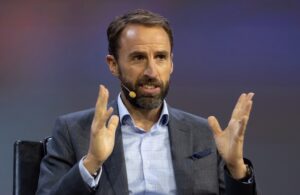
If you haven’t watched ‘Dear England’, I would recommend it highly; it’s a play about the pressures of elite sport, and explores how Southgate helped to change notions of masculinity on the England team. Hearing him speak on leadership and team culture from such a unique perspective, having had such a massive impact on the England players and fans, should be top of your list.
Sports Psychology for Business
Beyond simply the culture of the England team, Southgate wanted to prioritise the mental health of the players and understand their mindset. The significance of looking after your mental health and having a positive mindset cannot be overstated. In both football and business your attitude and health are essential to your performance. Jamil Qureshi, who has worked with footballers such as Mason Mount, is a performance psychologist who teaches both sports professionals and business how to change your mindset, to improve your performance (I’m told Jamil takes no claim in Mount’s unfortunate injury crisis!).
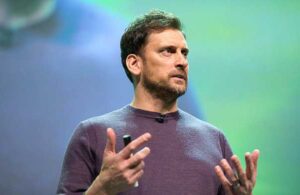
Sports psychology for business is a growing field, and Jamil is one of its most compelling voices. For athletes and business leaders, being able to change your mindset to think positively is a key part of success. But don’t just take that from me, hear Jamil speak and learn it for yourself.
High Performance Culture
Arguably the most clear parallel between football and business is the importance of high performance. In business, high performance helps achieve better results and stay competitive. Football is the same. The first thing you’re told as a football player, and in sports generally, is that to win, you need to perform to the best of your ability.
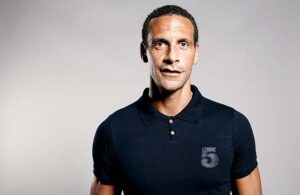
Rio Ferdinand in particular speaks about this in his keynote and his podcast “Rio Ferdinand Presents” (it’s a great listen). Rio stresses how discipline, mindset, teamwork, consistency, and handling pressure at the highest level is key to success.
I also strongly believe it’s vital to hear and learn about high performance and insights in football through the eyes of those who discuss it in the media; pundits. The level of in-depth thought that goes into every sentence you hear on TV will astound you. Having an objective and outside perspective of football allows you to truly understand its nuance and gives an unique perspective on the sport as a whole.

I’ve had the privilege of seeing Gabby Logan speak, both as a moderator and as the interviewee. Her knowledge on football and keen eye for analysis, along with years of experience truly highlights why she is such a respected figure in sports broadcasting. If you’re looking for a safe pair of hands or an expert in their field, Gabby is perfect for your event.
The World Cup succeeds because it combines emotion, excellence, leadership, and community. The best events and businesses do the same. Whether organising global tournaments or leading teams, success comes from creating connection, culture, and shared purpose.
To explore booking any of the speakers featured in this article, contact the JLA team to discuss your event requirements.
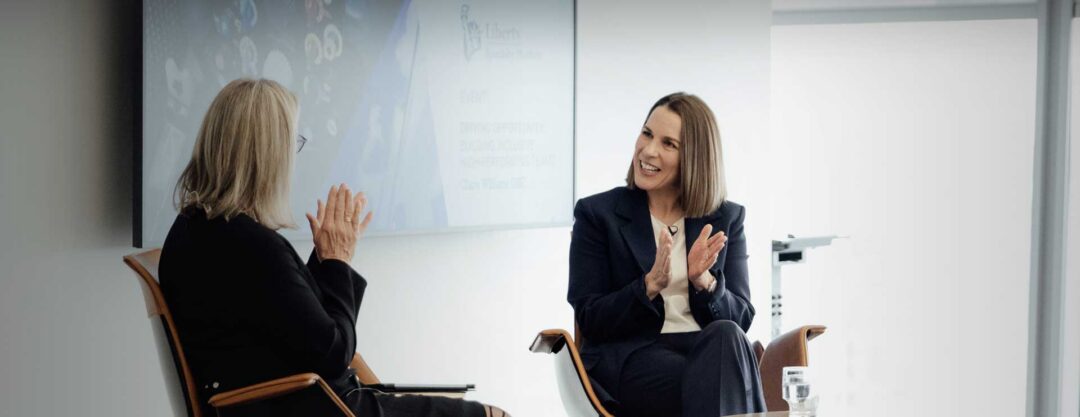
Leadership Lessons from Formula 1
In a world shaken by overwhelming turbulence and change, few keynote speakers understand the pressures of leading high-performance organisations quite like Claire Williams.
Claire is the former Deputy Team Principal of the Williams Formula One Team, and spent years navigating the relentless demands of one of the world’s most fast-paced and high-stakes sports – steering a team with a decades long racing legacy through regulatory upheaval, global crises, and the ever-evolving demands of elite competition.
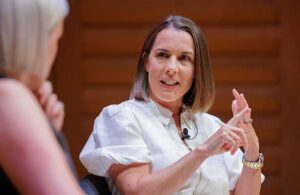
I sat down with Claire to reflect on the leadership lessons Formula 1 taught her – from building genuinely resilient, cultivating psychological safety, to unpacking the power of authentic communication towards forming durable cultures.
Formula 1 is subject to frequent regulatory changes, including the major new technical and power unit regulations that have come into force this year.
From a leadership perspective, how do you guide an organisation through the uncertainty these changes bring?
There’s often an awful lot of uncertainty in Formula 1 – not just from season to season, but even from race to race. As a result, it’s critical that F1 organisations are built to withstand regular change.
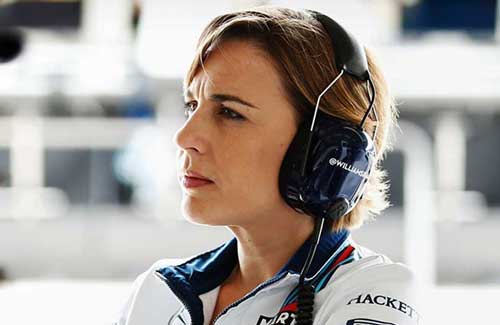
Williams had been racing for 40 years when I took over, so my team were eminently used to a degree of consistent turbulence, and was structurally built to accommodate it – to react quickly, and to remain robust during periods of uncertainty. The ability to pivot, to think “okay, well, we were going down this path, but now we’ve been told to go down another path” – for people to be able to adapt quickly, is exceptionally important.
You need the entire team to be able to do that.
On a daily basis, leadership needs to be able to set clear goals from the outset, and to be almost overly communicative when changes are required. Leaders must be clear and concise about what those alterations are, what the expectations are to meet and accommodate those shifts, what pathway has been laid to achieve them, and the timing plan around that.
In an industry where change is the norm, the environment that you operate in can also be incredibly powerful. The people in your organisation need to genuinely feel that failure is okay, this is what organisational psychologists call psychological safety. In industries where it’s a regular occurrence, things are inevitably going to fall through the cracks. People aren’t always going to get it right the first time when you’re asking them to adapt at the drop of a hat. They will make mistakes, and you need to create a space where that’s allowed – one where when you fail, you fail fast, and you pick yourself back up.
Like the new regulations in F1, AI is rapidly reshaping many industries, including motorsport.
How do leaders balance the pressure to deliver week-to-week results with the longer-term responsibility of preparing their organisation for transformational change?
It’s not easy. In the world of Formula 1, you deliver your car to the racetrack every other weekend, and that will invariably demand showcasing updates at each and every race. Simultaneously, in the background, you’ve always got a new car to build for the following year.

As a result, you typically have groups structured to accommodate that: every team will have two smaller teams within it – one working on the current car, and another solely focused on long-term projects.
Obviously, if you have the luxury of people-power, the right numbers and generous budgets to accommodate it, this is a great principle to apply for businesses across the board. When bringing in new technologies, processes or innovations, you’ve got to ensure you have enough people to implement it, spend time thinking about it, creating it, and building it, whilst you lead your main team in focusing on the day-to-day. You can’t expect people to do both. I think that’s almost a physical impossibility, particularly if you want a positive outcome. Having those dedicated future-focused teams is key to successfully tackling these workplace challenges.
In Formula 1, you’ve always got that balance around investment as well, particularly when exploring future-focused innovation. You’ve got to be looking ahead to what’s coming next year – to make sure your team has the investment necessary to accommodate and deliver against it, whilst maintaining investment on the day-to-day as well. Ensuring you’ve got clear principles around expenditure becomes even more significant in this light.
Lastly, one of the most important considerations when bringing in new tech and innovations to propel your performance: you’ve got to leave time to think.
So often, we don’t leave time for our people to think strategically, to consider what’s coming down the line, and how they can roll implementations out in a complementary way. We’re so busy with meetings, emails and the day-to-day grind, we don’t allow that really critical time for creative thinking and experimentation. People expect that you’ll have lightning bolt moments whilst you’re doing your day job. In reality, it’s just not going to happen if you don’t create the conditions for it.
In Formula 1, races are scheduled years in advance. However, events beyond the track – like geopolitical tensions and global crises – can change plans week by week.
How do you plan effectively and keep the team motivated when so much is outside of your control?
Good contingency planning is non-negotiable. This is one of the things Formula 1 is renowned for as an industry – being able to move and react extraordinarily quickly. That’s what we do all day long, whether it’s on the pit wall, or because we’ve got to build a new upgrade.
Being able to pivot and adapt is absolutely paramount to crisis management. When there is so much uncertainty in industry, business, and the world at large, you’ve got to have an organisation that can remain agile.
As an example, we went to Australia at the start of COVID back in 2020. Everything was set up and ready to go – our last few people had just flown in. Suddenly, a meeting was called announcing that they were cancelling the Grand Prix. With that news, we had to get everyone and everything out quickly. Fast reaction time is of the essence in those kinds of situations, just as much as it is on the track.
As a leader, being able to communicate efficiently and effectively in moments like that is vital. Even when we don’t know all the information, it’s much better to be transparent about what you do understand. Even if you don’t have the answers to everything, at least tell people that. It’s better to stand up in front of your organisation and say, “I don’t know the situation yet, but as leadership, we are keeping an eye on it”. A lack of information can be immensely damaging, especially to organisations that are potentially entering a period of peril – it’s much, much safer to over-communicate.
Also, it must be remembered that you are your team’s emotional checkboard. If you are panicking, or not demonstrating emotional control, the wrong message is likely to be conveyed. Alternatively, if you focus on showcasing a calm, collected headspace, that’s the message you’re going to relay to everybody working for you – they will respond and behave accordingly. It’s all about that “keep calm and carry on” kind of ethos.
How did you find space to focus on culture, people, and organisational development in such a time intensive and performance focused sport?
I have to hold my hands up here, and admit that in the early days of my tenure, I didn’t really focus on culture and the environment.
This was probably attributable to the first four years of my time being largely successful. When any organisation is thriving, culture tends to go out the window, and daily health checks are pretty much forgotten about; success breeds success, along with motivation, and an inherently strong culture. Leading a business like this, you don’t necessarily think there’s much work to do.
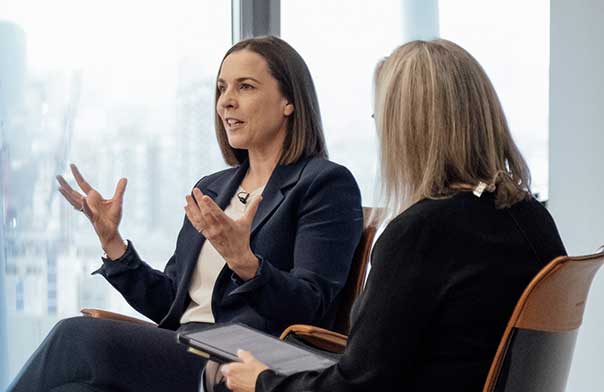
My greatest learnings came when we weren’t doing well, and our organisation was starting to fall apart. I learnt that culture is the absolute bedrock of any high-performing team. Even if you have the very best people, with all the resources necessary to do their jobs, you won’t get the best out of them if the environment – and the psychological safety – they work in doesn’t also make the cut.
As a consequence of this period, culture became something I paid close attention to, each and every single day of my leadership journey at Williams – whether it was conducting walkabouts around the factory, having lunches with groups in the team, or even hosting go-karting sessions with members of the race team on race weekends.
Simultaneously, this attitude can’t all come from one leader. It has to be lived and breathed by senior and middle management – it must flow throughout the organisation. One person can’t prop up the whole team by themselves. It has to be a joint, collaborative effort.
To learn more about booking Claire for your event, you can check out her page here, or contact the JLA team for more information.

JLA Speaks
What Event Organisers Need To Get Right This Pride Month
June is fast approaching, and in turn, so is Pride Month – an important time to celebrate LGBTQ+ identities, honour significant milestones within the community, and recommit to the work still necessary to drive forward change.
For organisations, it’s also an opportunity to listen, learn, and demonstrate that inclusion isn’t a seasonal gesture, but a year-round value. Few things bring that opportunity to life quite like hearing from someone whose story is both resonant and relevant.
I sat down with Oliver Costello, an Account Manager at JLA, to discuss the role speaking engagements play during Pride Month, the keynote speakers who have inspired him, and what companies should keep in mind when putting on events this year.
Are there any LGBTQ+ keynote speakers you’ve been inspired by whilst working at JLA?
The first event I ever booked was actually a Pride Month event. It was for a med-tech company, which has obvious relevance to this year’s theme, and the speaker was CNN Anchor & Correspondent Ben Hunte.
His story is incredibly inspirational, exploring how authenticity unlocks doors for both personal and professional development, with reference to his own career. Many of the anecdotes he draws on in his talks, the experiences that were the making of him, have stuck with me to this day, all these years later.
Another brilliant speaker to mention here is Nigel Owens. Nigel is the only openly gay official in rugby, and something of a renowned figure in the sports community. Like Ben, he speaks powerfully about his career, and central to his talks is a strong underlying message: keeping back large parts of yourself and your identity can be limiting on many levels, and being true to who you are widens the scope for success. He embodies a big part of what Pride events are truly about – the importance and positive consequence of embracing everything about yourself. This sentiment isn’t just meaningful on an individual level; it’s a critical concept for companies to understand, too. Though it may be difficult to tangibly measure, fulfilled, confident and self-realised employees will inevitably perform better at work.

Lastly, I want to highlight Inga Beale, Former CEO of Lloyd’s of London. Her expertise is in creating welcoming, inclusive cultures in the workplace, and how this change can revolutionise productivity. With her background in corporate leadership, she’s uniquely able to convey the positive impact of successfully integrating and cultivating diversity in a business context from her own direct experience, linking the work done during Pride Month to real, palpable consequences – making her one of the most compelling diversity and inclusion speakers available for corporate events.
Why are diversity and inclusion speakers an important part of Pride Month events?
Speaking engagements are incredibly important – however, crucially, they cannot be the only thing a company arranges if they want to approach Pride authentically.
The same principle is true for International Women’s Day and Black History Month. An excellent external speaker can drive audience engagement, but your overarching event and a speaker’s role within it should ultimately showcase what your company is contributing to the cause across the rest of the year, or indicate the start of something bigger.
In turn, as an opportunity to create real buy-in for lasting change, speakers can link your event’s message to real-life experiences and connect directly with its purpose. A successful speaking engagement will leave your audience with a different mindset, a change which resonates for days, months and even years after they’ve left the stage.
We’re seeing increased interest in speakers who don’t just disappear after the event – those who check back in, stay in contact, and act as more of an ongoing consultative presence, rather than offering a one-off perspective. For organisations looking to make a concrete difference, this opportunity to check back in and reinspire can be an effective way to prevent initiatives from becoming stagnant, and to keep progress on track.
This year’s Pride Month theme is Science and Innovation. How is this theme meaningful in a speaking context?
It’s also worth recognising that this is the year for Science and Innovation companies to shine on the event front, and make the most of a theme that really chimes with them. If you work within this space, do make sure to take this chance and showcase how you’re driving change within your field.

What is the most important thing for companies to remember when arranging their Pride events this year?
As I’ve emphasised, Pride speakers are a brilliant way to spread awareness and spark thought within an organisation, but they are best received when playing into overarching development initiatives. Speaking engagements work best either as an advertisement for what you’re already doing, or as a launchpad – a moment to say, “let’s all get on board.” What matters most is that the momentum doesn’t fizzle out. To ensure this, you’re going to want a speaker whose delivery and message persists after the curtains close – and that’s where JLA and our roster of LGBTQ+ conference and keynote speakers can help.
If you would like more information on these or any other speakers, or would like to discuss the requirements for your own Pride Month event more generally, please contact your JLA Agent or call 020 7907 2800.
The Politics of Technology: Three Key Takeaways
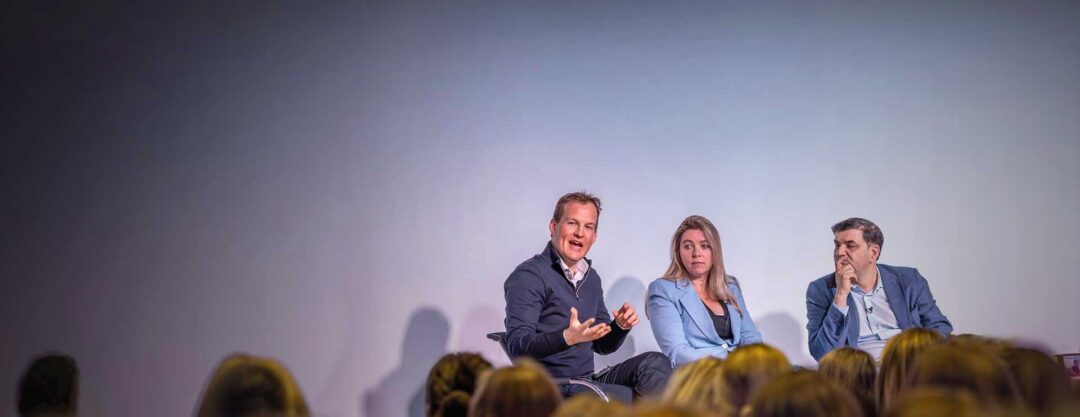
JLA had the pleasure of welcoming three of the most compelling voices sitting at the intersection between technology and global affairs to the stage at One Moorgate Place.
We heard from Matt Clifford, entrepreneur, investor, and former AI adviser to two British Prime Ministers, and Sarah Wynn-Williams, global public policy expert and author of the bestselling Careless People. The pair were joined in conversation by Gordon Corera, former BBC Security Analyst and co-host of The Rest is Classified.
After 25 years covering national security, Gordon opened the session with an unambiguous verdict: the world really is more unpredictable than it has ever been. However, he was careful to stress that it is not necessarily more dangerous.
What defines the present moment is a particular kind of uncertainty, driven not just by the familiar disruptions of geopolitical rivalry and conflict, but by the accelerating role of technology. AI, Gordon argued, is both a driver of that disruption and a casualty of it – it fuels the race between the US and China, and is simultaneously shaped by the pressures that race creates.
The consequences of this tension are no longer abstract. The question of who controls the most powerful AI systems is fast becoming one of the defining questions of our age. No business leader can afford to ignore it any longer.
Wednesday’s conversation dissected the technological and political forces reshaping our world – from AI’s exponential advance, to the geopolitical chess-match between the US, China, and the rest of the globe. We’ve distilled three of the most resonant takeaways from the morning.
1) AI’s Trajectory Matters More Than Its Current State
Matt opened his remarks by attempting something ambitious: resolving one of the great paradoxes of the AI debate.
Open any newspaper and you’ll find two entirely contradictory narratives living side by side. ‘AI is driven by hype, and it’s about to crash’ dominates one side of the conversation, and ‘AI’s going to take everyone’s jobs and consume the entire economy’ grips the other. Both cannot be true simultaneously. Or if they can, we need to open up more nuance.
To tackle this problem, Matt redirected attention to the extended history of modern AI. Rather than beginning with the advent of ChatGPT in 2022, he highlighted that it actually kicked off much earlier, with many thought-leading papers released as far back as the early 2010s. Matt explained that decades-old AI ideas are now finally able to become actualised – not because the ideas themselves have changed, but because computational power has finally caught up. We have been on a continuous, exponential curve ever since.
"The most important measurement to watch when following AI’s growth and development is simple. How much work can you outsource to an AI? "
The answer has moved from two to four minutes in 2023, to twenty minutes in 2024, to two hours in 2025, and roughly ten hours in 2026. With a doubling period of approximately six months, Matt’s political takeaway was clear: a world where you can delegate a working month of work to an AI is a world transformed. Whatever this ultimately means, we must remember that there are still six more doublings to go before the next general election hits.
Matt also aimed to dismantle a big mistake when thinking about AI: that its development is aimed at bringing it closer and closer to the human mind. This, he asserts, is a “category error”.
The skillset of AI is vastly different in scale and nature to that of a human being. For this reason, he believes that the threat of AI replacing jobs shouldn’t be overestimated – there are no AI-shaped holes in the world we live in, but there will always be human-shaped ones. Its integration into day-to-day business relies on redesigning our workflows, and understanding how we can best take advantage of it.
2) Paying Attention to Global AI Developments is Critical
Sarah shifted focus to the global implications of AI’s impact. With much of the attention, debate, and oxygen around AI focused on a handful of companies in the United States, she argued that its development in China is going largely unexamined. Whilst there’s certainly geopolitical contention, the competition around models is also important to keep track of.
A fundamental strategic divergence between these two superpowers sits at the centre of this rivalry. The US is betting on closed models – proprietary systems developed and controlled by companies like Anthropic and OpenAI. On the other hand, China has bet on open source, exploring this with DeepSeek, Qwen and other companies.
Open models offer accessibility and adaptability; closed models tend to offer greater refinement, and clearer lines of accountability. The question of which approach wins is far from settled, and the answer will shape the landscape that businesses are operating in for years to come.
Crucially, China’s models are also free to use, and are built to remain so. With only around 5% of users currently paying for Western AI tools like Claude or ChatGPT around the world, the shape of the competitive threat comes into focus.
In a prolonged cost-of-living crisis, as the UK is facing, price is far from trivial as a factor. For businesses evaluating which AI tools to adopt, and for those thinking about where their customers and partners around the world are making the same decisions, the economics of free versus paid deserve serious attention.
Which AI platform a business or a country chooses to build on top of is not simply a procurement decision. It is a decision about whose infrastructure, whose values, and whose information sits at the heart of your operations.
3) The Case For Optimism In The UK
Where does the UK sit in all of this? Do we have enough agency to carve a name for ourselves in the AI space, or are we trapped in a tough spot between two giants?
Sarah was quick to emphasise the short-sightedness of Silicon Valley, with all decisions made from a heavily US-oriented perspective. With this in mind, it’s difficult to avoid concluding that the UK risks slipping by the wayside, largely cut out of the picture.
And yet, Matt made a considered case for cautious optimism, built on three pillars.
- Firstly, the UK’s AI ecosystem is genuinely world-class.
- Secondly, the UK’s state capacity in understanding the security implications of AI is arguably unparalleled outside the US and China.
- Thirdly, in a moment of growing tension between the US and its traditional allies, middle powers with the ability to convene, build coalitions, and earn trust across divides have a real opportunity to shape the rules of the road.
The UK’s position, both agreed, is precarious. But precarious is not the same as powerless. The quality of engagement in rooms like One Moorgate Place, as we saw last week, stands as a reason for measured hope.
If you missed us at this Speaker Breakfast, highlight of the session will be available here once edited. To enquire about Matt, Sarah, or Gordon speaking at your own event, please contact us today.
We look forward to seeing you at our next JLA event!


JLA Speaks
Reasons To Be Cheerful, One, Two, don’t have Three….
Let’s be honest, it’s not been an easy start to the year. I’ll leave it to the experts to unpick the current geopolitical climate (as an aside, can I recommend JLA keynote speaker David Rennie’s Economist interviews as a way of interpreting the signals through the noise), but external forces continue to challenge our working environment. Oh, and it rained quite a lot, and Scotland once again provided glorious failure in the Six Nations.
Since March 2020, we’ve lacked certainty – Covid, wars in Ukraine and the Middle East, increases in inflation and the cost of living, combined with what feels like exponential technological change (see also Margaret Heffernan’s “On the Level” substack for insights into the challenge of AI). It’s all kind of felt, well… exhausting.
I’ve always felt that the key to doing my job well over time and building trust with bigger corporate clients is providing a consistency of service. This is undoubtedly more difficult to achieve as the external environment has become choppier.
However, to channel my inner Ian Dury, I wanted to highlight a few points of optimism…
1. The Speaker Bureau market is strong and continues to evolve.
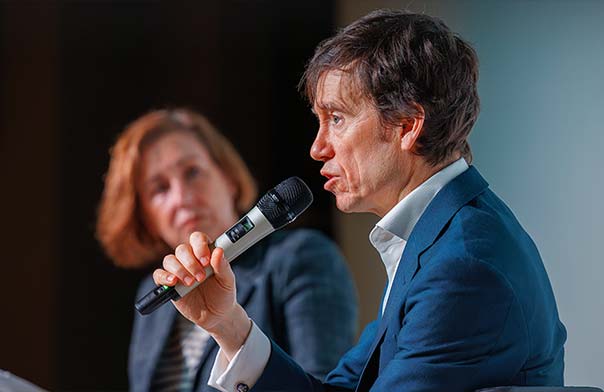
Rory Stewart speaking at our last Speakers Breakfast event.
I’ve been at JLA for 16 years, and it’s sometimes difficult to notice incremental change. But looking at the bigger market picture, I can see that we have more competitors, they are (for the most part) good companies with good people, in it for the right reasons and providing a good level of service to their clients and the wider industry.
We have also had to improve as a result. The nature of our world is we don’t sign contracts that last months or years. One bad booking after two hundred good ones could potentially end a relationship. This surely can only be a good thing for the corporate clients we serve and work with.
It feels good to work in an agile, competitive market, and though I worry about the effect technological change will have on my role and industry, this is outweighed by my confidence that people do actually want to listen to experts and meet in person and exchange ideas.
2. The talent we are booking is more diverse.
The conversation around Diversity, Equity, and Inclusion (DEI) has felt like a swinging pendulum over the last few years, but stepping back and looking at the bigger picture, it’s unarguable that the speakers we are booking are more diverse and therefore more interesting than at the beginning of my career at JLA.
To give Margaret Heffernan a second reference here, her TED Talk “Dare to Disagree” was the single biggest eye opener I’ve had on the benefit of diverse teams and organisations. Whilst I recognise that business and society is still imbalanced and has work to do, it’s important to recognise that things have changed.
So as winter ends, I can see more than a sprig of hope and positivity – the world keeps turning, ideas and the power of speech can still effect change, and the people thinking, writing and orating are increasingly likely to represent the world around us.
I haven’t used any AI tools to write this post.
Featured Keynote Speakers

Having run a range of digital and internet businesses in the US, Margaret has turned to analysing where leadership in organisations so often goes wrong. Ignoring potential problems, failing to encourage or develop talent, building a culture of isolation and internal competition; all are commonplace issues that could easily be addressed.

David has worked for the Economist for over a decade, living around the world and gaining a uniquely international perspective on global issues. After a period based in China as Beijing bureau chief, he returned to London to serve as the publication’s Geopolitics Editor.
If you would like more information on these speakers, or would like to discuss you own event requirements in more detail, please contact your JLA Agent or call 020 7907 2800.

JLA Speaks
Navigating Disruption Through Creativity: Five Voices to Inspire Embracing Change
In a time characterised by rapid technological change, particularly with the advancement of AI, the importance of creativity as a catalyst for navigating disruption has never been greater. Organisations are grappling with constant uncertainty, making it essential to harness innovative thinking to thrive, grow and remain resilient.
The following list of exceptional keynote speakers explores how businesses can combat uncertainty and disruption through the lens of creativity, while examining how AI and digital transformation can be leveraged to unlock new opportunities for growth and innovation.
Margaret Heffernan is celebrated for her insights into how the world’s most creative thinkers find inspiration in uncertainty. As a former CEO and author, she highlights the value of embracing ambiguity to foster innovative ideas. Her talks examine how businesses can learn from creative minds and adapt to the unpredictability of today’s environment. Heffernan analyses effective leadership, drawing on examples from emerging tech disruptors to established multinationals, and explores the culture of disruptive companies that have transformed the workplace.

Manon Dave is a technologist, music producer, and songwriter who thrives at the intersection of creativity, technology, and social impact. As the Principal Lead AI Engineer for will.i.am and Idris Elba, and the Chief Innovation and Creative Officer at Mindvalley, Dave champions equitable and inclusive AI. He believes that thoughtfully designed AI can foster a more connected and fair global economy. By developing powerful, intuitive, and inclusive tools, he transforms complex challenges into opportunities, paving the way for smarter, more connected communities.

Karen Blackett is a thought leader in creating vibrant and resilient organisational cultures. Having led UK operations for the global advertising giant WPP, Karen also served as CEO of Group M, WPP’s media investment arm. With over 20 years at the forefront of the media and advertising industry, she is one of the most influential figures in the sector. She focuses on how to motivate and engage diverse teams, merging growth with creativity. Blackett’s approach encourages organisations to foster environments that thrive on inclusivity and innovation, enabling them to navigate disruptions more effectively.
As Head of the Fashion Innovation Agency (FIA) at the London College of Fashion, Matthew Drinkwater leads efforts to integrate emerging technologies such as AI, AR and IoT into traditional industries. His work demonstrates how the fashion sector can adapt to disruption, with technology reshaping every stage of the industry – from manufacturing and supply chains to retail and design – through the adoption of innovative tools and forward-thinking design practices.

Vanessa Kingori made history as the first female business lead at British Vogue and now serves as Managing Director for Technology, Media & Telecoms at Google. Her work champions diversity, social responsibility and female empowerment while highlighting the value of inclusive perspectives in driving creativity and innovation. Kingori also shares practical advice on how organisations can embrace digitalisation, encouraging companies to remain agile, adopt new technologies and evolve their strategies while staying true to their original purpose in an increasingly fast-changing digital landscape and shifting consumer expectations.
Final Thoughts: Putting Creativity and Innovation at the Forefront of Change
In a world facing limitless disruption and uncertainty, these conference speakers exemplify how creativity can be harnessed to navigate challenges and inspire innovation. They offer valuable insights into fostering resilient cultures and thriving in a rapidly evolving world.
If you would like more information on these or any other speakers, or would like to discuss you own requirements more generally, please contact your JLA Agent or call 020 7907 2800.