 Simon Williams
The BBC presenter, Oxford Fellow, data detective and million-selling author is a compelling storyteller on economics, psychology and the unexpected bits in between. Tim explores innovation and how ideas spread, what disasters teach us about ourselves, the power of price, and the use of uncertainty as a competitive weapon. He also reveals truths and myths in data – whether public information, misinformation or deliberate disinformation.
Tim Harford is a world-renowned behavioural economist, award-winning Financial Times columnist, data detective and BBC broadcaster. Described as ‘Britain’s Malcolm Gladwell’ (and as 'a genius at telling stories that illuminate our world' by Gladwell himself), and by the New Statesman as ‘perhaps the best popular economics writer in the world’, Tim brings storytelling, humour, and intelligence to the world of data and statistics.
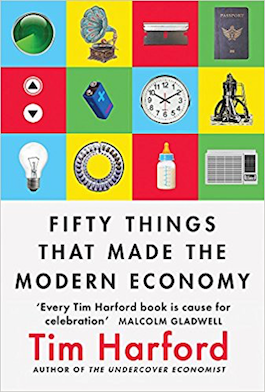
His Radio 4 show More or Less looks at the truth behind dubious statistics and manipulated figures. In the midst of the Covid-19 pandemic he also hosted How To Vaccinate The World, with guests including Bill Gates, Larry Brilliant and Anthony Fauci. He also hosts the BBC's radio series and podcast Fifty Things That Made The Modern Economy, as well as writing the accompanying books, and Cautionary Tales, which features stories of human error, with guests including Russell Tovey and Alan Cumming.
Whilst he’s a ‘serious’ economist with a career spanning Oxford, Shell and the World Bank, Tim’s FT columns dwell on the economics of daily life and offer tongue-in-cheek solutions to readers’ problems. His first book The Undercover Economist, sold almost two million copies, and built on these themes. It was likened to Freakonomics in its explanation of everything from coffee shops to organised crime to development aid. He's since gone on to be one of the foremost writers on economics.
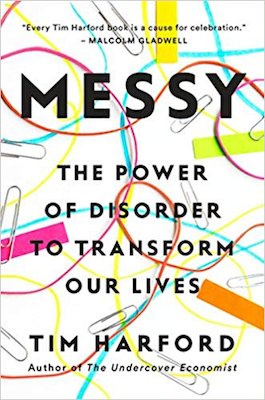
Tim’s other titles include: The Logic of Life which applies economic theory to the world to explain how rational (or otherwise) our decisions are; Adapt: Why Success Always Starts With Failure which shows how challenges of all types need to be tackled by learning to improvise and allowing for failure. Messy: How to Be Creative and Resilient in a Tidy-Minded World, considers why tidiness, organisation and predictability aren’t always the best environments to foster innovation and achievement; and How to Make the World Add Up: Ten Rules for Thinking Differently About Numbers, equips readers with the tools to understand and question the numbers that dominate headlines, and sometimes seem to confirm our own biases.
Tim looks at why it’s so hard yet so important to learn from mistakes, how to deal with uncertainty, how forecasting works and what to do when it doesn’t, and why the wrong sort of innovation can be a distraction. Taking in everything from the military to game shows, aviation to ballet, he questions received wisdom, common sense, and statistical certainty. His accessible, easy style provides entertaining, thought-provoking insights relevant to every person and organisation. He is a member of Nuffield College, Oxford, and the only journalist to be an honorary fellow of the Royal Statistical Society. He's a two-time winner of the Bastiat Prize for economic journalism and has been named Science and Data Commentator of the Year, Economics Commentator of the Year, and has won the Society for Business Economists writing prize and the Royal Statistical Society prize for journalism.
© Copyright 2024 JLA. All rights reserved.
The Undercover Economist was the first book I read when I joined JLA – since then I’ve never failed to be impressed by Tim. He makes you look at everything differently. Hearing his new speech on Big Data was a revelation: you realise the challenge is not to get the biggest data set, but the right data! He has a knack for making the seemingly impenetrable blissfully clear.
JLA Agent Jethro Fox