David Olusoga
Historian, Writer and Presenter
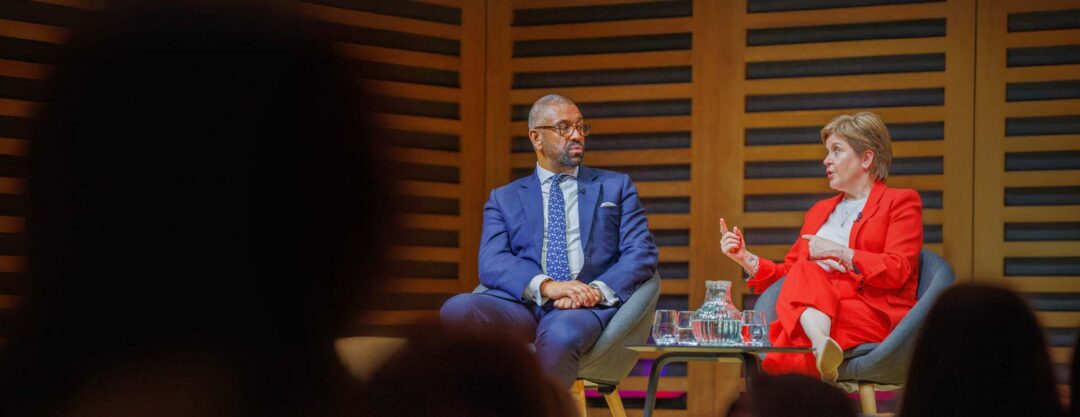
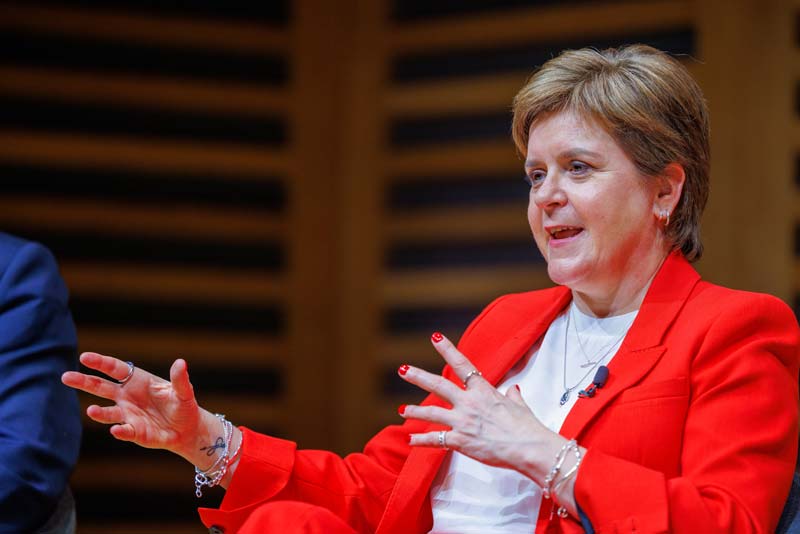
First to the stage last Tuesday at JLA’s inaugural Festival of Speech were Former First Minister of Scotland Nicola Sturgeon and Former Home Secretary and Foreign Secretary James Cleverly, for an in-depth and candid discussion ranging from the current state of politics in the UK, to their own individual experiences working in the field.
We’ve broken down four key themes that came to light during the conversation.
In the context of political debate, it might seem counterintuitive to hope your opponent puts up a tough fight. However, despite their ideological differences, both Nicola and James agreed that tussling with a formidable opponent is much more valuable than securing an easy win.
Opening last Tuesday’s event, the pair discussed how politics is at its best when ideas are challenged and sharpened through debate. James was quick to liken debate to sport: real progress comes when you’re tested by worthy opponents, not when the contest is easy.
For business leaders worldwide, the implication is clear – confrontation ultimately leads to higher quality progress, whether that’s in parliament, the boardroom, or beyond.
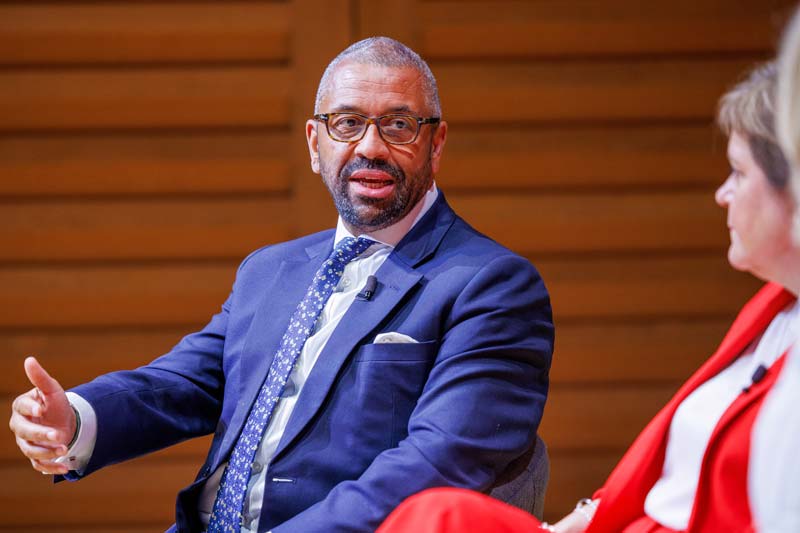
Working in the public sphere brings with it a range of inevitable challenges: from bearing the brunt of public scrutiny, to your name slotting into witty headlines across the media. Yet, it’s important to recognise how these experiences contrast for male and female politicians respectively.
During the discussion, Nicola reflected on the sheer number of differences between treatment of men versus women in the political sphere. Whether it’s highlighting her appearance or her tone of voice, many traits that would be celebrated in men are often cast as flaws in women.
Both went on to highlight the heightened toxicity of these judgements in the age of social media, where abuse can be delivered directly to the phone in your pocket. With this, the pair recognised how the tone of political discourse has noticeably hardened, and resilience is more essential to politicians – and leaders across the board – than ever. Critically, both James and Nicola recognised the need in a cultural shift towards challenging ideas without resorting to slander and belittlement, and the return of open, respectful communication.
Another key theme from Nicola and James’ conversation was the state of transition UK politics currently inhabits. Today, voters are increasingly sceptical of traditional parties and structures, and more inclined to support movements that promise disruption.
Responding to this trend, James argued that lasting impact comes when politics is bigger than any one individual — when broad “coalitions under one roof” force compromise and dialogue rather than falling into a cycle of endless fragmentation. With this in mind, he didn’t feel that the current two-party system as we know it was under significant enough pressure to change.
Alternatively, Nicola identified a real possibility of the UK’s dominant parties shifting quite significantly – noting the threat of further fragmentation. In her eyes, the balance and constitution of the UK’s two-party system may well undergo a significant degree of transformation.
Regardless of which way the pendulum swings, Nicola went on to later emphasise the importance of authenticity in uncertain times. People are quick to sense when leaders are simply chasing the mood of the moment, whilst the leaders who last are those who remain grounded in their values and consistent in their purpose, particularly amidst instability.
What emerged most strongly from Nicola and James’ conversation was not just a diagnosis of where politics stands, but a message about how best to lead during uncertain times.
Both warned against the temptation to disengage when the climate feels noisy or hostile: stepping back leaves space for shallow answers to take hold. Instead, leaders – whether in politics or business – need to remain visible, principled and consistent. Authenticity and patience matter more than chasing every headline or trend.
In a world where disruption is the norm, success depends on keeping focus, staying true to your values, and continuing to speak up for the issues that matter most.
If you missed the event, you can watch additional highlights on our dedicated Festival of Speech page. To enquire about booking James or Nicola to speak at your own event, please contact us today.
We will be delving deeper into the other 3 sessions of the night in the coming weeks and bringing you key takeaways from each speaker.


October’s rolling around again, which importantly means one thing: Black History Month is almost here. Up and down the UK, companies and councils will be turning their attention to celebrating the incredible contributions Black people have made to politics, music, literature, social justice, and academia.
Though we may put on and attend these events, many of us still know little about Black History Month beyond its occurrence in October. When did it start? Why does it matter? And what’s this year all about?
Black History Month events set out to recognise the adversities faced by Black communities, as well as celebrate the achievements of Black people across history. It began in 1926 in the US and was founded by historian Carter G. Woodson to ensure that the role of Black communities in shaping the world would not be overlooked.
What started as a week gradually grew into the month-long celebration we know today, taking place each February in the US and Canada and every October here in the UK and Ireland.
In 2025, we still live in a world where certain voices and stories get pushed to the margins. Black History Month is a critical opportunity to acknowledge the impact of Black leaders, artists, scientists and activists, to highlight perspectives and experiences that are too often absent from the mainstream, and to reflect on the ongoing fight for racial justice and equality. It is also a time to celebrate the richness of Black culture and identity, and to inspire future generations through resilience, creativity and leadership.
The theme for this year is Standing Firm in Power and Pride, a chance to celebrate the continued strength, resilience and achievements of Black communities. It calls on us to recognise the determination and creativity that have driven progress when the odds were stacked high. It’s about honouring the pride that comes from cultural heritage, identity, and unity – something we can all learn from.
At JLA, we work with hundreds of thought leaders, keynote speakers and presenters who bring diverse perspectives to Black History Month events and beyond, helping audiences to reflect, learn and be inspired by the trailblazers who continue to spearhead important change in our world.
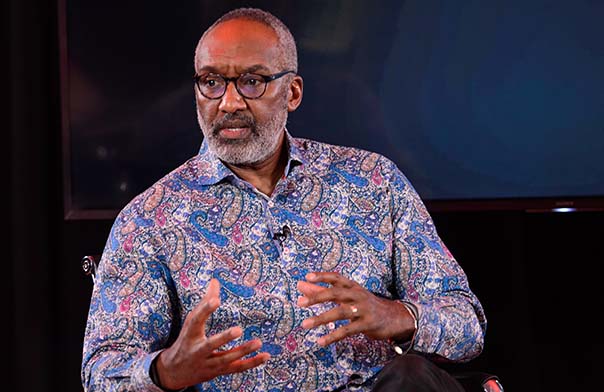
Historian, Writer and Presenter
Former Met Superintendent & Author, Closing Ranks

Mathematician & STEM Advocate

Founder, Operation Black Vote

Social Entrepreneur
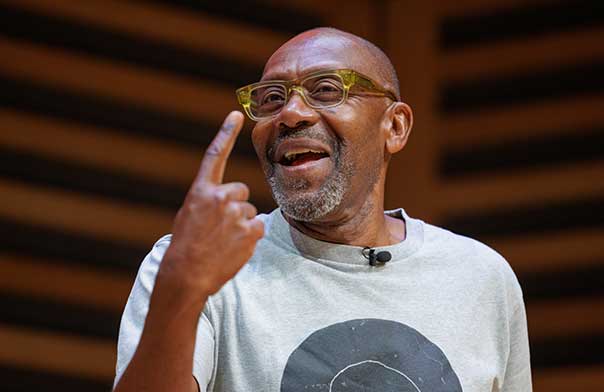
Actor & Comedian

England Rugby World Cup winner
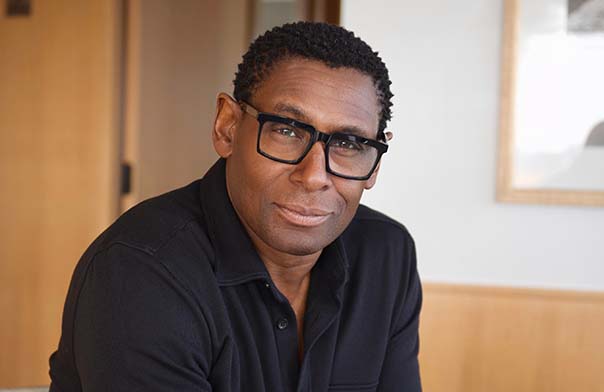
Actor, Homeland, The Night Manager
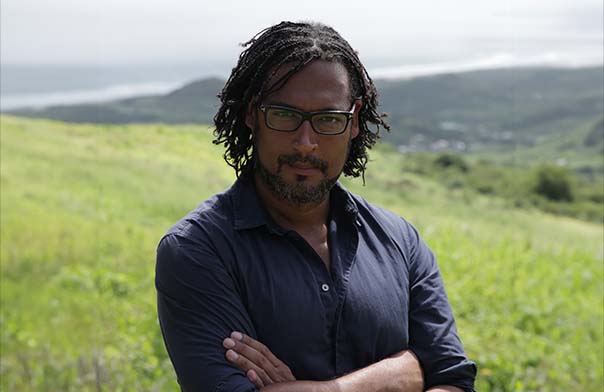
David is a celebrated documentary maker, historian and writer behind Black and British: A Forgotten History. From exploring the hidden stories within Georgian townhouses to examining how art intersected with imperial power during the Victorian era, David illuminates why understanding our past remains vital.
As a founder of the Black Police Association and author of Closing Ranks, his memoir and call to action, Leroy has been a powerful voice for fairer policing and stronger support for vulnerable young people. Drawing on themes of resilience, leadership, and transformation, Leroy brings an inspiring perspective that makes him an outstanding speaker for Black History Month.
Space scientist and broadcaster Dr Maggie has broken barriers in science and education, from developing instruments for the James Webb Space Telescope to inspiring thousands of young people through her outreach work. Overcoming challenges such as dyslexia, she has become a leading advocate for diversity and inclusion in STEM and an inspiring role model, making her a powerful voice for any stage.
Mathematician & STEM Advocate, Anne-Marie embodies the trailblazing spirit we celebrate during Black History Month – her genius, activism and commitment to inclusivity underscore how history is being made today. From breaking academic records as a child to creating platforms that open doors for others, her story continues to inspire the next generation of STEM leaders.
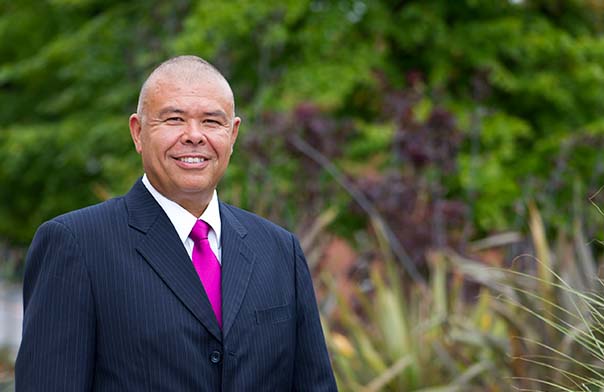
Founder of Operation Black Vote, Simon has dedicated his career to tackling the under-representation of Black communities in politics and public life. Since 1996, his work has inspired greater participation and civic engagement across the UK. Now Principal of Homerton College, Cambridge and the first Black man to lead an Oxbridge college, Simon brings a unique perspective on leadership, representation, and social change.
From stage to screen, David has broken barriers, as the first Black actor to play Othello at the National Theatre, and now as the first person of colour to serve as President of RADA. His critically acclaimed memoir Maybe I Don’t Belong Here and his documentaries covering mental health, race, and identity bring raw honesty and transformative storytelling, make him a powerful and poignant speaker.
As one of England’s most celebrated rugby players, Maggie helped secure a Rugby World Cup and seven consecutive Six Nations titles before becoming a trailblazer in sports media and governance. From being the first former female player to commentate on men’s international rugby to serving on the Rugby Football Union Council, she has broken barriers both on and off the pitch.
Natalie is a social entrepreneur and broadcaster, known for her leadership at Belu Water and work driving purpose-led business. A passionate advocate for inclusion and social impact, she inspires organisations and individuals to create positive change, making her an inspiring and engaging conference speaker.
Sir Lenny Henry is a comedian, actor, and writer with a career spanning decades, known for breaking barriers for Black talent in British entertainment. Beyond his performances, he champions diversity and inclusion, using his platform to inspire change. His experience, insight, and advocacy make him a powerful speaker for Black History Month.
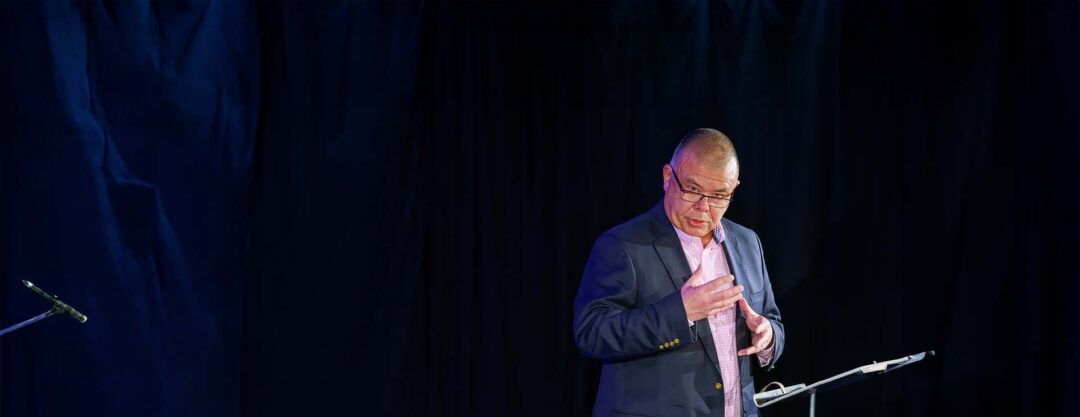
The coronavirus pandemic in 2020 was a seismic global event. It plunged whole societies into temporary chaos, and affected everyone’s lives in different ways. Mine too. I had joined the Department of Health and Social Care (DHSC) in 2017 as Deputy Chief Medical Officer, on secondment from the University of Nottingham. I’d already lived through several government crises, not least of which was the Salisbury poisonings. I wasn’t expecting anything else on top!

Some people have heard me say in previous talks and fireside chats that I was ‘in the wrong place at the wrong time’. It did feel like that in some ways, especially as I could have made an exit in September 2019; however, I almost always go on to qualify that initial remark by stating that others might judge, and sometimes I also agree that, I was ‘in the right place (and the right job) at the right time’. I suppose it is true that very few people, and even fewer doctors, have managed to pack in, over their career spans, time in all of the following: clinical practice, academia, public health agencies, the pharmaceutical and vaccine industries, and central government policy making, whilst making respiratory viruses essentially my life-long special interest. You name it, I seem to have done it – from mid-air and mid-ocean emergencies, to accidental self-defibrillation! Most of the above happened by accident, rather than through deliberate career planning; but I like to think that all that I had learned across those different sectors and cultures made me quite a unique beast in the somewhat traditionally fashioned corridors of the UK’s Civil Service; and in turn that helped me do the job I did from early 2020 through until 2022.
I left DHSC in the Spring of 2022. Some in the media linked this to my likely protestation at rule-breaking by some political and Civil Service leaders who themselves had set the rules for the public, and should then have led by example. In fact, the timing of my departure was all purely coincidental and I simply felt I had done the best job I could, we were beginning the return to normality, and it was therefore time to move on. I don’t mind saying I was also pretty tired. Exhausted might be a truer expression.
Five years since the start of the pandemic have flashed by in an instant. Sometimes these things are just distant memories to me; sometimes it feels like yesterday. The trick is to learn from it all, not dwell on that darkness. I’ve always been a watcher and an observer of human behaviour, organisations and cultures. Being half-Vietnamese but brought up entirely in Britain has, no doubt, helped me think more about how human ecosystems work, what matters, and what you need to succeed. At first, so many people wanted to hear from me what I call ‘the pandemic story’…my view of how we got through this, and the pivotal moments in government. But, over time, I’ve realised I’ve actually a lot more to say about how complex systems work, how science mixes (or doesn’t) with politics, and how to communicate with clarity when the chips are down. How you navigate all of that, and how you manage to stay sane and keep leading under pressure and in the spotlight are lessons that can be taken into so many different walks of professional life.
I have also had the honour to speak at a JLA Speakers Breakfast on Leadership Under Pressure, highlight of this can be seen below:
Jonathan Van-Tam is a public health specialist and infectious diseases expert who gained prominence as Deputy Chief Medical Officer during the COVID-19 pandemic, becoming well-known for his direct communication style from Downing Street and his role in the UK’s vaccine rollout. He has been recognised with a knighthood and the Royal Society’s Attenborough Award for his contributions to public health and science communication.
To enquire about Jonathan speaking at your next event or for advice on selecting the perfect conference speaker for your next event, don’t hesitate to get in touch with us!

Good leaders know they can’t always predict the future.
Great leaders know they don’t have to.
I’ve spent my career building and backing ideas that seemed impossible at the time. From the early days of Shazam, before smartphones even existed, to investing in founders who are now shaping the frontier of AI, one pattern keeps emerging: the world doesn’t stand still. And neither can leadership.
Right now, the pace of change is unlike anything we’ve seen before. Artificial intelligence is accelerating innovation and it’s rewiring how businesses operate, how teams think, and what people expect from their leaders. At this moment, it’s not just companies that need to adapt. It’s leadership itself.
While leadership today demands flexibility, sometimes even improvisation, there are still a few principles that can help us lead more effectively through change.
There was a time when leadership meant control. Tight plans. Clear chains of command. Five-year strategies written in stone. That kind of thinking might have worked in a more predictable world. But AI moves differently. It doesn’t follow the rules, it writes new ones as it goes.
If you’re still leading with certainty, you’re already behind.
The companies I meet today, whether they’re building AI-powered decision tools or platforms that allow anyone to create with large language models, are teaching me the same thing over and over again: adaptability beats perfection. The goal isn’t to know everything in advance. It’s to build teams and systems that can learn fast, flex when needed, and respond to change in real time.
I remember speaking with the founder of Dust, whose team is helping companies build their own internal AI tools with remarkable speed. What stood out wasn’t just the product; it was how openly the founder talked about uncertainty. There was no bravado, just clarity: “We don’t need to be right at launch. We just need to get better every week.” That mindset? That’s leadership in 2025.

Just a few days ago, I met an entrepreneur, Noamaan, who built a fully electric truck now used by Amazon in the UK. Noamaan didn’t have a background in automotive engineering. He was drafting a clean air policy. But when traditional truck makers dragged their heels, he borrowed money from his dad, teamed up with his brother, and got to work.
When I asked him why he did it, his answer was simple: “Because everyone else said it was too hard.”
That’s the leadership shift we’re seeing. It’s not about having the answer. It’s about asking better questions. Not “Is it possible?” but “What would it take?”
And in the AI era, asking the right question is more powerful than ever. Machine learning models thrive on clear objectives and good data. So do teams. Your job as a leader isn’t to micromanage the how. It’s to create a culture where people can figure it out, with speed, trust, and enough safety to take a risk.
f there’s one thing I learned from building Shazam, it’s that chaos is inevitable. The team changed, the business model changed, the tech landscape shifted underneath our feet. But what held us together was a clear sense of purpose.
People often ask me what the “secret” to Shazam’s success was. I don’t have a simple answer. It wasn’t a silver bullet. It was 18 years of resilience, reinvention, and yes, moments of blind faith. But if I had to name three things, I’d say: a clear mission, an unreasonable amount of persistence, and a team that stuck together when it mattered most.
Also… we got lucky. (Every entrepreneur needs their Daft Punk moment.)

I’m meeting more founders now who are letting go of the old leadership models. They’re building environments, not empires. They’re obsessed with feedback, not hierarchy. They’re less interested in being the smartest person in the room, and more focused on making everyone smarter.
At Liveblocks, the team is rethinking how people collaborate in real time. What I admire isn’t just the tech—it’s how they operate internally. Leadership there feels more like quiet orchestration than command-and-control. It’s about giving people space, removing friction, and trusting the process. No one’s trying to be the hero, they’re trying to build something great together.
Leadership used to be about directing traffic. Now it’s about designing the road.
The smartest AI systems don’t run because someone told them what to do. They run because someone set the right conditions. In a way, great leadership is becoming more like machine learning itself: set the reward function, define the boundaries, and let the team discover the best path.
It’s not easy to lead this way. It takes humility. And courage. But the results are extraordinary when you do.
AI can write, code, automate, and optimise. But it can’t create belief. It can’t build culture. It can’t walk into a room and make a team feel like they’re part of something bigger than themselves. That’s still your job.
If you’re leading in a time like this, where the ground keeps shifting, where every week brings a new tool or threat or breakthrough, your people don’t just need you to make decisions. They need you to give meaning.
Because the art of adapting isn’t about knowing what’s next. It’s about building something that gets stronger when you don’t.
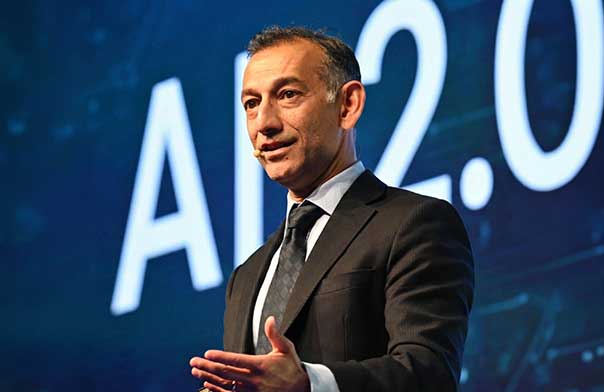
Dhiraj, co-founded the music recognition platform Shazam, earned recognition from the Financial Times as one of Europe’s Top 50 technology entrepreneurs. Today, he provides strategic guidance to organizations across various scales, helping them navigate unpredictability, cultivate agile teams, and foster innovation amid constant change.
To book Dhiraj to speak at your event or for more tailored adviced on selecting your next conference speaker, do not hesitate to get in touch with us.

After an electric tournament and an unforgettable final, the Lionesses have done it – England are European champions. Again. They did it the hard way, with all three knockout games going to extra time, but through passion, belief and unity on the pitch, they’ve captured the hearts of a nation and written themselves into sporting history.
The Women’s Euros have once again shown how engaging and unifying sport can be. With standout performances and a brilliant team spirit, players like Chloe Kelly, Leah Williamson and Hannah Hampton have become role models for the next generation, not to mention potential guest speakers in the coming years.
At JLA, we have the privilege of working with many outstanding female sports stars – now fantastic motivational speakers – who are just as inspiring off the field as they were on it, motivating, challenging and energising their audiences across the board. Here are just a few to consider…
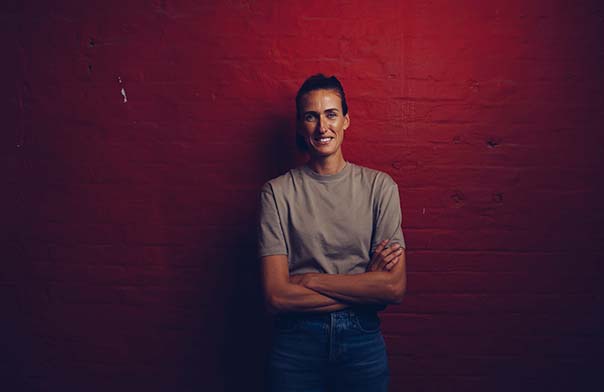
Former England Midfielder

Head Coach, England Women’s National Team
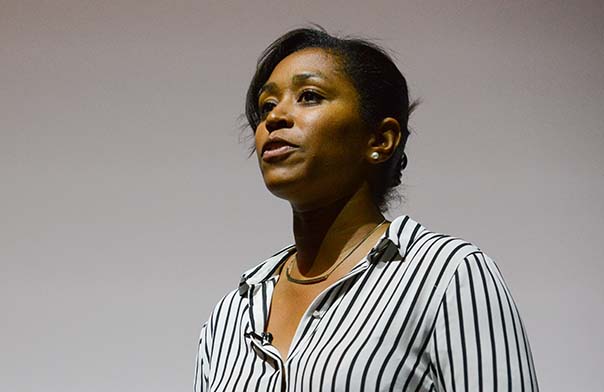
Former England Cricketer

Former Lioness
England Rugby World Cup winner

Paralympic Athlete & Cycling Record holder
.jpg)
Football Focus

Hockey Gold Medalist & Former Captain

Olympic Swimming Champion
Former England international Jill Scott enjoyed an illustrious 18-year career with clubs including Manchester City, Everton, Sunderland and Aston Villa. She bowed out on a high, winning Euro 2022 with the Lionesses in her final match, finishing as England’s second-highest capped player.
After leading the Lionesses to another historic victory, Sarina Wiegman has further cemented her place as FIFA’s most decorated female football manager, and one of the most successful coaches in the history of the game. Her calm authority, clear vision and inspiring leadership have earned her global recognition.
Former England cricketer Ebony Rainford-Brent was the first black woman to play for England, helping retain the Ashes and win the World Cup and Twenty20 in one year. Now Test Match Special’s first female analyst and Director of Women’s Cricket at Surrey, she mentors players and management. Ebony encourages us to challenge ourselves and see things from a fresh perspective.
Former Lioness Ellen White is England Women’s all-time leading goal scorer, with a career that includes three FIFA Women’s World Cup tournaments. She won the Bronze Boot in France 2019 and was named England’s International Player of the Year three times.
England Rugby World Cup winner Maggie Alphonsi was vice-captain of the national side, winning a record-breaking seven consecutive Six Nations titles and reaching two World Cup finals, lifting the trophy in one. In her speeches, she explores leadership, resilience and performing under pressure.
Paralympian and cycling record holder Kadeena Cox made history by winning gold in two sports at the same games. After being diagnosed with Multiple Sclerosis, she went on to win six medals across athletics and cycling in 2016 and 2020. Off the track, she champions diversity in sport and has appeared on I’m a Celebrity and Celebrity MasterChef.
After captaining Arsenal and earning over 100 caps as a Lioness, Alex Scott is now one of the most recognisable and respected faces in sports broadcasting. A trailblazer both on and off the pitch, she made history as the first woman to commentate on men’s international and Premier League matches for the BBC and Sky.
Hockey gold medallist and former captain Kate Richardson-Walsh is the most capped woman in British hockey history. As captain for over a decade, she led the team through major change and on to Olympic glory. In her talks, Kate shares powerful lessons on leadership, team culture and achieving the unexpected.
Olympic champion Rebecca Adlington made history in Beijing with gold in the 400m and 800m freestyle, the first British woman in 40 years to win Olympic swimming gold. Now retired, she champions swimming education and shares insights on focus, motivation and purpose.
For more insight into what any of the above speakers can bring to your next event or for other options on female sporting speakers to build on the Lionesses’ success, please do not hesitate to get in touch with us!

At JLA, we’ve seen an increase in demand for speakers across several strategic areas. Our booking data reveals that geopolitical speaker requests have grown by 350%, AI expert bookings have increased by 221%, and leadership speaker demand is up 76%. These figures reflect a growing emphasis on performance, risk management, and navigating complexity in today’s business landscape.
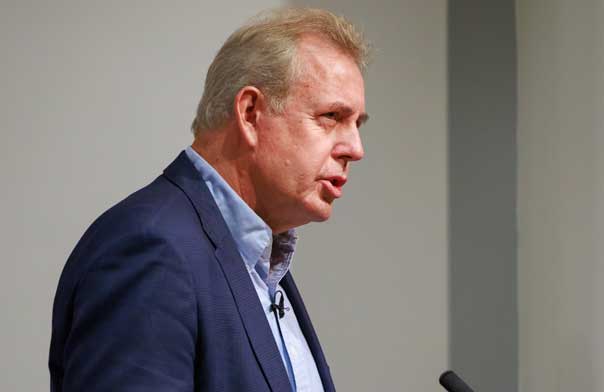
In 2025 alone, former UK Ambassador to the United States Lord (Kim) Darroch has been booked more than a dozen times in the first half of 2025.
Nothing has grown faster in our bookings than geopolitics. With a 350% increase in requests, this area now tops our demand list. Recent global events have made geopolitical awareness more than just relevant; it’s now mission-critical for many businesses.
Clients aren’t just looking for commentary. They want geopolitical speakers who can analyse international trade, diplomacy, market shifts, and conflict, and translate that complexity into business-relevant takeaways.
As we’ve seen, there’s been a clear shift toward more targeted expertise. Organisations are asking us for speakers who can tailor their content to specific regions, industries, or operational concerns. Uncertainty has made understanding the global landscape more vital than ever.
Leadership speaker demand has risen by 76%, and we’re seeing a real shift in what clients expect from these sessions. Today’s organisations want more than traditional takes on vision and strategy; they need speakers who can address remote work, cultural shifts, digital transformation, and leading through volatility.
Clients are asking for speakers who can help leaders deal with the complexity of modern business: everything from AI integration to managing distributed teams to keeping pace with rapidly evolving customer expectations.
With over 20 bookings already this year, Rahaf Harfoush is in high demand as an expert in Emerging Technologies, Innovation and AI.
We’ve witnessed a 221% spike in bookings for AI experts, a clear sign that artificial intelligence is now a top agenda item across virtually every sector. From marketing and HR teams to C-level audiences, clients are asking us for speakers who can cut through the hype and address both the fundamental principles of AI and its real-world impact.
We’re booking speakers who explore everything from how AI works, to its implications for productivity, workplace transformation, and long-term commercialisation. Whether it’s strategic overviews or operational guidance, our clients want tailored insights they can act on.
As Jethro Fox, one of our account managers, puts it:
“From our enquiries and conversations with clients, it’s clear AI is at or close to the top of many agendas, regardless of sector or audience.”
We’ve also seen a 106% increase in bookings for high-performance and teamwork experts. Organisations are looking for speakers who can deliver real, measurable advice on boosting productivity and improving collaboration.
This reflects a growing desire for practical, culture-focused sessions that move beyond motivation and into lasting impact.
Across all categories, our data is showing a more strategic mindset from clients when it comes to speaker selection. We’re seeing clear patterns: leadership, tech, performance, and risk are often requested together, pointing to an integrated approach to capability-building.
“Clients aren’t just planning events, they’re planning for the future,” says Brogan West, JLA account manager. “And keynote speaker selection is becoming part of how they futureproof their organisations.”
Our booking data offers a unique snapshot of corporate priorities in 2025. From AI to geopolitics, leadership to performance, we’re seeing a shift toward conference speakers who can help organisations navigate complexity, embrace change, and build resilience.
At JLA, we see this as more than a trend. It’s a signal of what matters most to businesses right now, and where they’re investing their time and attention for the road ahead.

I spent forty-five years in the British Diplomatic Service: four decades of rich experiences and extraordinary memories. To pick out some highlights, I recall accompanying David Cameron on a pre-Christmas trip to see our troops in Afghanistan. We visited an isolated British contingent holed up in a “Forward Operating Base”; in reality a fort in the middle of the Helmand desert. As night fell, the soldiers gathered for a carol concert, and the songs which ring out across every village green and town square over the Christmas period floated up into a clear, chilly and star-studded Afghan sky.
And there were other moments, both dark and light. I headed the Balkans Department of the FCO during the break-up of Yugoslavia, and visited Sarajevo while it was under siege from the Bosnian Serbs, and by contrast, Kosovo after NATO had forced the Serbs to pull out. I went to Libya several times after the fall of Gadaffi, seeing at first hand its collapse into civil war. I went to Gaza while it was still a metropolis rather than a wasteland. I worked for two Prime Ministers, Europe Adviser to Tony Blair and National Security Adviser to David Cameron, and travelled with them so I was “in the room” for an Oval Office meeting with President Obama, a private dinner in Beijing with President Xi of China, and a lunch with Vladimir Putin in his summer residence on the shores of the Black Sea. And I attended forty-three European Councils in succession -to be honest, only a few of them memorable, and nowadays blending themselves in my mind into one long sleepless night.
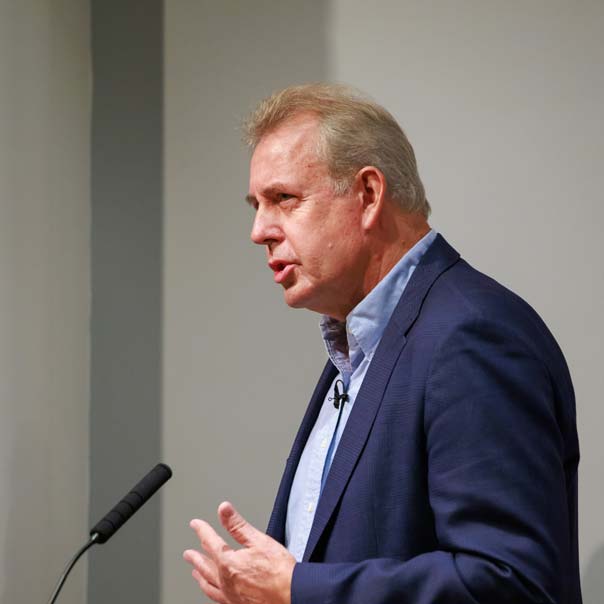
Lord (kim) Darroch speaking at a JLA Speakers Breakfast event.
But across all of these years, I cannot remember ever feeling as uncertain or concerned about the state of the world as I do now. We are more than 1,000 days into a war in Europe which has left close to a million and a half killed and wounded and caused the destruction of thousands of homes and countless lives. The Middle East remains locked in a cycle of violence, with an almost totally destroyed Gaza at the epicentre, a continuing Israeli military operation, intermittent and inadequate food and medical supplies to a beleaguered Palestinian population, and no lasting solution in sight. The United States has joined Israel in bombing Iran; time will tell whether their joint claims of the comprehensive and complete obliteration of the Iranian nuclear programme are accurate.
Meanwhile, the great International institutions of the post-war era, led by the United Nations and the World Trade Organisation, have never been weaker or more ineffective. The days of the great global trade liberalisation agreements are long gone, with protectionism now on the rise. And we are seeing an increasingly assertive China building links with the developing world and constructing alternative international structures: the Chinese leadership believe this century belongs to them.
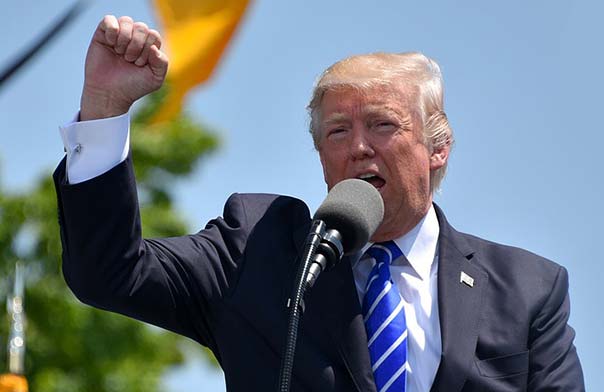
With over four decades of experience at the highest levels of diplomacy, largely centred on national security and European affairs, Lord Darroch has stepped back from frontline service but remains an astute observer of transatlantic relations and the shifting tides of global geopolitics, from trade and defence to democratic stability.
As a keynote speaker, Lord Darroch brings sharp insight, first-hand experience, and a rare candour that offers audiences a compelling perspective on the challenges shaping our world today.
To enquire about Lord Darroch speaking at your next event or to get advice tailored to your specific event needs, don’t hesitate to get in touch with us!

Music has the power to transform the mood of any event, whether that’s at an awards ceremony, your office Christmas/Summer party or a conference afterparty.
We are lucky to work with some very talented music acts at JLA; here’s a small handful of our favourites to give you some inspiration:
The ultimate party starters, AlleyCatz are an energetic covers band renowned for their electrifying sets. With a setlist packed full of crowd-pleasers spanning multiple decades – CHIC, Daft Punk, Rihanna, to name a few – expect guests dancing and singing along to every track. Available in a variety of different lineups, ranging from a 5 piece up to a 10 piece band, they tailor their sound to suit your event and audience size. AlleyCatz are a joy to work with and their energy and talent can bring any event to life!
An awards ceremony doesn’t feel complete without live music, and you can always rely on Jazzbomb to lift the room with their big band glamour. Here’s what to expect: live jazz in the background during the drinks reception as guests arrive followed by a 5 minute high energy show before the awards start. During the ceremony, they’ll play upbeat stings while nominees receive their awards, helping keep audiences engaged and entertained, particularly towards the end when people start to get rowdier!
Natalie Williams Soul Family
Gospel, Funk, Soul & R&B
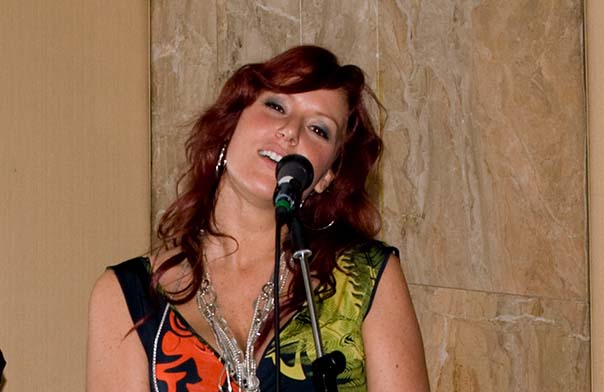
MOBO-nominated Natalie Williams fronts Soul Family, an iconic 10 piece band featuring some of the best R&B, soul and jazz musicians in the UK. Their party setlist typically includes the likes of Stevie Wonder, Diana Ross, The Jackson 5 and Chaka Khan. If you’ve ever been to their longstanding residency at Ronnie Scott’s, then you’ll know your audience is in for a treat! As well as the Soul Family, Natalie also performs with her own five-piece band for smaller and more intimate events, and also in duo, trio and quartet lineups.
Best known for his work in fashion and TV, Gok Wan has also become one of the UK’s most dynamic DJ’s. Gok launched ‘Isolation Nation’ during the pandemic, a series of livestreamed DJ sets from his kitchen that at one point had over 1 million people virtually raving together, and is now a regular on the UK festival scene. Perfect for any staff party, Gok’s sets offer a fun space for teams to relax and reconnect beyond the screen, which is vital in the world of hybrid working.
These are just a few of the fantastic music acts we offer. For more details or to discuss entertainment for your next corporate event, please contact us today.

With turmoil in the Middle East the likes of which we haven’t seen in decades, it’s vital all companies and organisations understand the potential trajectory and scenarios currently playing out.
The short and long-term effects on economies, markets, supply chains and international relations are wide-ranging. It’s important that everyone at every level has some insight into the strategic implications, and these conference speakers are experts at explaining the complexities and impact of events.

Former Home Secretary and Foreign Secretary

BBC Chief International Correspondent

Former Director General, MI5 and Former Lord Chamberlain
.jpg)
Former British Ambassador to the United States, and to the EU
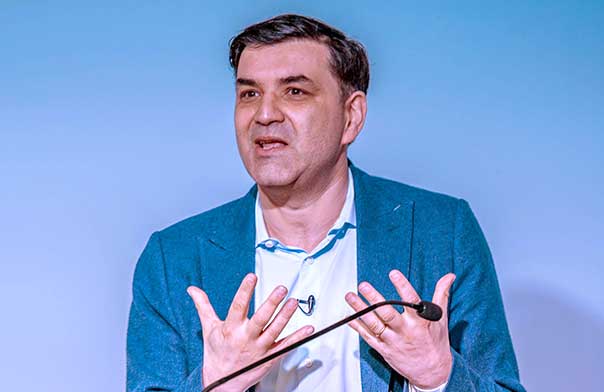
Former BBC Security Correspondent; The Rest is Classified
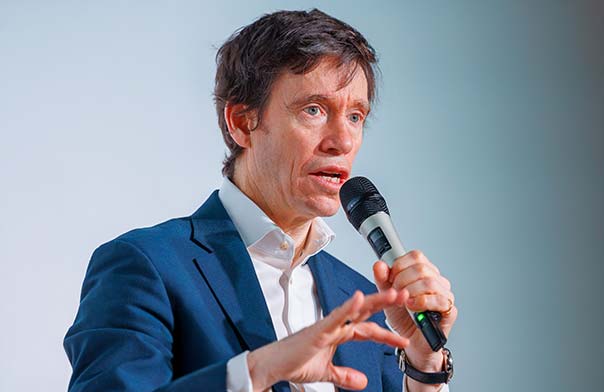
Academic, Former Politician & Diplomat, The Rest is Politics

Former White House Director of Global Engagement

ITV Political Editor, The Rest is Money
For more insight into what any of the above speakers can bring to your next event or for other options on geopolitical speakers, please do not hesitate to get in touch with us!

Throughout my career at Google, I’ve come to realise that innovation isn’t born in a vacuum. It doesn’t happen just because someone in the corner office says it’s important or because a team launches a shiny new product.
True innovation takes root in the culture of a company – in the way people think, collaborate, and take risks together. That’s why building a world-class innovation culture is less about slogans and more about daily habits, leadership choices, and shared beliefs.
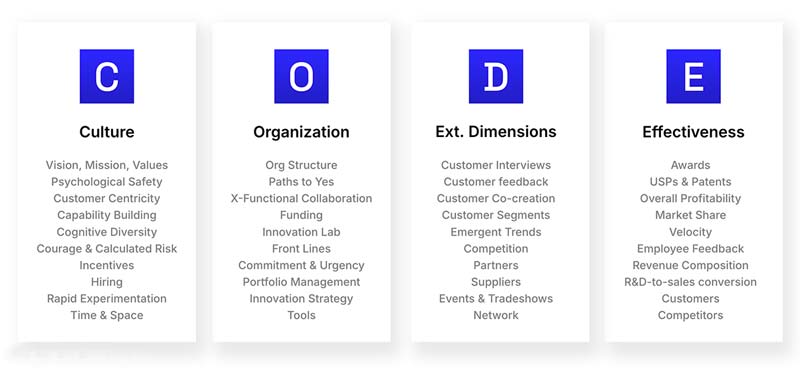
To provide a clear framework for this, I’ve developed The Innovation Scorecard™, organising innovation across four pillars: Culture, Organisation, External Dimensions, and Effectiveness. But it all starts with culture, because culture is where innovation lives or dies.
Below, I am sharing ten principles behind the kind of culture that fuels real, lasting innovation, brought to life by companies that are leading the way.
Innovation needs direction. A bold, authentic purpose acts as a filter for decisions and a magnet for aligned ideas. Patagonia’s vision – “We’re in business to save our home planet” – doesn’t just inspire; it drives everything from product design to marketing strategy. Their Worn Wear program, which encourages customers to repair gear rather than replace it, wouldn’t exist without this deeply lived purpose. When vision is clear and values are internalised, innovation becomes focused and meaningful, not just reactive or trendy.
2. Psychological Safety
If people don’t feel safe speaking up, innovation stalls. Google’s Project Aristotle studied 180 teams and found that the highest-performing ones shared a common trait: psychological safety. Employees who feel safe are more likely to share bold ideas, admit mistakes, and challenge the status quo. Google embedded this insight by training managers to model vulnerability, running inclusive team rituals like check-ins and retrospectives, and celebrating candour. Innovation thrives where fear doesn’t.
3. Customer Centricity
The most successful innovations solve real user problems. At Amazon, customer obsession isn’t a buzzword – it’s baked into their “working backwards” process. Before building a product, teams write an internal press release describing how it will benefit the customer. That forces clarity, empathy, and relevance. Their innovations in logistics (like one-click ordering and same-day delivery) weren’t born from brainstorming – they came from a deep understanding of what customers actually care about.
4. Capability Building
Innovation isn’t the job of a select few – it’s everyone’s responsibility. That only works if people have the tools and confidence to contribute. Intuit launched a company-wide program training employees in design thinking and rapid experimentation. Their “Innovation Catalysts” mentor others across the company, embedding a shared language and process for innovation. The result? More grassroots ideas, faster cycles, and fewer bottlenecks.
5. Cognitive Diversity
Homogeneous teams produce familiar ideas. Innovation demands friction – the productive kind that arises when people with different backgrounds, disciplines, and perspectives work together. At IDEO, teams are built intentionally with a blend of engineers, anthropologists, designers, and business thinkers. This diversity of thought leads to more holistic solutions, better user insights, and less groupthink. IDEO even uses tools like the AEM Cube to ensure cognitive diversity in how team members approach problems.
6. Courage & Risk-Taking
Real innovation means venturing into the unknown, which means failure is inevitable. What matters is how an organisation treats it. SpaceX is famous for its spectacular early rocket failures. But every crash was a learning moment. By setting audacious goals (like colonising Mars) and backing teams to take calculated risks, they’ve achieved some of the most groundbreaking engineering feats of the century. Innovation cultures normalise failure, not as a goal, but as part of the journey.
7. Incentives that Reward Learning
Innovation isn’t just about outcomes – it’s about behaviours. Amazon’s “Just Do It” awards celebrate employees who take initiative, regardless of success. Google’s “Courageous Penguin” award recognises bold failures that produced valuable lessons. These incentives send a clear message: trying, learning, and experimenting are what matter. Organisations that reward only success unintentionally discourage the very behaviours innovation needs.
8. Hiring for Curiosity
Innovative cultures start with who they bring in. Google looks beyond credentials, testing for problem-solving ability, adaptability, and creative thinking. They use structured interviews with real-world scenarios and hypothetical challenges. The goal is to find people who ask good questions, not just give good answers. Recruiting for curiosity ensures a steady flow of fresh thinking and energy.
9. Rapid Experimentation
Don’t wait for the perfect answer. The best innovators test fast, fail small, and learn quickly. Spotify exemplifies this with its autonomous “squads” – small, cross-functional teams that run A/B tests and ship iterative updates based on user data. This structure reduces bureaucracy and speeds up learning. Experimentation isn’t a side project – it’s a habit, deeply woven into daily operations.
10. Time and Space to Create
If innovation is always squeezed between urgent tasks, it won’t happen. 3M institutionalised this insight with its 15% rule – allowing employees to spend part of their time exploring new ideas. This led to the invention of Post-it Notes and countless other products. They also invested in dedicated innovation labs to prototype and test ideas away from day-to-day distractions. Making space – literally and figuratively – signals that innovation matters.
If your organisation struggles to innovate, it’s easy to point to budgets or tools. But often the real barriers are invisible: fear, misalignment, lack of trust, or unclear purpose. Culture sets the tone for everything else: the decisions people make, how they collaborate, and whether they’re willing to stretch beyond the known.
When the culture is strong, it lives in how people show up, challenge each other, the organisation and build the future together.
Chris Heemskerk is the Founder and CEO of The Innovation Alliance, a global network of innovation and technology leaders. He previously led Scaled Acquisitions at Google North America. Recognised as an expert in corporate innovation, he was featured as Google’s innovation advisor in a Harvard Business School case study. He developed The Innovation Scorecard™, a framework for making innovation a repeatable and scalable effort across the organisation.
As a keynote speaker, Chris has presented at venues including the United Nations in Rome and Arizona’s Technology CEO Summit. He holds executive credentials from Harvard and Stanford, and is a visiting faculty member of The European Institute of Innovation for Sustainability.
To enquire about Chris speaking at your next event or to get advice tailored to your specific event needs, don’t hesitate to get in touch with us!