
Stephen Fry
QI
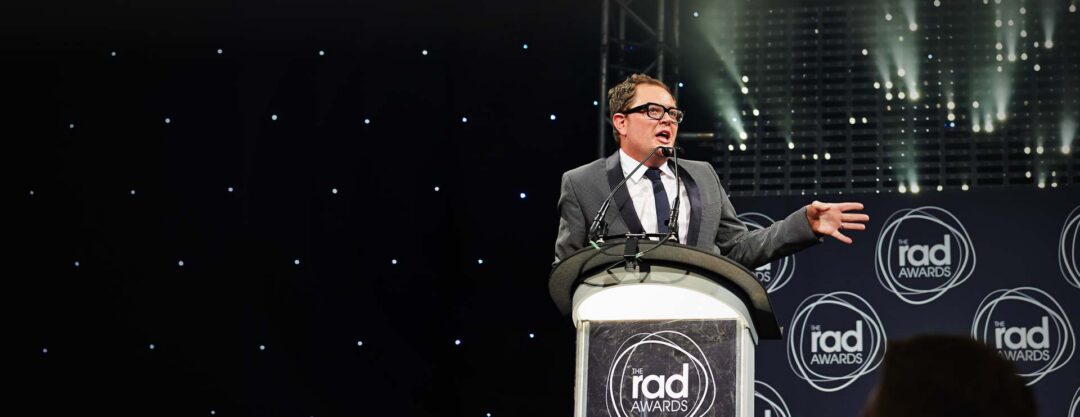
After the Baftas, Golden Globes, Grammys and Brit Awards, and with the Oscars and more still to come, we are in the middle of the glitziest season of the year – the awards season. What can a look at how events like the Baftas are hosted tell us, and what is the wider purpose of awards for any industry?
I sat down with Christopher Morrell, Account Manager at JLA, to reflect on this question, and chat about the real centerpiece of any successful ceremony: the awards host.
Awards with audiences of this magnitude can be very difficult to play. It involves a lot of pressure, and places the host in a spotlight far brighter than any smaller-scale or internal event, their impact reaching far beyond the audience present in the room.
There’s the question of the host’s degree of relevance to the event theme – an actor for the Baftas, a musician for the Brits, and everything in between. This then needs to be balanced with the experience and aptitude of an artist to play the role of host – to maintain stage presence, interact with the crowd, and keep the energy consistent through the duration of the evening.
In a world where the Brits or the Golden Globes came to JLA for their host, we’d have pulled together a range of ideas spanning these considerations in diverse and dynamic ways. We work with so many brilliant people, many of whom have already hosted awards in previous years. Taking the Baftas as an example – Richard E. Grant, Edith Bowman, Dermot O’Leary, Joanna Lumley, Stephen Fry…there are so many strong names to choose from.
From that list, I would highlight Edith Bowman in particular. She has an incredible coolness about her, and creates a great energy onstage. Combined with the fact she’s someone I’ve known from childhood, growing up listening to the radio, she is immensely likable, and goes down very well with audiences.
Similarly, a recognisable face from TV is always a great choice. Dermot O’Leary is a fantastic example, hosting massive events like the X Factor – he’s someone that we work with regularly. There are also names that have a certain built-in level of impact…Joanna Lumley, Stephen Fry…
Then again, that’s a question in itself. A ‘big name’ gives a bit of gravitas to the event, and earns the host a sort of ‘aura’; their name reaches beyond their appearance onstage on the night. However, are there other hosts out there who may not necessarily have the same level of profile, but would do an excellent job? The answer is absolutely yes.
This is where JLA sits, at that junction between these two paths. Whilst we have access to the very top end of talent, we can also find terrific alternatives that don’t stretch budgets. Events like these are obviously high-profile, and they often opt for a big name to match that status. But do I think there are other people who could slot in there brilliantly? Of course.
The most important characteristic of an event host is their ability to ease their clients’ concerns. After all, awards are often the centerpiece of an evening event.
First and foremost – they should be someone who’s willing to be collaborative with the client. A good host will listen to and absorb the brief, whilst also understanding any pain points.
With this comes the recognition that an event has most likely happened several times before. It isn’t taking place in isolation, and there are all sorts of considerations that need to go into that.
Also important to note: whilst an awards host takes to the stage, clients will already be thinking about the next event. The industry operates in loops – as a result, a host that can play into that ecosystem, weave in key messaging and encourage attendees to continue showing up is equally as impactful.
Lastly, the basics are just as significant, and should not be overlooked. A successful event host is interested, easy to work with, arrives on time, and matches the client’s energy. They are adaptable whilst also offering up the best version of themselves.
In a world which can be dark and unpredictable at times, honouring our peers for their achievements in their respective fields allows us to centre optimism and hope.
Whilst film is obviously heralded as a powerful medium, just as valuable artistically as it is reflective of our contemporary moment, the celebration of accomplishments is always critical, no matter the field, whatever the industry being championed, and regardless of the specific awards being handed out.
Awards celebrations highlight an intrinsic good in us, as humans: the impulse to celebrate others. If you’re looking at it cynically, you could say this is all for commercial benefit. However, whilst there is of course an element of this, it is the drive to honour the efforts of our colleagues which sits at their core. We want to be pleased with their achievements; we want people to have their time in the sun, to get their flowers.
Awards are important, and I’m almost certain they will remain a regular feature of the speaking and hosting industry in the future.
Again, so many options to choose from!
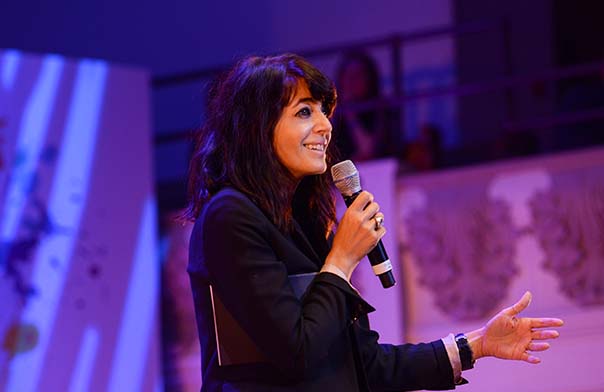
Someone like Alan Carr could be great – building on that success with The Traitors, events like these might be something he could have fun with. In a similar vein, Claudia Winkleman is always superb.
I’d also like to shine a particular light on Sally Phillips. For me, she’s the ideal awards host, and really embodies what it means to do the job well – she’s warm, she’s collaborative, and she truly cares.
However, as an ending note, perhaps we should think beyond those who are familiar faces on the stage and screen. Perhaps the host doesn’t need to be from the world we’re celebrating; rather than pigeonholing them into respective ‘categories’, it might be worth breaking free from that presumption, and looking beyond.
If you would like more information on these or any other presenters, or would like to discuss an awards ceromony more generally, please contact your JLA Agent or call 020 7907 2800.

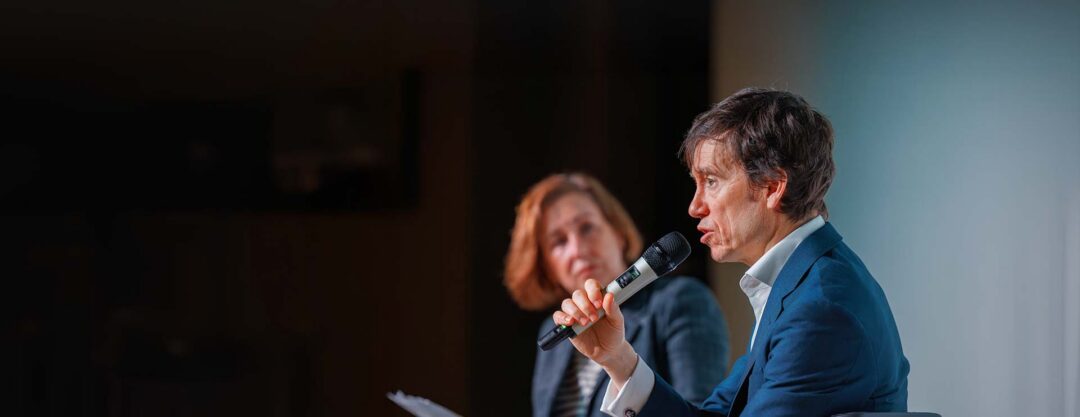
Bright and early on Tuesday 10th February, we had the pleasure of hosting our first Speaker Breakfast of 2026, welcoming political power-house Rory Stewart to the stage of One Moorgate Place, joined in conversation by the brilliant Kirsty Wark.
Our exclusive Speakers Breakfast events offer clients the opportunity to see speakers in action as they address pressing and contemporary issues. Last week’s event was an excellent exemplar: Rory and Kirsty unpacked the pressures and opportunities presented by our current geopolitical landscape, and how leaders can best steer their businesses through uncertainty.
We’ve pinpointed three of the most resonant takeaways from the session.
No, we’re not referring to the 2004 film. The idea of the ‘butterfly effect’ wove itself throughout Rory and Kirsty’s conversation on Tuesday morning, with reference to the amplified interconnectedness of geopolitics and international relations today.
The nature of politics, economics, international relations, and media technology has brought the world in closer proximity than ever before. The speed at which fact, fiction and opinion circulate around the seismic events of our age is only increasing exponentially, and ‘small’ occurrences have the power to trigger and spiral into others in unpredictable ways.
As a result, no global event is too far removed from businesses.
To keep a finger on the pulse as a leader is to keep geopolitics at the centre of decision-making and strategy, rather than a dismissable side-note.
Kirsty also looped back to the butterfly effect analogy with reference to Trump, posing an important question: will the qualities and effects of his presidency, the ‘batting of his butterfly wings’, make waves that will transcend his time in office?
Rory’s answer was immediate, and definite: absolutely.
In a world without Trump, the public’s trust in the realm of political possibility will have changed, perhaps irrevocably. No matter what the next president says, does, or believes, the US population has seen what is possible, and can no longer rely on the soundness of any boundaries.
As the rules around us shift from one day to the next, looking beyond clichés and focusing on the bigger picture with geopolitics is more important than ever before.
Rory’s reflections on Trump tie in with a broader theme running through the session: the impossibility of future prediction when the rules-based order of the past 80 years is showing cracks. In his words, “anybody who tells you that they can predict the future is deluding themselves.”
To illustrate this point, Rory draws a pertinent analogy. If, during a game of chess, your opponent suddenly announces that the old rules of the game no longer apply, it’s simply not possible to anticipate what move they’ll pull next.
So, what can we look towards when preparing for the unexpected, at least tentatively?
The rules-based environment remains relatively stable in Western Europe and the UK. But we must work hard to maintain that. Rory suggests that this stability could become key to our growth and security in years to come, and could positively influence other regions.
Nonetheless, he re-emphasises that first point: the importance of paying specific attention to the unfolding geopolitical landscape on a day-to-day basis, and taking it seriously from a corporate perspective. With such little recourse to predicting the future, it is more important than ever to take seriously the events of the present.
Towards the end of Tuesday’s session, Kirsty and Rory turned to AI – a topic which has followed us all keenly into the new year.
Exploring how AI has featured on the global stage, Rory highlighted three questions which we can, and should, be asking ourselves about the systems we implement and the balance of power they enable:
Breaking down these points of concern, and asking these questions with reference to our own organisations, can help us to understand the broader consequences of the technologies we weave into our everyday lives.
AI is not apolitical, and it’s important we don’t treat it as such. Furthermore, the possibility of AI becoming an actor in its own right – an autonomous influence in the web of international relations – should not be overlooked.
If you missed us at this Speaker Breakfast, you can still watch an overview of the session’s highlights here. To enquire about Rory or Kirsty speaking at your own event, please contact us today.
Equally, if there is a speaker you would like to hear from next, or a topic you would want covered in the next session – get in touch today.
We look forward to seeing you at our next JLA event!

International Women’s Day is fast approaching, with this year’s theme being ‘Give and Gain’. But what does this really mean, and what significance does the occasion truly hold?
I sat down with Safia Canbakis, Assistant Account Manager at JLA, to discuss what IWD is all about, and explore how JLA can help make your IWD event stand out.
International Women’s Day is not just about celebrating the achievements of women, but is also about visibility – amplifying women’s voices, stories and expertise in areas where they’ve been historically underrepresented.
From a business perspective, this day offers the opportunity to put the values they hold into practice. Stating a stance on equality is very different to demonstrating it – as a dedicated time period, IWD encourages and even compels organisations to translate their position into real, tangible actions, by creating platforms for women to lead conversations and influence change.
On a wider level, IWD’s lens can also extend to the topic of male allyship, intersectionality, and beyond. The occasion is not just about supporting and uplifting women, but also shining a light on how women’s rights affect us all.
Definitely! It’s difficult to choose, as we work with so many brilliant female speakers across many different walks of life – from comedians (Katherine Ryan) and Formula 1 leaders (such as Bernie Collins) to entrepreneurs (Dr. Anne-Marie Imafidon) and politicians (Nicola Sturgeon). Whether you’re looking for a keynote speaker or a more intimate discussion format, we represent a real spectrum of talent.
One person I’d highlight in particular is English fashion designer Anya Hindmarch. I saw her at a Q&A-based women’s networking event, where she spoke about balancing her time as the head of a global brand, an environmental advocate, and a mother of five. Her life has so many moving parts, and is far from one-dimensional, but she’s been incredibly successful both professionally and personally. The talk illuminated the way that women don’t need to choose a single path and stick to that alone – you can succeed at work, and you can also build a family. She really demonstrates that women don’t have to limit themselves – they can do it all.
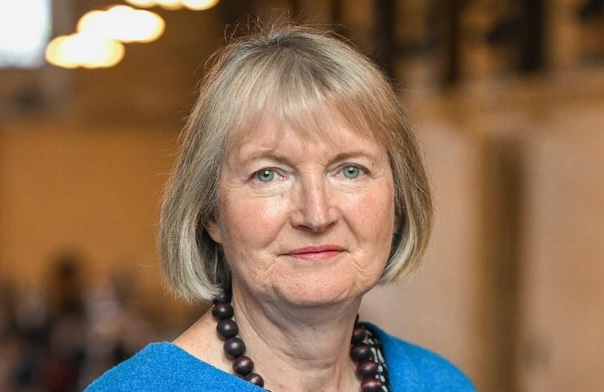
My next pick would be Harriet Harman, a Member of the House of Lords and a compelling leadership speaker. A big part of Harriet’s talk revolves around the societal perception that women are never truly in their ‘prime’. If you’re classed as a ‘good mother’, you’re seen as not being driven. Simultaneously, if you’re a successful business woman, you’re seen as having abandoned your maternal purpose. Alternatively, successful men are straightforwardly seen as successful. This is all the more poignant in light of Harriet’s own work in politics, a male-dominated field. More generally, she brings important insights into leadership, policy, and systematic change, grounded in decades of real-world experience.
Finally, I want to shine a light on the incredible Baroness Eliza Manningham-Buller, Former Head of MI5 & Former Chair of the Wellcome Trust. Eliza has a firmness of principle which powerfully transcends expectations of women. She is unapologetically strong-willed. At the same time – and linking to Anya and Harriet – her family plays an important role in her life. Eliza also advocates powerfully for open, frank and critical conversation – something which, more broadly, lies at the heart of forwarding gender equality.
As I mentioned earlier, International Women’s Day is about amplifying women’s voices – however, there are so many resonant stories to be told. Speaking engagements offer the exact platform to showcase a variety of perspectives. On a broader level, it also acts as an excuse to bring together a room full of people, and make them listen.
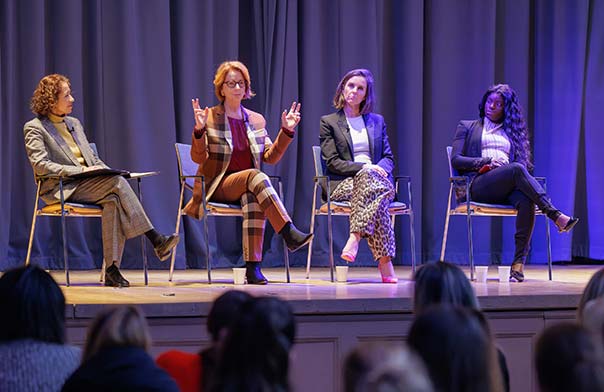
JLA Speakers Breakfast: Looking ahead to IWD 2024
A ‘speaking engagement’ doesn’t need to mean one thing. Whether it refers to a keynote at a conference, or a laid-back fireside chat between two people, a discussion about women in business or a reflection on their day-to-day experience, a series of anecdotes or an overview of insights – the term encompasses all of these things, which JLA can help support across the board.
The term does not need to be ring-fenced – it can take many different forms. In the case of IWD, this could be a women’s networking event, or as mentioned earlier, an event targeted specifically to male allies. This diversity opens the door to really tailor your IWD event to your business, and your audience – whether there are hundreds of people in the room, or twenty.
I think IWD events work best on an interactive level – whether that’s having an element of networking, or a workshop-style session. The powerful stuff happens when communities talk to each other, sharing opinions and inviting productive debate towards identifying a real solution. This maps well onto a general trend we’ve noticed as a speaker-bureau – interactivity is gaining traction as a format, with more clients asking for fireside chats, workshops, and more.
As I mentioned earlier, I think IWD events should have inclusivity at their heart. It would be great to see more events spotlighting how men can better support women in the workplace, for example – I often hear men saying they’re not sure how to do this, so I feel this could be genuinely useful.
For me personally, ‘Give To Gain’ is a theme focused on selflessness – specifically, giving other women support for their gain.
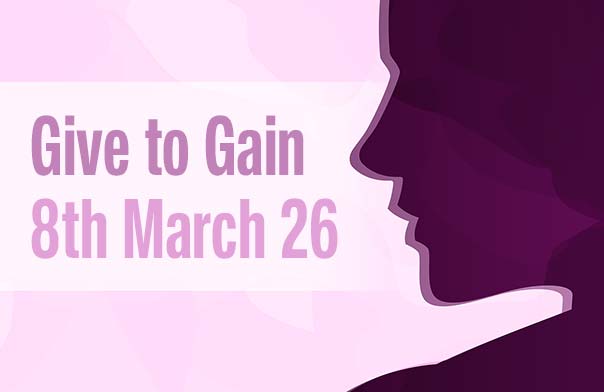
It’s not easy to be a woman. We’ve had to deal with so much across history, and there are still parts of the world where women are losing and going without their rights. Awareness is such a critical thing as a result. This theme doesn’t need to be about what we gain from IWD – we need to prioritise not being selfish.
It doesn’t matter if these issues are happening across the world. When we give our attention to those who are overshadowed – facilitate real, impactful conversations and dialogue – and speak about them as much as possible, it does make a difference.
This ties in with this theme’s significance from a JLA perspective – particularly the piece around giving people a voice. JLA’s work reinforces the importance of creating platforms for diverse female stories, giving women the opportunity to both be heard, and listened to, in sharing insights and experience. Whether you’re seeking a conference speaker for a large-scale event or an expert for a smaller gathering, we can connect you with voices that matter.
A speaking engagement is a mutual exchange, in that everyone benefits, or ‘gains’ – the speaker sharing their perspective, the audience gaining insights, and the business applying takeaways to their operations moving forward. The more we invest in women’s voices, the more we gain.
Discover how we brought this to life at our Speakers Breakfast: Looking Ahead to International Women’s Day 2025 – explore the highlights below for inspiration for your own event.
If you would like more information on these or any other speakers, or would like to discuss you own International Women’s Day event more generally, please contact your JLA Agent or call 020 7907 2800.
As we step into the new year, leaders around the world are grappling with a very different set of challenges to those they faced at the start of 2025.
However, one thing has stayed the same: JLA is here to provide expert perspectives and advice, helping businesses to take change by the reins and use it as a means to thrive.
We sat down with Jessica Mears, Senior Account Manager at JLA, to explore trends in client expectations around leadership content, and delve into what makes an impactful leadership speaker.
Our clients’ expectations change alongside the challenges that they face – whether that’s in their day-to-day professional lives, or company-wide.
It’s been a turbulent few years for leaders. Businesses had to manage uncertainty surrounding COVID, particularly the impact this had on their workforce, with the sudden increase of people working from home. Since then, the focus has shifted towards the challenges posed by hybrid models – of having people return to the office, but in a different way to before. On any given day, the balance of people in the office or working from home could tip one way or another. Managing this transition successfully relies on both establishing and nurturing a solid company culture.
Over the past year, we’ve received an influx of briefs surrounding AI – particularly focused on the uncertainty the technology has introduced – raising questions about how it will impact us, and our jobs, without anyone being left behind. This leads to the related matter of company restructuring – many businesses are choosing to rebuild and shift their workforces, taking AI and other surrounding pressures (geopolitical, economic, etc.) into account.
To intensify things further – these developments are all taking place very quickly. The pressures leaders are tackling day-to-day are higher than they’ve been in a long, long time.
When it comes to leadership sessions, we’re finding that our clients prioritise speakers who offer tangible takeaways and learnings. Regardless of the audience, mid-level or C-level, practical insights that can be immediately put into practice are favoured above all, to help businesses build resilient teams and lead them through uncertainty and change.
Whether these takeaways are delivered through a ‘psychology of leadership’ angle – Simon Sinek and Matthew Syed are great thought leaders in this space – a business speaker who has credibly led through change, or someone who currently leads businesses and teams, actionable insights are more important than ever.
More and more, clients want something that goes beyond just an interesting keynote, or ‘food for thought’. They want a session that will make a real, enduring impact.
In light of all the uncertainty businesses are grappling with, resilience and change management are two themes which we’re getting asked about a lot.
One brilliant speaker on these topics is Baroness Manningham-Buller. As the Former Head of MI5, she led the organisation through significant times of change, and can reflect on how she managed teams effectively within this context. She also shares lessons learned around authentic leadership – from having empathy for others, and the significance of offering praise, to the importance of championing open communication as a leader, and inviting criticism from your team.
We’ve also seen continued interest in high-performance leadership, and how teams can be united towards a joint purpose, as a topic of discussion – given the competitive, fast-paced landscape and financial pressures our clients’ businesses face.
Guenther Steiner, Marc Priestly and Claire Williams are all great speakers on high-performance. All three cover their experience operating in high-pressure, technical teams, from their own perspectives – there are lots of pertinent crossovers between the inner workings of F1 and the ways that traditional businesses operate.
“Culture” – specifically team culture and company culture – is another strong talking point for our clients.
We spoke earlier about hybrid patterns of work, and how important it is to nurture a strong working culture to ensure a company remains united and grounded. This has been a real challenge for leaders across the board.
Linked to this theme is the idea of generational difference – specifically, how companies can navigate this effectively as Gen Z begins entering the workforce. There are still big sticking points between generations, driven by social, cultural and technological divides, so managing a space shared by people from all ages can be challenging.
Paul Redmond is a fantastic speaker on this topic. He not only outlines the differences between the generations and their expectations, but also offers tangible advice on how best to manage them. Karen Blackett also speaks excellently about leading team culture – emphasising the power of earning trust through empathy, and leading by focusing on others rather than yourself.
Leadership speakers that really get to know a client, take their time to understand their challenges and tailor their presentations to resonate accordingly, are those that deliver sessions that really stick with audiences.
There are multiple ways of doing this – whether that’s through a very thorough, in-depth briefing call discussion, or the speaker conducting additional research in their own time.
Increasingly, clients are also asking to rebook speakers for follow-up sessions – whether that’s with the same audience, or with different teams within their businesses. This is a great way of maximising impact.
Kate Richardson-Walsh delivered a particularly impactful session on team culture and values for one of my clients. The session was with an internal team, spanning different levels of the client’s business.
Significantly, Kate created a safe space for the group to openly discuss and challenge what matters to them as a company – asking them to pin down what behaviours they should be championing and striving for. She encouraged a level of open communication that welcomed perspectives from everyone in the group, regardless of their professional level.
Kate’s session went beyond a simple keynote – it was interactive, personalised, practical, and won’t be forgotten any time soon.
When JLA’s account managers receive a leadership brief, it’s important for us to understand the audience, including who they are, and what level they’re at professionally (e.g mid-level, board level, or C-level).
We then need a firm grasp of any surrounding context – whether that’s successes the client’s recently celebrated, or challenges they’re working through – and the key themes and messaging they want to communicate through a speaking session.
Lastly, it’s always useful to know who they’ve booked in the past – not only to identify patterns in what has worked before, but also to spot opportunities to try something new. For example, if a company has only booked speakers from within their industry, it might be impactful to look at someone outside the box to offer a completely new perspective
If you would like more information on these or any other speakers, or would like to discuss a leadership event more generally, please contact your JLA Agent or call 020 7907 2800.
After supporting over 2,400 events for 1,200 clients with 806 speakers, presenters and performers in 2025, we’re now looking ahead at what will be driving demand throughout 2026: applied AI, geopolitics, leadership and sector disruption.
Organisations want keynote speakers who can help facilitate fast-moving change in practical and relevant ways. At JLA, our ever-evolving database of speakers is perfectly positioned to tackle the big talking points for the next 12 months and beyond.
Last year, we saw enquiries for speakers on all aspects of AI – from agentic AI to implementation and strategy, through to the impact of quantum computing – were more than double those for any other topic, and we don’t see this trend changing. It’s clear that organisations are prioritising these areas, and want experts who can help them understand the technology and make it work for their business.
Technical expertise combined with policy knowledge is increasingly valuable.
As AI, cybersecurity and regulation evolve rapidly, professionals who can bridge the gap between complex technical challenges and strategic decision-making will be in high demand. At JLA we can identify the right AI speaker to meet your specific needs.
Financial Times’ Undercover Economist & More or Less Presenter
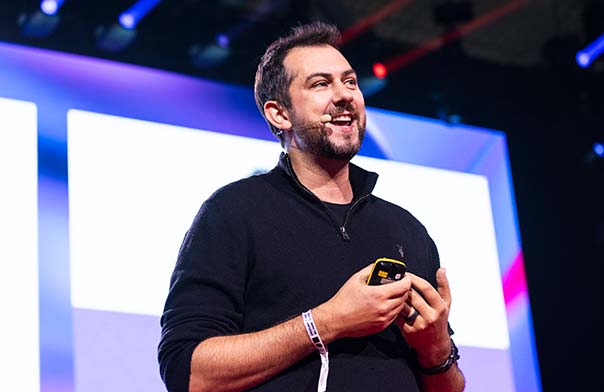
Chief AI Officer, WPP and AI Academic

Founder and CEO, CENTURY Tech

Emerging Technologies, Innovation and Business
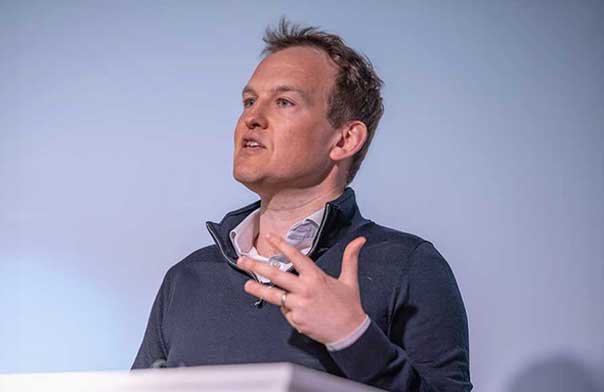
Vice-Chair, AI Safety Institute; Co-founder, Entrepreneurs First
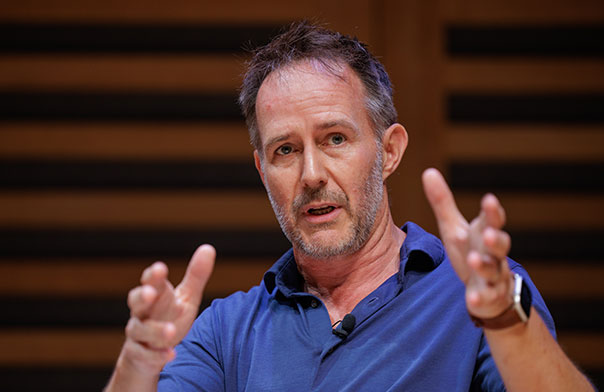
Former COO Google Europe
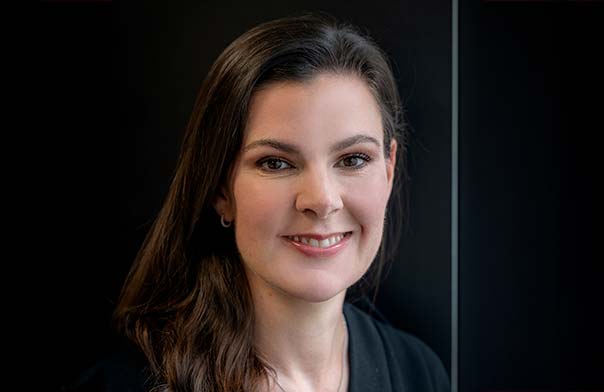
AI Policy & Government Expert
.jpg)
Creative Technologist, Product Designer & Musician
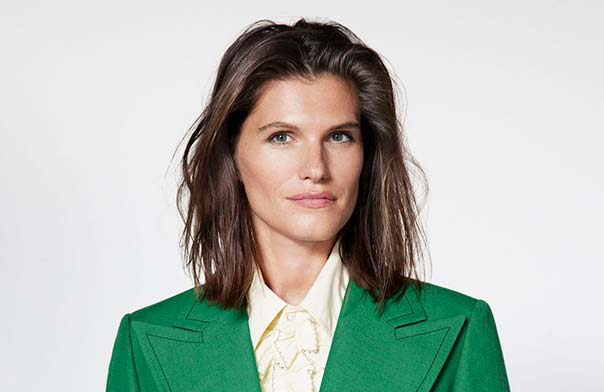
Social Scientist, Author & AI Expert
Developments in the geopolitical sphere continue to defy expectations – from old alliances crumbling and populations demanding change to policy being upended with a single social media post. Now more than ever, organisations need up-to-the-minute insight on global affairs to manage their risk strategy.
Understanding geopolitical dynamics and strategic implications remains essential, whether you’re considering where to invest, expand your market, or if your supply chain is vulnerable. With the geopolitical landscape evolving by the day, audiences are seeking leaders’ perspectives on how to navigate global challenges and risk with confidence.
At JLA, we have the perfect selection of Geopolitical Speakers to help your business maintain control through the uncertainty ahead.
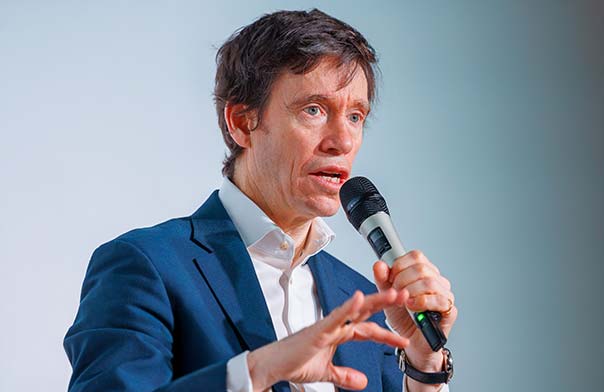
Academic, Former Politician & Diplomat, The Rest is Politics
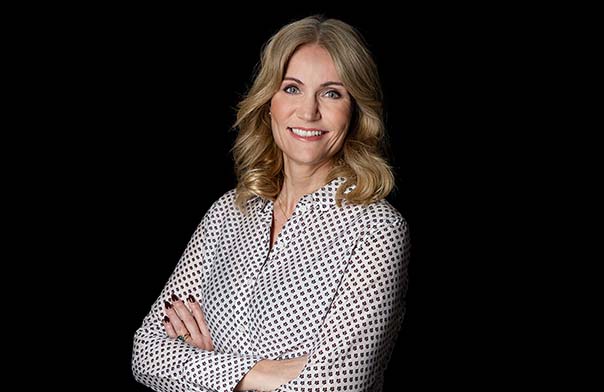
Former Danish PM and Former CEO, Save the Children

Geopolitics Editor, The Economist
.jpg)
Former British Ambassador to the United States, and to the EU

Former Leader of the House of Commons & Secretary of State for Defence
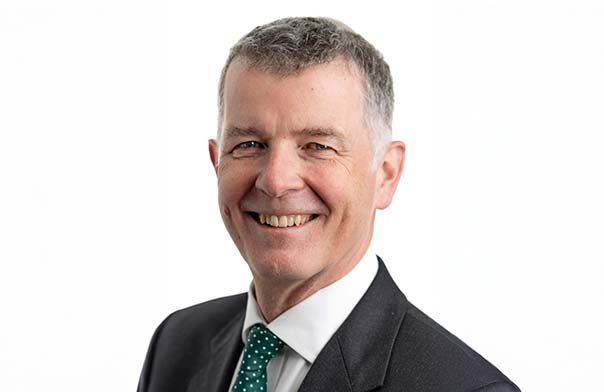
Former Chief, Secret Intelligence Service (MI6)
With more complexity and uncertainty to come in 2026, there are greater demands on our leaders. The need for organisations to support decision-makers in dealing with incomplete information, rapidly changing situations, pressures on teams, and competing priorities is more important than ever.
Speakers who can combine knowledge of the issues leaders face with practical tools for addressing them are in constant demand. Whether it’s human behaviour or strategic shifts, leaders need ideas and frameworks they can implement immediately.

Former Head of MI5 & Former Chair of the Wellcome Trust

Author, Journalist & Broadcaster

Performance Psychologist

Science Broadcaster & Emergency Medicine Doctor
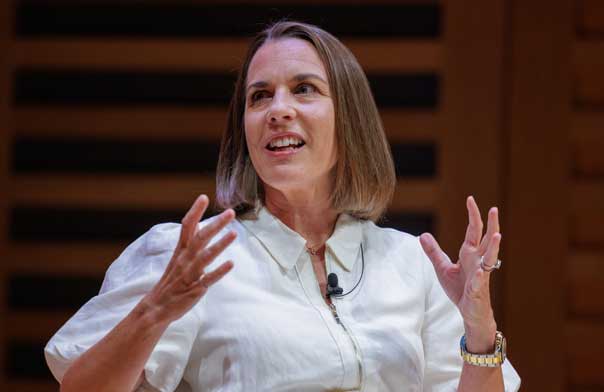
Former Deputy Team Principal of the Williams Formula One Team

Former Home Secretary and Foreign Secretary
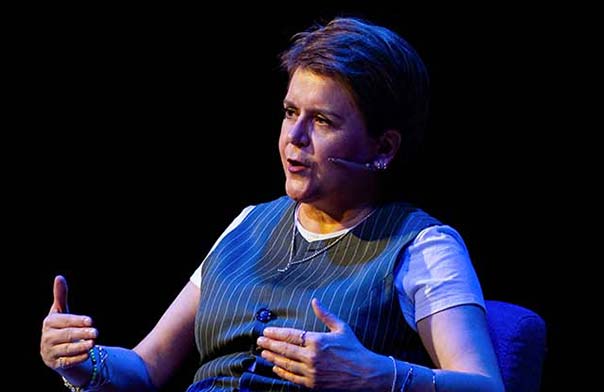
Former First Minister of Scotland
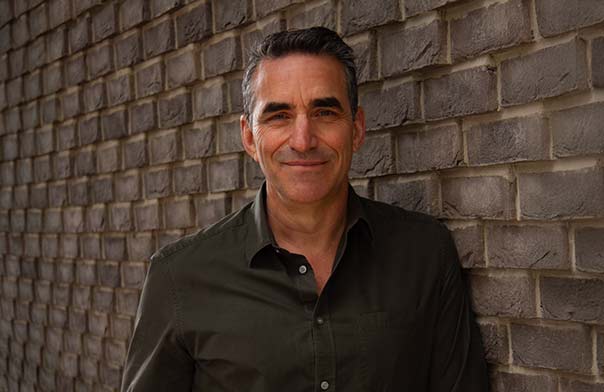
Foreign Correspondent & Tech CEO
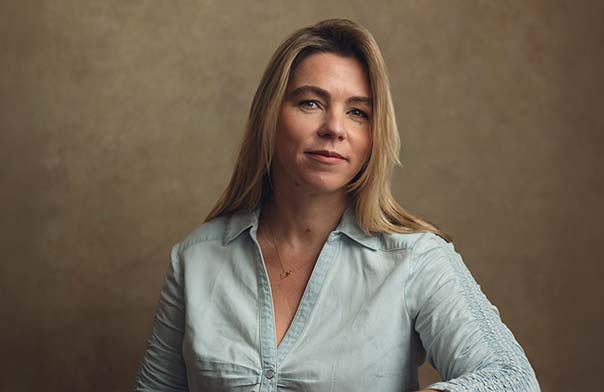
Tech & Policy Expert and Author, Careless People
1-28 Feb – LGBTQ+ History Month
6-22 Feb – Winter Olympics
8 Mar – International Women’s Day
1-30 Apr – Stress Awareness Month
7 May – Local Elections (England) & National Assembly Elections (Scotland, Wales)
12-18 May – Mental Health Awareness Week
1-30 Jun – Pride Month
11 Jun – 19 Jul – FIFA Men’s World Cup
23 Jul – 2 Aug – Commonwealth Games (Glasgow)
7-31 Aug – Edinburgh Fringe Festival
1-31 Oct – Black History Month
3 Nov – US Mid-Term Elections
9-20 Nov – COP 31
17-23 Nov – Global Entrepreneurship Week
If you would like more information on these or any other speakers, or would like to discuss an event more generally, please contact your JLA Agent or call 020 7907 2800.

Last month, JLA Account Director Andrew Stoney flew to North Carolina to represent JLA at this year’s ENGAGE 2025 IASB Convention, his 12th year attending.
I sat down with Andrew to talk through this year’s most important takeaways, and the impact the event has as a whole.

A key theme that underlined this year’s event was the notion of ‘looking ahead’ – considering how the industry is changing and evolving.
The speaking marketplace is quite crowded at the moment. There are lots of new speakers, which in turn has led to new bureaus and new speaker management organisations. As a result, an important strand to IASB’s 2025 event was looking at how we’ll all work in a more collaborative way across the board, to promote best practice, amplify the benefits of bureaus, reinforce strong relationships with our artists, and uplift the industry as a whole.
Since my first time attending the conference in 2013, the event has grown steadily, with this year being its biggest yet. Notably, there is an increasing diversity of attendee type – beyond just speaker bureaus, there was also a larger presence of speakers, speaker management, and other organisations travelling from all over the world to join.
Against this backdrop, it was announced at this year’s event that the International Association of Speaker Bureaus (IASB) will be renamed in 2026 to the Global Speakers Industry Association (GSIA). It’s a significant shift, and more reflective of the scope of those involved in the field.
One speaker I’d highlight this time around is pianist Felipe Gomez. Felipe drew insights from his experience as a virtuoso performer – reflecting on lessons learned about high performance and achieving excellence through consistency and discipline. This is all set within the context of his emotional connection to his work, and the idea of inspiring through passion – making for a keynote that is both moving and engaging.
Beyond keynotes, there were also a series of concurrent sessions and workshops looking at the use of social media (e.g LinkedIn) and AI in the work we do – critically exploring how we can use these tools to our advantage.
For the last 12 months, I’ve been on the Board of Governors for IASB. There’s a great group of us from all over the world – we’ve got members from the UK, South America, the US, Canada and beyond.
Working on the board, it’s been really interesting to get different viewpoints on matters relating to the industry, and explore how the association as a group can deal with them in both an effective and united way. We also have the rebrand ahead of us, so we’ll be exploring how best to communicate this change in the years ahead.
I’m very grateful that people have voted for me to take on this role, and have really enjoyed it so far – it’s been a great opportunity to meet key figures within the industry and discuss what matters most in the speaking world.
Across all the years I’ve attended the conference, I’ve always found the opportunity to connect with and learn from others incredibly valuable.
Although we’re all booking talent, whether that’s high-profile business speakers or sector-specific experts, and our ‘end product’ is technically the same, we all go about our work in such different ways. By meeting and speaking with other agents around the world, I’ve been able to pick things up that I wouldn’t have thought to try – whether that’s something people do differently in the US, or in Mexico, or Australia, and so on. Learning from others about how they approach their work means we can elevate what we do and the service we offer to our clients in the UK.
This all links back to the name of the conference, ‘ENGAGE’. Whilst our work revolves around booking keynote speakers that will engage our clients’ audiences, IASB’s convention offers the chance for us to all engage with our own global community – to reinforce our internal connections, learn from and support each other..
Keynote Speaker Matt Ellison writes a passionate and personal article about the importance of TDOR and the role of employers and organisations in supporting trans people, creating inclusive policies, and embracing understanding and empathy.
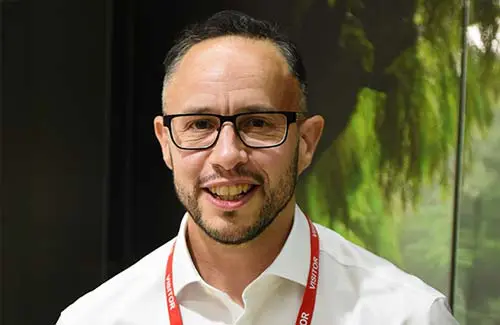
Every year on November 20th, Trans Day of Remembrance (TDOR) gives us the opportunity to honour the lives of transgender people who have lost their lives to anti-trans violence. It is a day of reflection and raising awareness about the ongoing struggles faced by the trans community worldwide. More than just a memorial, it is a call to action for allies, organisations, and society at large.
In the UK and around the world, trans people are facing an increasingly hostile rhetoric, discriminatory policies, and public attacks, something I’ve felt personally. Life since transitioning over a decade ago has been amazing; I’ve felt free, aligned, and as if a weight has been lifted from my shoulders. But recently, with everything that’s been happening, I’ve felt that weight return for the first time since transition – low, disheartened, and reminded that safety and acceptance are never guaranteed. Across the world, trans communities continue to face violence, exclusion, and political backlash. This is a stark reminder that the fight for safety, inclusion, and equality is far from over. Recognising this day is more than a symbolic gesture; it is a statement that your organisation stands against discrimination and supports the trans community.
Many people I speak to are completely unaware of the many challenges the trans community is facing, and when I explain, they are often baffled as to where this has all come from. Here in the UK, for example, the EHRC (Equality and Human Rights Commission) – the very organisation meant to protect us – has been pushing guidance that would legally exclude trans people from using gendered spaces that align with their identity. They have now submitted this guidance to Parliament for review, and there is a real threat that it could become law. This would mean it could be illegal for me to enter any male space, despite physically appearing to everyone just as any biological male does.
Many organisations have already acted on this guidance. Here’s one example of a company who have updated its terms and conditions to read:
8. By law, our members and visitors who use a changing room marked as ‘male’ or ‘female’ must select the one that matches their biological sex.
They have mistakenly interpreted this as law – which it isn’t ….YET – but they currently require me to use female facilities despite looking 100% male, or lie to access male spaces.
If the guidance does become law, trans people will face impossible choices: use facilities that don’t match their appearance – which would be distressing for both the trans person and others in that space; live a stealth, criminalised life just to use a toilet, get changed safely and to maintain dignity; be forced into gender-neutral facilities, which risks outing us; or, in many cases, have no access at all. Gender-neutral facilities can be fantastic – but only when offered as an option, not as a substitute that excludes us from all gendered spaces and effectively classifies us as a “third gender.”
The situation is ludicrous both for trans people like myself who pass in their acquired gender (actually the majority of us), and also for those who don’t pass, as it means they are discriminated against simply due to appearance, which shouldn’t happen.
This is just one example of why we need your help, support, and allyship more than ever at this pivotal moment in history.
This year at least 350 people are being commemorated on TDOR after losing their lives simply due to being trans, that’s on average one person every day, and with the growing anti trans sentiment that number is only likely to increase in years to come, unless we try to educate and raise awareness.
Here’s how organisations can make a difference:
TDOR is a vital moment for reflection and action. By marking it, your organisation signals its commitment to equality and inclusion, and takes a stand against the rising tide of anti-trans rhetoric.
Much of the anti-trans rhetoric comes from misinformation and a lack of understanding. I share my own story, using my experiences to provide insight, understanding, and education. My sessions are designed to be practical, engaging, and inspiring, helping organisations turn awareness into real change.
When we experience acceptance and understanding, life post-transition can be amazing, and you can help us achieve that.
Matt is an inspiring transgender campaigner and speaker whose thought-provoking insights reach far beyond his personal journey of transition. A former co-chair of FTM London, Matt has worked with NHS England to improve trans care and advises on safe practices and the Gender Recognition Act. Through his engaging talks, he helps individuals and organisations embrace diversity & inclusion, and create meaningful change.
To book Matt to speak at your event or for more tailored adviced on selecting your next speaker, do not hesitate to get in touch with us.
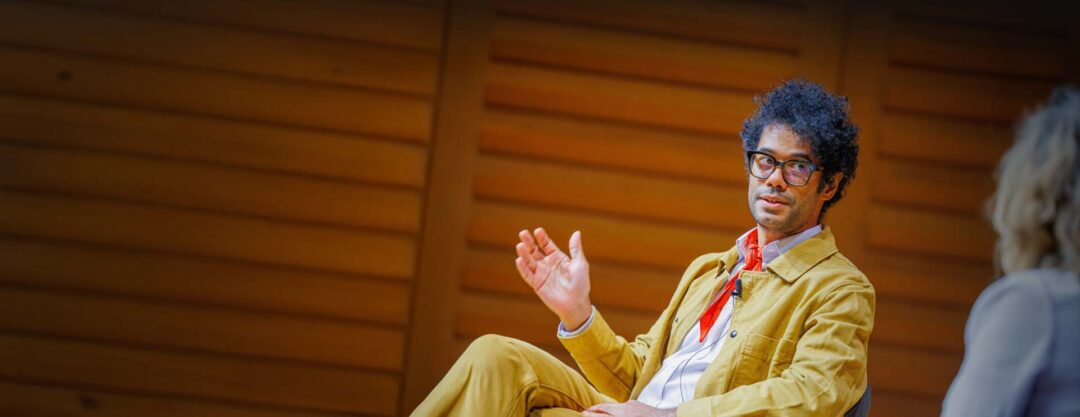
For the fourth and final session of JLA’s inaugural Festival of Speech, we were thrilled to welcome comedian, actor, writer and director Richard Ayoade to the stage.
As a multi-disciplinary creator, whose work has placed him both in front of the camera and behind it, Richard shared his reflections on creativity, collaboration, and audience engagement in the context of his varied career.
We’ve broken down the three most important lessons his session left our audience with, and explored the impact of JLA’s first ever FoS as a whole.
Where does creativity come from? Is it an attribute some people are simply born with, or one that anyone can work towards?
When asked this question, Richard was quick to dismantle the myth of the ‘creative type’. For him, creativity isn’t about harbouring a rare form of genius, or being hounded by flashes of inspiration. Instead, it is something much quieter, and much simpler: committing to putting in the work.
As he explained, “I think it’s simply not telling yourself you can’t do it…a lot of it’s just deciding that you’ll do it.”
Ironically, it may be easier clinging to an ephemeral, romantic notion of ‘creativity’ in the abstract, than to sit down and actually create. In this way, becoming ‘a creative’ involves deciding to be one, and then committing to following through.
Richard went on to highlight an important part of the creative process: the essential transformation of an idea into a product, involving an important externalisation of the internal.
When asked if he’s harsh on himself when judging his own writing, he said: “I think that it’s not you that you’re being hard on…at a certain stage, [the writing] isn’t you”.
From this standpoint, assessing a creative product becomes less a judgement of ourselves and our ‘abilities’ – a trap so many of us surrender to. Instead, it becomes an evaluation of something separate, existing of its own accord – a “thing”, as he deemed it, that is distinct.
Self-evaluation can be just as sore in a professional context as in a creative one – seemingly demanding a strict analysis of why we do what we do. However, using Richard’s perspective, this process becomes much easier to approach objectively and impartially, allowing critical space to exist between oneself and one’s work.
Exploring how creators must adapt to fragmented media and hybrid forms of viewership, maximising audience engagement across all verticals, Richard offered a powerful definition of “audience” that resonates across the board.
When performing, he shared that he imagines his audiences not as a crowd of individuals, but as a single person – specifically, his ‘favourite person’: intelligent, and compassionate, but capable of recognising a lack of effort or authenticity.
In this light, the audience becomes less an amorphous, unfamiliar mass, where judgement inevitably festers, but instead a form of benevolent coach – sympathetic to slip-ups, but also keen on accountability. Someone that, above all, is cheering you on.
Through Richard’s eyes, the ‘audience’ is an embodiment of both artistic and personal integrity. Whilst regarding an audience involves the physical act of looking outwards, this approach allows the gaze to turn inwards – to reflect on the quality of both your work, and your attitude towards it. Regardless of how that audience manifests – whether you’re speaking to a camera or looking each person in the eye – it can be used as a powerful tool towards creative and professional development.
Tying up JLA’s Festival of Speech on an important note – the significance of the connection between a speaker and their audience – we were reminded of what Louise Minchin critically praised at the very start of the event in her introduction: the power of interpersonal connection.
In a world where so much of our communication is filtered through technology, JLA’s event provided a space to share ideas, laughter and genuine human presence. Audiences want to hear people speak from the heart, to share a space and a moment together – as Louise put it, ‘people want to hear from real people’.
Across the day, our guests heard from six remarkable speakers, each sharing their distinct perspectives on their respective fields – from politics to business, technology to creativity, and everything in between.
We want to offer an enormous thank you, not only to our world-class line-up, but also to everyone that attended the event, and made the very first Festival of Speech one to remember.
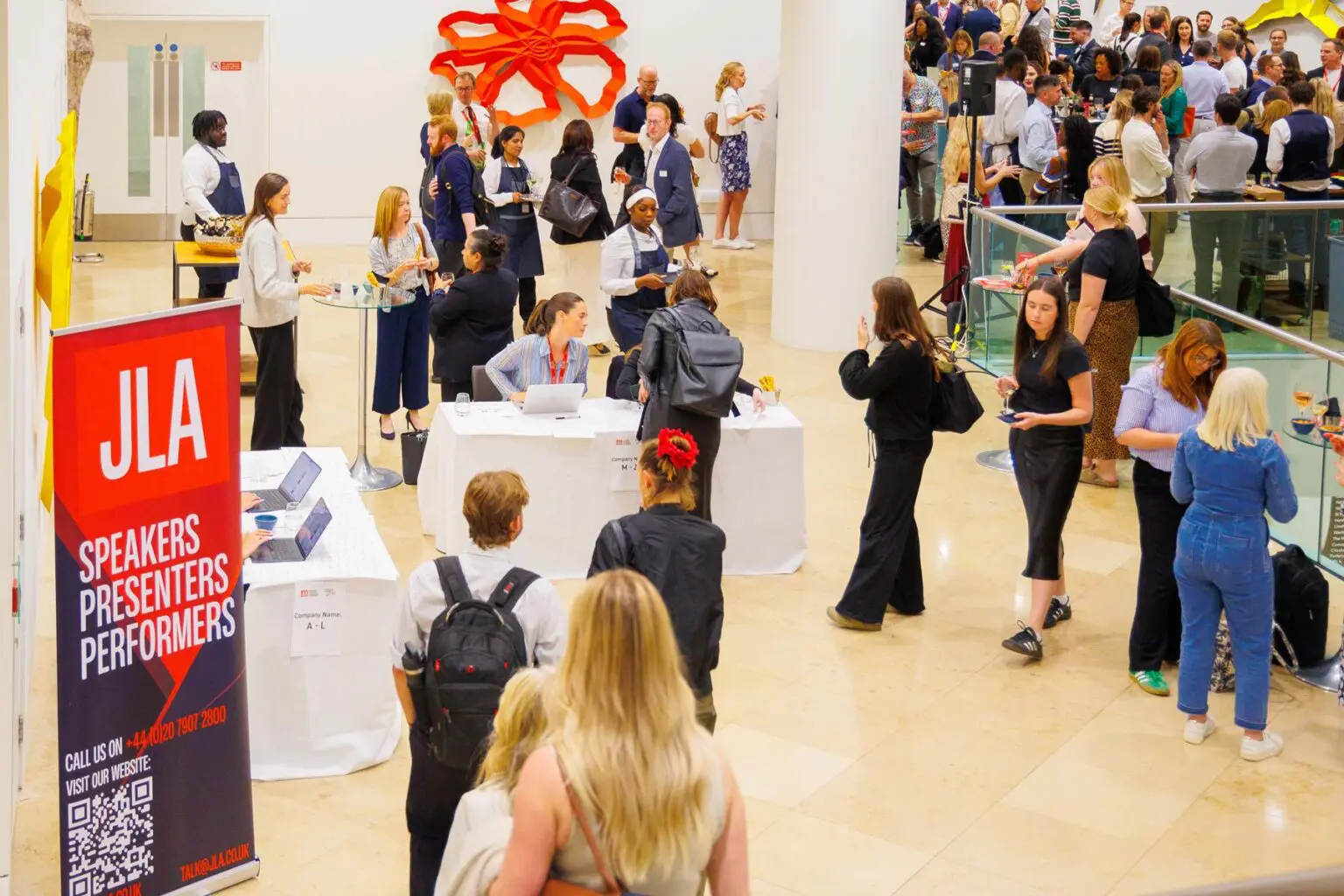
If you missed the event, you can watch additional highlights on our dedicated Festival of Speech page or read the write-ups from the other three sessions with James Cleverly and Nicola Sturgeon, Jamie Laing and Rahaf Harfoush.
To enquire about booking Richard to speak at your own event, please contact us today.
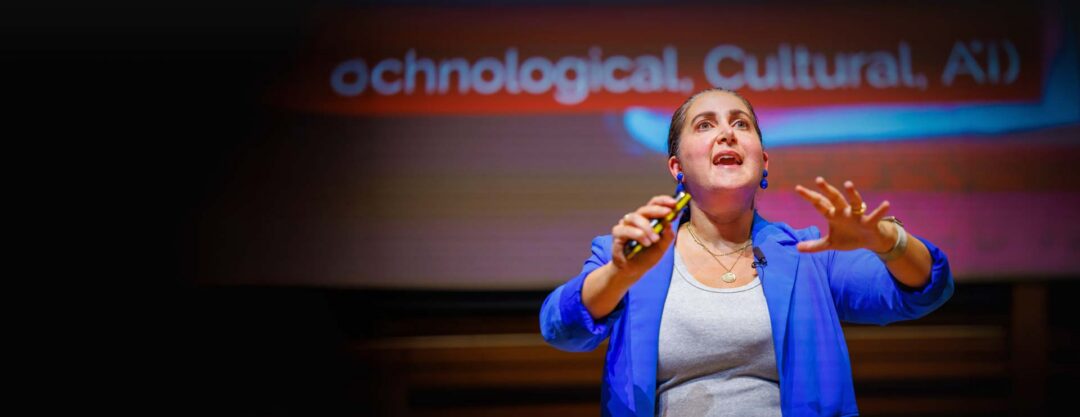
JLA was delighted to welcome digital anthropologist Rahaf Harfoush for the penultimate session of the first-ever Festival of Speech.
Rahaf, whose work explores the critical and ever-changing intersection between technology and culture, asked audiences to look beyond the surface-level convenience of AI tools. She drew important attention to the deeper social, cultural, and human impacts of artificial intelligence as it permeates our world, alongside those we can expect to witness in the years ahead of us.
What does it truly mean to live, work and lead in an era where technology shapes not only our productivity, but our values, relationships and even memories?
Read on to hear about Rahaf’s perspective.
Companies across industries world-wide are already well aware of the ways in which AI is transforming knowledge work. Tools can now generate pitch decks, marketing campaigns, or images in a matter of mere seconds, meeting assistants summarise conversations, and the words we exchange day-to-day are increasingly funnelled through the lens of an AI’s “opinion”.
However, Rahaf’s talk importantly highlighted the ways in which efficiencies come with a hidden but significant risk: the atrophy of human cognition.
“Our society is in the midst of transforming from a searching culture to a generating culture” she reflected: instead of hunting for answers, validating sources, and strengthening our critical faculties, we’re being conditioned to accept the single output a machine someone else has designed gives us.
This dynamic also reveals a widening divide amongst professionals.
On one hand, experienced workers with concrete and well-developed critical thinking skills can use AI to accelerate their work and eliminate menial tasks, validating and filtering outputs. On the other, students and early-career workers use AI without a firmly grounded reference point, substituting opportunities to develop their skillset and reach their own conclusions with AI outputs. Strategic thought is cut out of the equation.
Rahaf’s point brings to light the disparities between each use-case of AI; its application has different consequences for different people. As a result, it’s more important than ever for businesses to keep this in mind as they integrate these tools and technologies across their diverse workforces.
Rahaf moved on to spotlight an often underlooked aspect of AI’s ‘anatomy’: as a system designed by a person, every tool we use carries with it an invisible worldview.
“The technology that you use is actually the manifestation of a belief system”, she explained, “[…] every app, every tool, every device inside of it has someone’s idea of what they think the world should be.” Through this lens, the use of AI as a search engine becomes dubious – the answers it provides must necessarily be channelled through filters that represent the designer’s perspective.
For businesses looking to embed AI as an operation tool, the challenge is not simply whether it provides results, but whether it aligns with your organisation’s values and culture, without subtly reshaping them behind the scenes.
Another powerful theme during Rahaf’s talk was the need to resist simple narratives about technology, characterising it as wholly “good” or “bad.” Instead, she urged leaders to embrace the reality: it will inevitably help us and harm us at the same time.
AI is facilitating incredible technological developments that are actively saving lives – improving cancer diagnoses and predicting natural disasters. At the same time, it is infiltrating the very things that make us human, from love – with the rise of human-robot romantic relationships – to grief – with its use to bring loved ones who have passed ‘back to life’ through image generation and voice imitation. These are two sides of the same coin.
Rather than taking ‘sides’ in the matter, arguing ‘for’ or ‘against’ artificial intelligence in a never-ending back and forth, we can face this duality head-on by recognising, accepting, and even getting comfortable with its necessary complexity.
Rahaf closed with a call to establish and maintain an open, curious and critical mindset towards AI as the technology further deepens its roots within our society.
Amidst the shifting shades of uncertainty AI casts on our world, we must remain committed to asking the right questions, and following the answers. In Rahaf’s words,”no matter where [those questions] may take you – even if it’s uncomfortable, even if it’s scary, even if it’s unfamiliar…you’ll be able to face [the answer] and make a decision with calm and with clarity, knowing that you’re making decisions that are aligned with your values.”
In an era of rapid digital transformation, success will not belong to those who cling to easy answers, but to those willing to keep learning, questioning, and leading with humanity.
If you missed the event, you can watch additional highlights on our dedicated Festival of Speech page or read the write-ups from the other three sessions with James Cleverly and Nicola Sturgeon and Jamie Laing.
To enquire about booking Rahaf to speak at your own event, please contact us today.
JLA was delighted to welcome digital anthropologist Rahaf Harfoush for the penultimate session of the first-ever Festival of Speech. Rahaf, whose work explores the critical and ever-changing intersection between technology and culture, asked audiences to look beyond the surface-level convenience of AI tools. She drew important attention to the deeper social, cultural, and human impacts of artificial intelligence as it permeates our world, alongside those we can expect to witness in the years ahead of us. What does it truly mean to live, work and lead in an era where technology shapes not only our productivity, but our values, relationships and even memories? Read on to hear about Rahaf’s perspective.
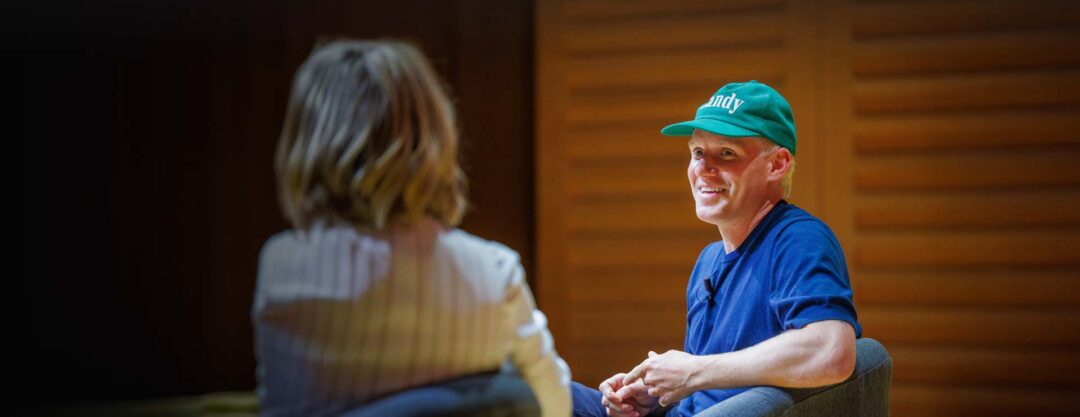
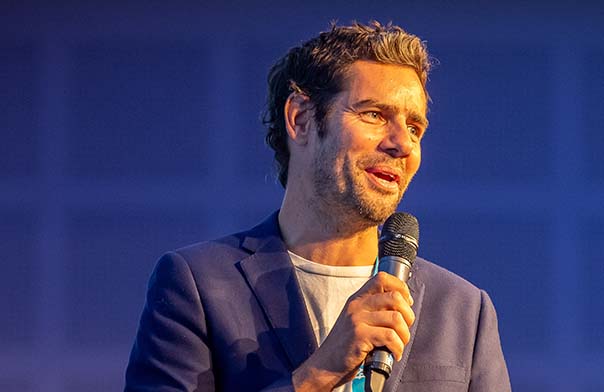
JLA had the pleasure of hosting entrepreneur and media personality Jamie Laing onstage for the second session of the Festival of Speech.
Best known as the co-founder of confectionery brand Candy Kittens, and a familiar face on TV from his appearance on Made in Chelsea, Jamie brought his characteristic mix of humour, openness and honesty to the stage – discussing everything from the early days of reality TV, to launching a business, to running ultra-marathons for charity.
Underlining the conversation was Jamie’s story of risk and resilience – the ways in which he has repeatedly stepped into the unknown, whether in entertainment, entrepreneurship, or personal endeavours, and adapted with new modes of resilience at each turn.
Read on to discover three key themes that stood out from the session.
Looking back on the launch of Candy Kittens, Jamie shared and reflected on an unexpected strength of his, as someone just starting out as a business owner: simply not knowing how things “should” be done.
Without industry experience to hem him in, he and his team had less trouble doing things differently, creating vegan recipes when few others were doing so and designing sleek packaging aimed at adults, ultimately succeeding in manufacturing sweets for a whole new audience.
For Jamie, this approach was driven not by logic, but by instinct and imagination. He describes naivety as his “biggest weapon” – without the weight of established rules comes the freedom to innovate.
The lesson for entrepreneurs and business leaders? Sometimes the best results come not from following the well-trodden path, but from being bold enough to ignore it.
Jamie went on to speak openly about the realities of building a brand from scratch. Despite common perceptions and misconceptions about his background, he explained that Candy Kittens started out with limited resources, and has relied on determination and hard work to reach where it is today.
Running a business, he noted, is “relentless the whole time” – a test of patience, resilience and commitment. Drawing on his experience, he argued that it often takes a decade or more before a brand truly comes into itself.
Jamie’s resilience has been tested not only in business, but also in sport – most notably when he completed five marathons in five days to raise money for mental health charities. Just as with building a brand, the challenge demanded endurance, patience and purpose. In both arenas, he demonstrated how resilience is rarely about pushing forward for ourselves alone, but about drawing strength from the communities and causes that earn our efforts significance.
For Jamie, being authentic isn’t just the cherry on the cake of a successful business – it’s the only way forward.
Whether sharing the real-life ups-and-downs of his relationship with his wife Sophie on their joint podcast NearlyParents, or writing openly about mental health in his book I Can Explain, Jamie has chosen to prioritise honesty over perfection.
In his experience, centring vulnerability proved the real key to unlocking strong, lasting connections, especially in a culture where filtering and tweaking how we present ourselves is the norm. In this way, authenticity can be viewed as a long-term strategy: the leaders and brands that last are those that are unafraid to show their real selves.
Jamie’s conversation at JLA’s first Festival of Speech was an important one. Beyond a sugar-coated story of sweets, stamina and success, he provided a deeper reflection on what it means to both build something meaningful and keep that meaning alive.
Don’t be afraid to approach problems with fresh eyes, accept that the road will be long and tough, and above all, have the courage to stay true to yourself.
If you missed the event, you can watch additional highlights on our dedicated Festival of Speech page or read the write-up of the session with James Cleverly and Nicola Sturgeon. To enquire about booking Jamie to speak at your own event, please contact us today.
Over the coming weeks, we’ll be delving deeper into the other two sessions from the evening and bringing you key takeaways from each speaker.







.jpg)