
Speaker Q&A
Preparation, Resilience and Leadership
By Sacha Deshmukh
About Sacha
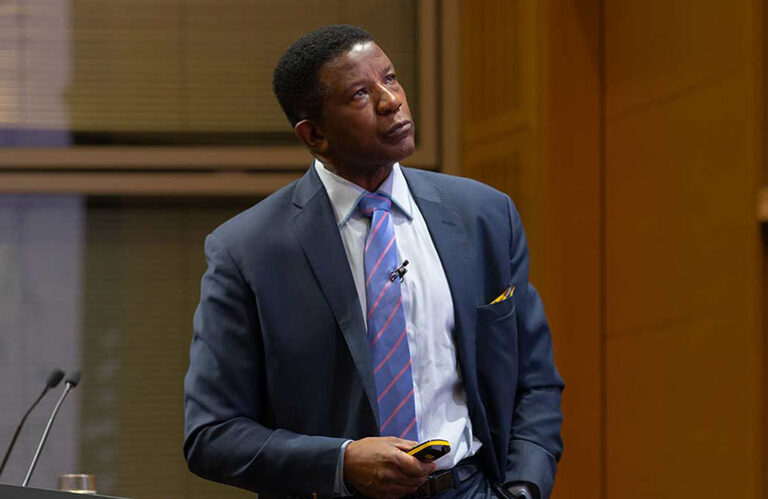
Earlier this year, Sacha Deshmukh became a Commissioner of the UK National Preparedness Commission, the organisation focused on the UK’s resilience in the face of growing threats to national security. This followed 20 years serving as Chief Executive of complex organisations, working across some of the most unstable areas in the world. With experience leading organisations that operate on the frontline of conflict and complex political and social environments, Sacha now speaks to and advises businesses on navigating geopolitical uncertainty, shock mitigation and managing risk. He focuses on leadership in today’s turbulent world, and how leaders can be successful, and happy, despite unprecedented pressures.
QUESTION 1 of 4
[JLA] The Government’s advice to households to prepare for emergencies has been widely publicised. What is business’s role in this?
[Sacha] Now I am a Commissioner in the UK National Preparedness Commission, part of my focus is on what is called a “whole of society” approach to resilience and how we would cope if the country was to be hit by different types of catastrophic events.
Alongside better individual and household preparedness, there is a very important role for business in building its own resilience and working with key suppliers you rely on so that there is greater robustness throughout your supply and operational chains.
I’m lucky enough to talk to businesspeople from a wide range of sectors. One thing I find they often have in common is that they are far too modest about the importance of their business to the whole economy and to critical aspects of day-to-day life. When leaders are encouraged to take a step back and think about the reliance that so many people place on their products and services, they suddenly realise. Not only does resilience matter to the business for its bottom line, but their continued operation would help people to survive a crisis and meet their most basic needs
We are in a new era for companies in how they should consider business continuity.
“It matters more than ever to the whole country that business grasps this nettle.“
I’ve been one of the voices calling on government to strengthen the role it plays in convening business (along with others, such as regional and local government, the NHS and care sector, faith groups and NGOs) to take our national preparedness for emergencies to a new level; to make sure there is consistency and “open source” learning so businesses in all sectors can prepare themselves to cope with a whole range of emergencies. Reducing the potential impact of those emergencies on operations. Planning the steps that means it takes days or weeks, not months or years to get back up and running when an emergency strikes.
I’d urge business leaders to step up to this need. It’s not just good for protecting the long-term value of your business; we now very much live in an era of multiple, very real threats to our country.
“You need to join in national preparedness for emergencies because, as the old posters used to say – Your Country Needs You.“

QUESTION 2 of 4
Leaders have to prepare for the unexpected whilst also focusing on both long-term and short-term strategic priorities. How do they strike that balance effectively?
One of the toughest parts of leadership is that, on most days, even the short-term issues that get hurled at you could fill up a full-time job, let alone then also finding time for the proactive long-term opportunities you want to pursue. Throw in dealing with the unexpected, and it’s not surprising that even experienced leaders sometimes tell me that they feel like firefighting is the only method of prioritisation they manage!
But, when I led organisations like UNICEF and Amnesty International, I thought hard about just this question. I researched methods by which leaders in places as varied as airports, hospitals and on the battlefield organise their decision making when they are dealing with the worst sorts of crises. It helped me develop a way of thinking that focused on better separating the unexpected but critical, from the unexpected but unimportant.
Developing this sort of rigour, and applying it very much to yourself, but as much as possible also to the growth of the culture of the whole organisation, is one of the most important ingredients in successful leadership. It also helps you to step back and realise that a large part of what could affect your business may not yet have happened, but that doesn’t mean that it is “unexpected” in the sense of being a complete surprise if it does. When you apply this rigour to thinking about the “unexpected” that is most likely to happen, and of those things what would really affect the business fundamentally, rather than just on the margins, you realise that there is more overlap between preparing for the important unexpected things and running your business well.
“There is so much convergence between building a better and more successful business today, and planning for a more uncertain and turbulent tomorrow.“

QUESTION 3 of 4
How are geopolitical uncertainties impacting on day-to-day decision-making in organisations?
I spent decades leading organisations which existed to (almost literally) run into locations where the most complex and turbulent geopolitics would affect everything you were aiming to do. For years that very much made my role an exception amongst most business leaders. I constantly thought about geopolitics, while leaders in many other organisations were very sensibly able to seek out the areas of maximum geopolitical calm and stability, and then just get on and run their businesses without thinking much about the impact of international affairs.
The change in that pattern over the last couple of years started gently, but then accelerated, like a waterfall. Now I speak to leaders across pretty much every sector, and they tell me that every part of their business model feels like it has been thrown in the air by geopolitics, and it’s often so new to them that they struggle to work out what are short-term impacts, and what might be signs of systemic changes that they will need to deal with for years to come.
“The breadth and scale of geopolitical uncertainty may be new, but in fact most leaders are way more equipped to cope with the new environment than they realise.“
Sometimes they are even struggling to work out how to separate news from rumour, and sensible predictions from wild speculation. But they shouldn’t panic! They certainly might need some help to make sure they get the right information flows. They might also need a little help to understand some newer issues and what does, and does not, really matter for their business. But, with the right support, most leaders can become more than comfortable navigating their organisations through the impacts of huge geopolitical upheavals.

QUESTION 4 of 4
How do leaders separate the meaningful from the huge amount of noise that’s out there?
I get asked this question a lot; from all sorts of angles. Sometimes it is leaders saying they are overwhelmed internally by information. Now, with everything happening in the world, it can be leaders saying they don’t know which parts of the news agenda really matter and which they should ignore.
In the leadership roles I held, I was pretty ruthless in working out what actually mattered (what was telling me fundamental points about the business, what really affected the team’s happiness and productivity) and what to ignore. I made sure everything, from my information flows through to how I spent my time, best reflected this. I was open with my team and my stakeholders about the choices I was making and why I felt they were right.
“You can’t blame people for trying to divert your attention to something else if you haven’t actually told them what you think matters and why.“
I also think that managing your own physical health, mental wellbeing, and rest is key to being able to focus on the meaningful and confidently recognise what is noise that you can ignore. It seems counterintuitive, but the answer to “how do I manage endless noise” rests more on finding time to switch off than it does on working out how to be constantly on!

Book Sacha Deshmukh for your next event
Navigating geopolitical uncertainty, building organisational resilience and leading through disruption is a growing challenge for businesses of every size. If you’d like Sacha to share his insight at your next event, or would like recommendations for other speakers on leadership, resilience or geopolitics, get in touch with the JLA team today.