
Speaker Analysis
A Budget of 98 measures, yet little impact on economic growth or debt
By Professor Trevor Williams
Professor Trevor Williams is the former Lloyds Chief Economist and chairs the Institute of Economic Affairs’ Shadow Monetary Policy Committee. Here, he gives his analysis of the 2026 Budget, and what its 98 measures mean for growth, debt and the public finances over the next five years.
John Healey’s Budget included 98 separate measures, yet the Office for Budget Responsibility’s latest forecasts show little effect on Britain’s overall debt burden. The short and long term fiscal outlook remains remarkably similar to that presented only six months ago. The small measures announced – £7bn – target many areas but will not alter the underlying trajectory of debt and the economy.
The package included a £100 council tax rebate, additional defence spending, support for first-time buyers, continued fuel-duty relief and temporary VAT relief on domestic electricity. At the same time, the Government raised revenue by tightening corporation tax allowances, temporarily increasing the bank surcharge, raising taxes on some savings and property income, restricting tax privileges for sovereign wealth funds, and introducing a range of other small tax-compliance measures.
Businesses also benefit from targeted incentives. Other contributors included banks, investors, property owners, and parts of the corporate sector. However, frozen tax thresholds will continue to push more people into higher tax bands, increasing the overall tax burden on the average taxpayer.
Although many households received some assistance in the Budget, many will feel it will not solve the issues they face. Moreover, those paying higher taxes will likely feel the burden more acutely than those who felt they gained. That explains why, despite 98 separate measures, the economic forecast has barely changed.
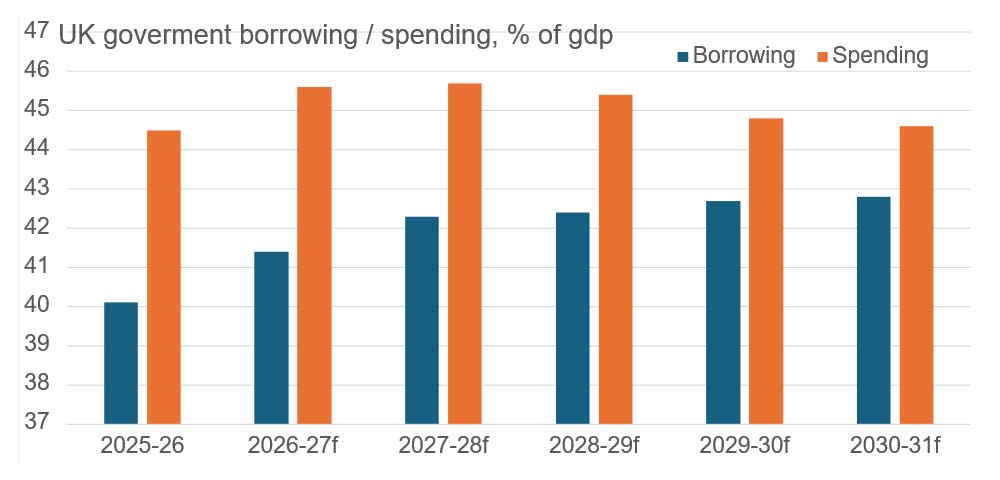
The OBR forecasts that public sector net debt will remain around 96% of GDP in the five years to 2030/31, pretty much the same debt burden as today.
It is difficult to argue that the Budget materially changes Britain’s economic path.
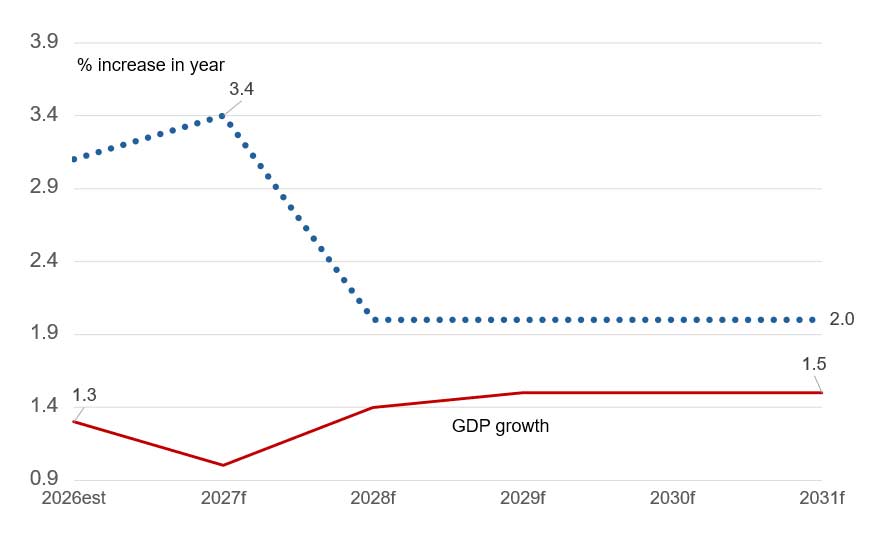
More fundamentally, it is difficult to argue that the Budget materially changes Britain’s economic path. The OBR expects economic growth of around 1.3% this year before slowing to roughly 1% next year. Growth then recovers, averaging about 1½% over the forecast period, though that may prove optimistic given the UK’s long-standing productivity and investment challenges. Faster growth will likely require more ambitious reforms to boost investment, improve skills, increase housing supply, and accelerate infrastructure development. Inflation rises temporarily to 4% earlier next year, reflecting the effects of the Iran war, then falls back to the 2% target.
Equally notable is what was largely absent. While it includes some support for homeownership, it does little to address the shortage of genuinely affordable housing for people who cannot buy or afford private rents. Nor materially lift the economy’s long-term growth rate, with little in the way of skills or productivity measures in the budget.
The options for reducing public debt are straightforward in principle but difficult in practice: raise taxes, cut spending, generate faster economic growth, or allow inflation to erode the real value of debt. This Budget leans heavily on higher taxation, yet taxes alone cannot solve Britain’s fiscal challenge. Debt-interest payments are forecast to rise from £109 billion in 2025-26 to £160 billion by 2031-32, consuming almost one pound in every ten spent by government.
Debt-interest payments are forecast to rise from £109 billion in 2025-26 to £160 billion by 2031-32, consuming almost one pound in every ten spent by government.
Without stronger growth, the UK is unlikely to grow its way out of its debt burden. But it can be done. What is missing is a more ambitious structural reform programme. The UK needs policies that can increase the economy’s productive capacity: delivering the target of 300,000 new homes a year, expanding genuinely affordable housing, revitalising apprenticeships, opening new technical and vocational training centres, and accelerating the adoption of artificial intelligence across schools, colleges, universities, and businesses.
Book Professor Trevor Williams for your next event
Navigating today’s economic outlook, from interest rates to growth and government policy, is a growing challenge for businesses of every size. If you’d like Trevor to share his insight at your next event, or would like recommendations for other economic speakers, get in touch with the JLA team today.