
Ian Goldin
Director, Oxford University 21st Century School
Nobel Prize-winning Economist, Author of Why Nations Fail

One of the best-known and most cited economists working today, Daron’s work on the interaction of democratic institutions, economics, innovation and AI is the foundation of acclaimed books including Why Nations Fail, What Happened to Liberal Democracy? and Power and Progress. He explores the trajectory of liberal democracy, the historic lessons of technology, and how institutions and governance shape innovation and inclusive progress.
Daron Acemoglu won the Nobel Prize in Economics for his groundbreaking work on the relationship between innovation, AI and prosperity. An MIT Institute Professor, he is the third most-cited economist in the world, and arguably the best-known working today. He has spent much of his career examining how technology can be harnessed for shared prosperity rather than its gains being concentrated amongst a few. He considers that, as AI advances reshape how we work, interact and live, we all have a choice in how we use it. We can create tools designed primarily to automate and centralise power, or we can build ‘pro-human AI’ that augments human expertise, improves judgment and increases capability.
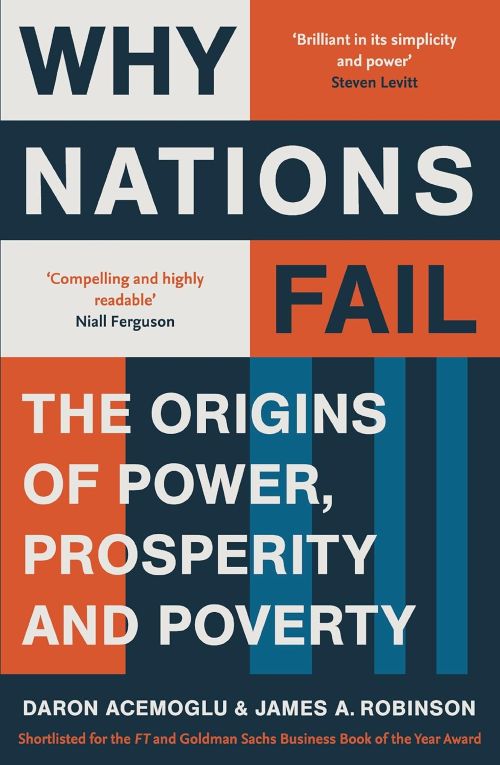
Throughout his work, Daron has argued that the importance of institutions and liberal ideals, including fair laws drafted by accountable governments within healthy democracies, is often overlooked when exploring innovation, prosperity and progress. In his international bestseller Why Nations Fail, co-authored with James Robinson, he explored the deceptively simple question of why some nations are rich while others remain stubbornly poor. With examples from the US-Mexico border to Singapore, the book showed that prosperity was less affected by geography or natural resources, as often assumed, but more by inclusive institutions that provide incentives for innovation and opportunity. The book gained international awards and acclaim, and has become required reading for policymakers and economists.
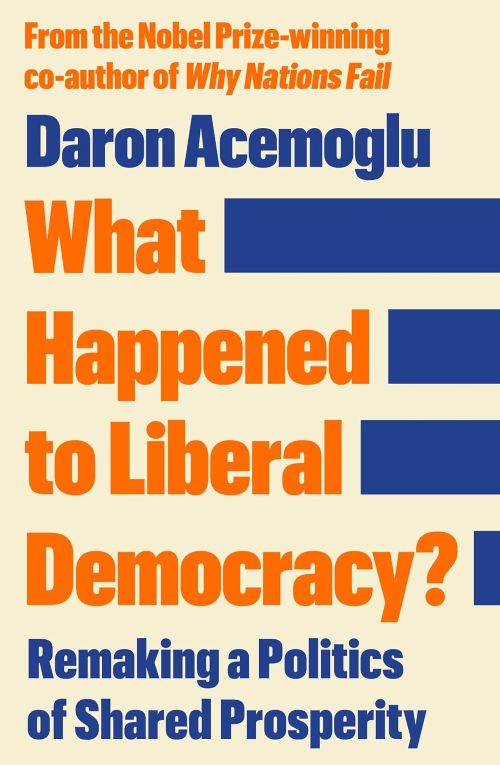
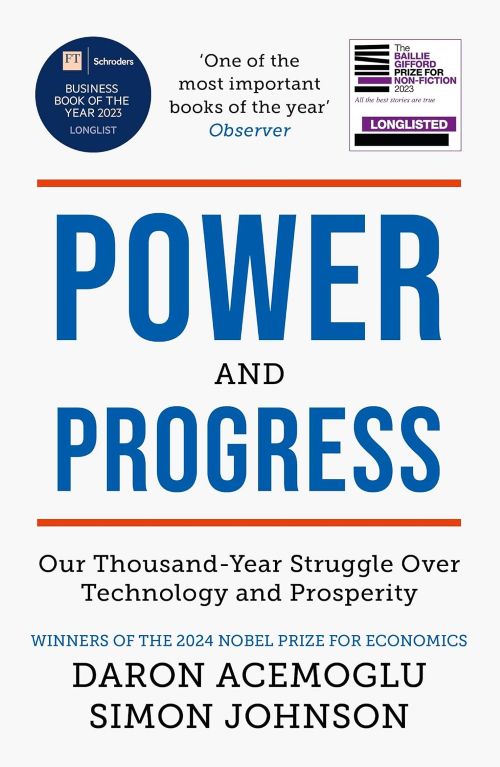
Daron’s next collaboration with Robinson, The Narrow Corridor, extended the discussion into why some nations retain free, democratic rule whist others shift towards authoritarianism or fragility. Whilst Daron’s What Happened to Liberal Democracy? - Remaking a Politics of Shared Prosperity suggested that Western-style democracy has turned away from its fundamental promises of opportunity, openness and fairness, and he proposes a path to a modern society of shared prosperity, empowered communities and pluralism. In Power and Progress, co-authored with fellow Nobel laureate Simon Johnson, Daron looks at the historic lessons of technology benefitting a select few, and shows how wider society can take more control and ensure greater benefit from advances like AI.
Daron is an MIT Institute Professor (the highest title awarded to faculty staff) and founding co-director of MIT's Stone Center on Inequality and Shaping the Future of Work. He is an elected fellow of the National Academy of Sciences, the American Academy of Arts and Sciences, the Econometric Society, and the Society of Labor Economists. His academic expertise spans political economy, economic development, inequality and labour economics. He was twice named one of Foreign Policy's Top 100 Global Thinkers, and was the 2019 winner of the Kiel Institute's Global Economy Prize. He has received the prestigious John Bates Clark Medal, the Nemmers Prize in Economics, the BBVA Foundation Frontiers of Knowledge Award, and an Andrew Carnegie Fellowship.
Daron explores how institutions shape innovation and prosperity, examining the critical intersection of technology, democracy and economic progress. He addresses the future of liberal democracy, the history of technology and labour, and how policy decisions determine whether innovation benefits society or concentrates power. Alongside that, he explains how a ‘pro-human AI’ model that works with instead of replacing human abilities, is both a economic and democratic imperative. From technology and history, politics and economics, Daron delivers an analysis of the present, lessons from the past, and a vision for what individuals, businesses and governments must do to ensure technology serves shared prosperity rather than deepening inequality.

"*" indicates required fields