
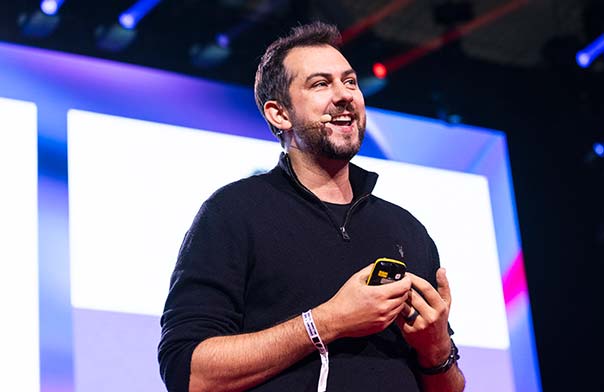
Daniel Hulme
Chief AI Officer, WPP and AI Academic
Technology Entrepreneur & Investor

The founder of ContentCal, Alex grew the business from nothing to a sale to Adobe for over $100m in six years. After spending time with the creative platform giant he started his own investment and advisory company, working with high-growth businesses. He's also CEO of a behavioural health technology company and co-founder of AcademyAI, a platform that assesses and personalises employee AI skills. He considers what businesses need to consider in a world of new AI-native competitors and the value of fostering an entrepreneurial perspective.
Alex Packham is a serial technology entrepreneur, advisor and investor. Aged 24, he left his role as a social media manager at Sky with a plan but little capital or network. From nothing he built ContentCal, and within six years had sold the business to Adobe for over $100 million. He served as Product Director at Adobe, leading the integration of ContentCal into the business, and working on innovation and value creation inside the creative platform giant. Alongside new businesses and challenges, he examines the opportunity-seeking mindset organisations need in an age of AI-native competition.
Through his business ASTP Ventures, Alex has built a portfolio of more than 60 investments across SaaS, AI, fast-growth consumer goods and digital technology, raising over £50 million and employing hundreds of people along the way. He is also the CEO of JAAQ, a behavioural health technology company, and co-founder of AcademyAI, a platform that assesses and personalises employee AI skills. Through ASTP, he advises new, high-growth companies as both investor and co-founder.
Alex explores how AI-native competitors are rebuilding entire industries from a blank page, with a fraction of the headcount, cost and time of established firms. The question for leaders is not how to add AI to what they already do, but what their organisation would look like if it were built today. He asks which parts of a business are most exposed and what has to change. He also examines innovation and risk through the lens of opportunity and how organisations with an entrepreneurial mindset explore new ideas, test them and recognise the decisions that determine whether a venture succeeds. He also looks at how limiting beliefs quietly restrict careers, teams and organisations, and how reflection and continual learning helps individuals and teams identify and challenge them.
"*" indicates required fields