
.jpg)
Zanny Minton Beddoes
Editor-in-Chief, The Economist
Professor Joseph Stiglitz (US)
Nobel Prize-winning Economist
Joseph Stiglitz chaired President Clinton's Council of Advisors and served as Chief Economist at the World Bank. A critic of the way in which the banks were bailed out, he sees a programme of public investment strengthening the US economy. To address the future debt burden, he believes spending must yield new assets in human capital, technology and infrastructure. He is also a strident critic of international financial institutions and globalisation policies.

Recognised as one of the leading economists of his generation, Joseph Stiglitz has influenced both the making and evaluation of policy. He chaired President Clinton’s Council of Economic Advisers and then became Chief Economist at the World Bank. He has since become an influential international voice on globalisation and inequality.
In 2001 Professor Stiglitz won the Nobel Prize, along with George Akerlof of UCLA and Michael Spence of Stanford. They were praised for ‘their analyses of markets with asymmetric information, identifying how small degrees of imperfection can have major economic consequences.’
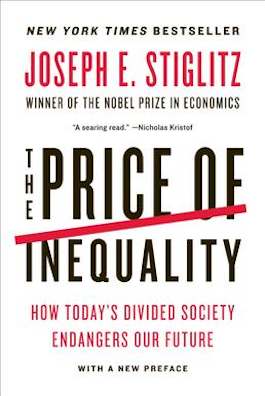
In the wake of the financial crisis, Joseph became an outspoken critic of markets, austerity, regulation and inequality. A prolific author, books including The Price of Inequality, Making Globalization Work, The Great Divide and Freefall deal harshly with the access to healthcare, education and opportunity that wealth affords, the necessity for reforms in banking, finance and trade, and the myths of international development. He’s looked at potential solutions in People, Power, and Profits: Progressive Capitalism for an Age of Discontent, and turned his economic insight to war in The Three Trillion Dollar War, which revealed how short-sighted budget decisions will affect us all for decades to come.
An influential figure around the world, especially on globalisation, Joseph remains a critic of the way banks were bailed out and supports the opinion that the opportunity to narrow the divide between rich and poor was missed. He believes a programme of public investment would strengthen the US economy; but to address the future debt burden, he argues that spending must yield new assets in human capital, technology and infrastructure. In his own words, there must be “more bang for the buck.”
Joseph also argues that globalisation will only benefit developing nations when the world’s institutions are democratised. His Initiative for Policy Dialogue aims at creating an alternative to the IMF and World Bank for nations in need of sound economic policy advice.
Amongst many other academic appointments, Professor Stiglitz is Chair of the Brooks World Poverty Institute at the University of Manchester. He also serves on the Labour Party’s Economic Advisory Committee.


"*" indicates required fields