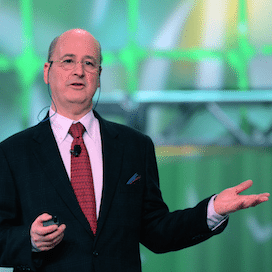
The Director of the World Competitiveness Centre and former Managing Director of the Davos World Economic Forum sets out the global picture. Stephane’s focus is on how companies and countries compete in, and look to open, international markets. In presentations he explains that we also compete in mindsets, and examines the possible consequences if big advanced economies continue to recover while emerging nations are slowing down.
View / Submit“Brilliant, amusing and very interesting - he made economics fascinating and relevant to everybody”
Mail on Sunday
Acknowledged as a leading authority on competitiveness, Stéphane Garelli is Professor at the Institute for Management Development and at the University of Lausanne. He is also the founder and Director of the World Competitiveness Centre.
Stéphane focuses on how companies and countries compete in international markets. Given that globalisation makes us much more vulnerable to external forces, he analyses the economic environment and measures the prospects - taking infrastructure, education, technology and demographics into account. He considers the effects of a slowdown in emerging economies as well as currency and monetary issues, the change in consumer behaviour, commodities, skills and new business models
Professor Garelli is chairman of Swiss newspaper Le Temps. Prior to that he was Chairman of Sandoz Banking Holdings and a board member of Banque Edouard Constant. He served as senior advisor to Hewlett-Packard Europe, and before that Managing Director of the World Economic Forum and The Davos Symposium.
Stéphane Garelli is a member of the China Enterprise Management Association, the Royal Society, and the China Enterprise Management Association. He has also been elected to the Constitutional Assembly of his local state in Switzerland and is a member of the International Olympic Committee commission on Sustainability and Legacy.
The author of many articles and publications on competitiveness and global business, including Top Class Competitors - How Nations, Firms and Individuals Succeed in the New World of Competitiveness, Professor Garelli’s presentations are always forceful, accessible and above all thought-provoking.
© Copyright 2024 JLA. All rights reserved.
While many economic speakers start by bracing you for whatever gloomy predictions they’re about to deliver, Stephane engages you with a real glint in his eye. Describing the post-recession world as “unusually desynchronised” he guides delegates through each region’s competitiveness, helping to join the dots in a constantly changing business landscape.
JLA Agent Ben Arnold