CONFERENCE SPEAKERS
£2.5K TO £5K
EXTERNAL LINKS
JLA is not responsible for the content of external websites.
WIKIPEDIA
TOPICS
Behavioural Economics
SPEECH TITLES
Putting well-being before profit
BIOGRAPHY
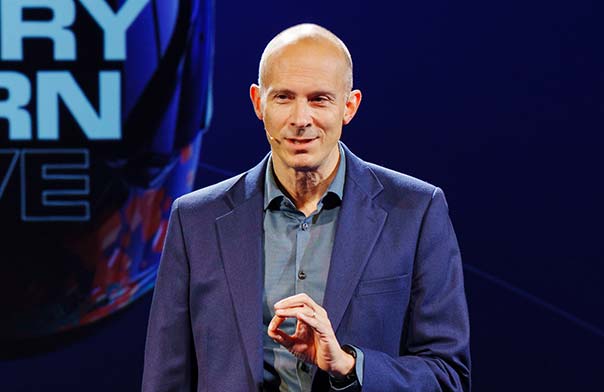
After a degree in Social Anthropology at Cambridge University Oliver James trained as a clinical psychologist at Nottingham. He worked as a research fellow at Brunel University before spending 6 years practicing clinical psychology at the Cassel Hospital London.
He is the author of They F*** You Up - How to survive family life, Britain On The Couch - Why We`re Unhappier Compared with 1950 Despite Being Richer and Juvenile Violence in a Winner-Loser Culture.
A trustee of the National Family and Parenting Institute and of Homestart. Since 1986 he has produced or presented over 30 TV documentaries and written weekly columns for The Sun Independent; Sunday Telegraph Sunday Express and currently the Observer.
© Copyright JLA: All Rights Reserved
THE PSYCHOLOGIST'S VIEW: RICH PICKINGS
by Oliver James
The interesting question is whether any of these men truly feel they were at fault - essential for feeling sorry - or could give a damn about harm done to customers or colleagues.
None authentically accepted any blame. In the cases of Sir Fred Goodwin and Sir Tom Mckillop, they did not feel that they personally were in any way culpable for the disaster at RBS. Mckillop admitted that the takeover of ABN Amro had been a terrible decision, but he also said that it had made perfect sense at the time - shades of Blair et al's excuse over the weapons of mass destruction, "it was the right decision at that time in the light of the evidence available".
More intriguing were Lord Dennis Stevenson and Andrew Hornby, the HBOS team. In making their apologies, both referred to being sorry at "the turn of events". They had not done anything wrong, were innocent victims of "events". While Hornby - who seems to have lost more money than the others - did look pretty shellshocked (which is not the same thing as contrite), Stevenson was a gripping exercise in patrician detachment.
Like his patron Tony Blair (who appointed Stevenson to be in charge of vetting the ethical suitability of new members of the House of Lords), Stevenson has always made a big point of stressing his personal probity and of condemning lack thereof in others.
How strikingly suspect, then, were the precise words with which he couched his apology: "We are profoundly, and, I think I would say, unreservedly, sorry at the turn of events." After the words "we are" and during the word "profoundly", his body experienced an extraordinary swerve from the shoulders, like a rugby player trying to dummy a pass. It was as if he was not at all comfortable delivering the words, was, indeed, making a feint.
His lack of authenticity was exposed by his use of the words "I think I would probably say" before "unreservedly apologise". Think? Probably? Good grief man, how could you possibly only "think" that "probably" you are sorry about a balls-up of such a catastrophic scale, one that may even have ruined your business career? One does not make qualifications about something one feels unreservedly.
But then I think it is probably not surprising that these men are so disconnected from the realities of shame and guilt. The definitive study of senior business managers found they were more likely to suffer from several personality disorders, such as narcissism, than inmates at a secure mental hospital.