
Brian brings scientific discovery to life for millions; he is also a leading physicist, recreating the conditions 1/000000000th of a second after Big Bang “to confirm the universe’s underlying simplicity.” With breathtaking images, Brian shows how science shocks and excites our imagination. He also sets out the case for co-ordinated investment in science as key to job creation and growth.
Arguably the UK's best known experimental physicist, Professor Brian Cox's books and TV programmes have been read and watched around the world and credited with making science engaging and accessible to millions. With his down-to-earth, likeable enthusiasm, Brian is frequently labelled a 'rock star scientist', in part due to his time as a professional musician. He the Professor of Particle Physics at Manchester University, The Royal Society Professor for Public Engagement in Science, and a key part of the ATLAS experiment at the CERN Large Hadron Collider.
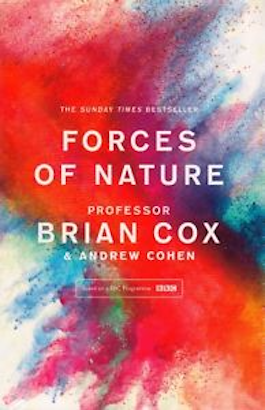
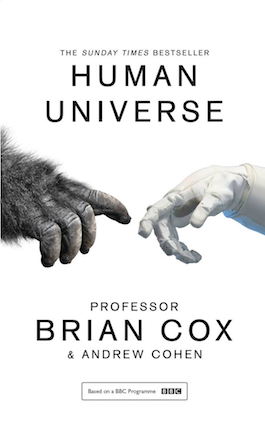
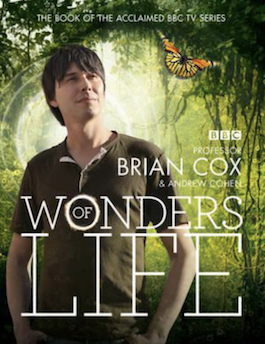
Brian's blockbuster TV shows include Wonders of the Universe, The Planets, Wonders of Life, and Forces of Nature, each looking at the fundamental science behind everything from stars and planets to atoms and microbiology. He has also presented Stargazing, Space Hoppers, The Big Bang, and numerous editions of Horizon. His books accompanying the Wonders of... series have become huge bestsellers, as did his co-authored titles Why Does E=mc2? and The Quantum Universe.
From speaking at TED in the US to World Economic Forums in Davos and China, Brian's presentations engage, inform, and entertain. They feature awe-inspiring images from the depths of the universe as well as his trademark infectious enthusiasm for his subject. Alongside the story of life, the universe and everything, Brian argues that science can unite the world in an attempt to discover our shared origins and answer long-held mysteries. He also explains the work of CERN and their attempts to use cutting-edge technology and engineering to recreate events fractions of a nanosecond after the Big Bang "in the hope of revealing the underlying simplicity of the universe.” He considers black holes, and why he believes they are the most interesting objects we know to exist in the universe, and how Mars appears to have had all the conditions we think are necessary to support the origin of life three and a half billion years ago.
Brian is also one of the few speakers to tour internationally with a solo lecture show, Universal: Adventures In Space and Time. An International Fellow of the Explorers Club Brian was awarded the prestigious Lord Kelvin Award for his work in promoting science to all. When not filming around the world, Brian writes for a range of newspapers and journals and co-hosts Radio 4's Infinite Monkey Cage, the comedy and science programme. He and his friend and co-host Robin Ince examine the big and not-so-big science questions alongside comedians, scientists, and celebrities both on air and on tour. Brian also serves as the Royal Society’s Professor for Public Engagement in Science.
© Copyright 2024 JLA. All rights reserved.